Fishing method
Bottom Fishing
Bottom fishing presents bait on or near the seabed using a weighted rig. Start with a rig suited to the ground, rod and line; check the full casting load and learn its assembly before using it.

The essentials
A weight holds your baited rig on or near the seabed, where many sea fish search for food, so bite detection and rig choice matter more than distance.
Best for
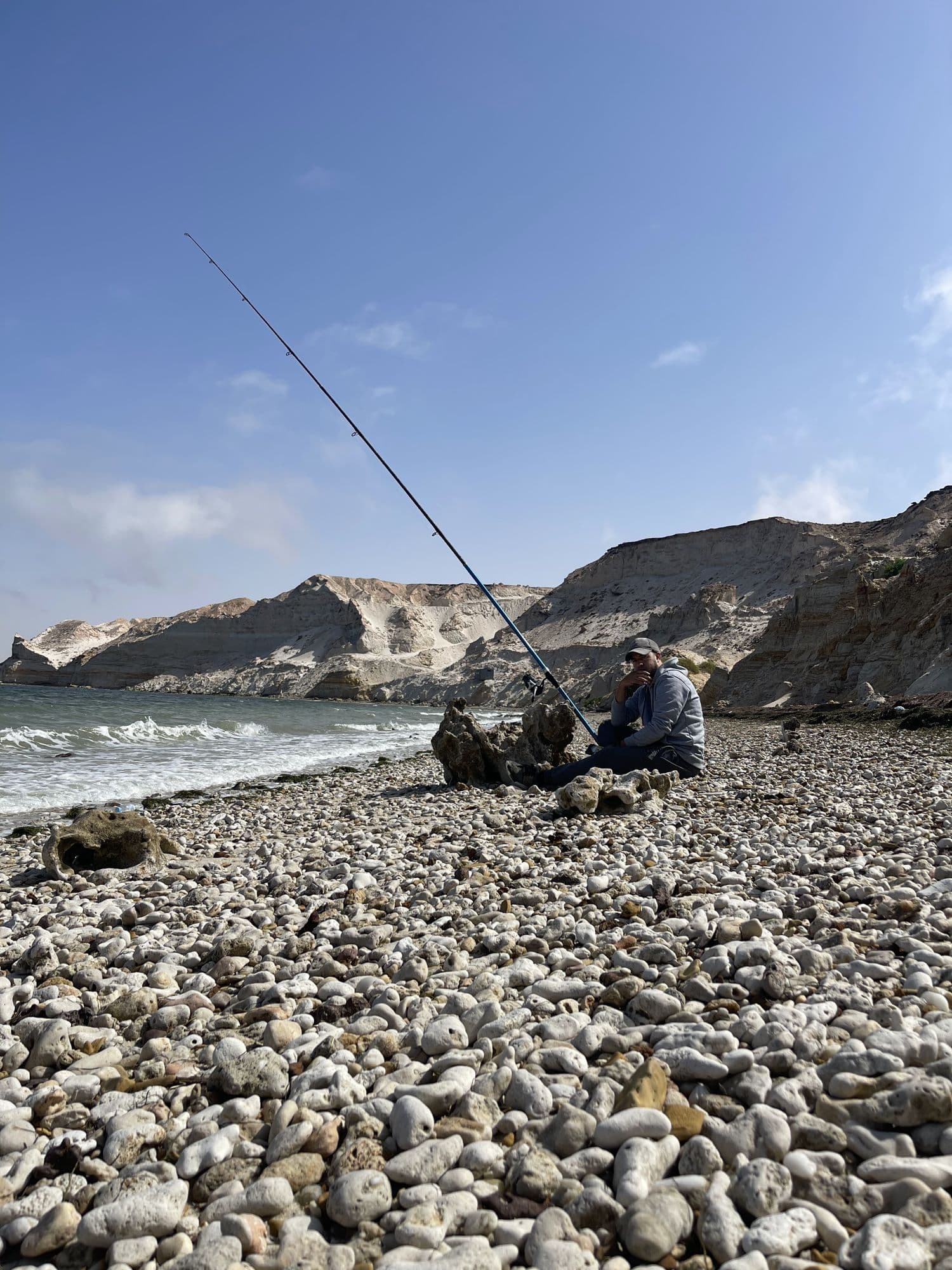
Beaches, estuaries and deeper marks where flatfish, bass, whiting, cod and dogfish feed hard on the seabed.
How it fishes
Steady and tide-led: you place a bait where fish naturally feed and let good ground and a moving tide do the work.
Tackle
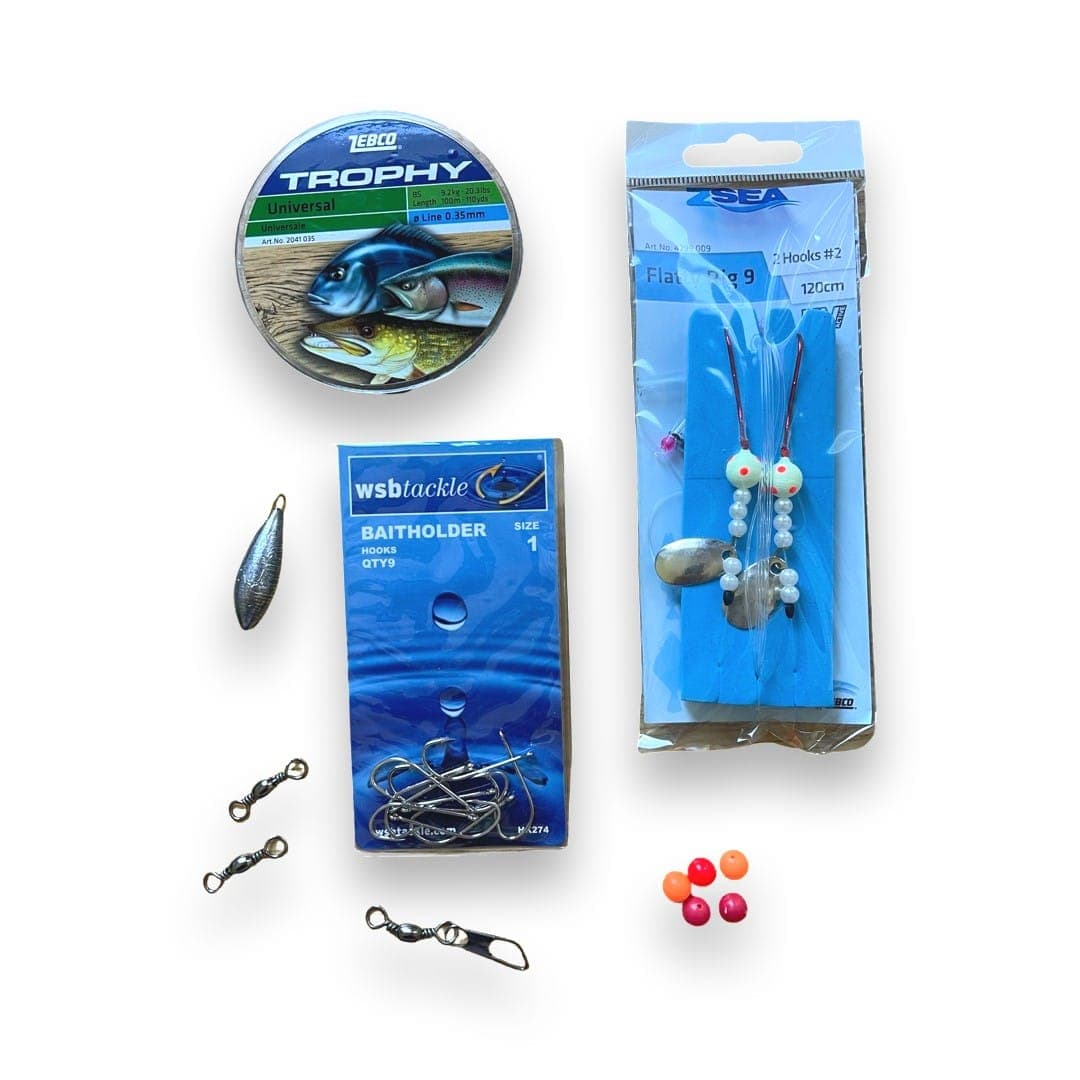
A beachcaster or multi-purpose rod, a suitable reel, grip or plain leads, and simple running ledger or paternoster rigs.
Stay safe
Check tide times carefully on beaches and estuaries, stay clear of cut-off points, and only cast weights you can manage safely.
Bottom fishing presents bait on or near the seabed using a weighted rig. Start with a rig suited to the ground, rod and line; check the full casting load and learn its assembly before using it.
Bottom fishing, ledgering and paternoster rigs
Bottom fishing describes where the bait is presented, not one universal rig. A running-ledger arrangement allows line to move through a running weight attachment. A paternoster carries the hook trace away from the main rig body, with the weight below. Exact layouts vary: use the rig maker’s diagram rather than mixing parts from different instructions.
Choose for the ground and the angler
Ask about local ground and snags before selecting terminal tackle. A ready-made rig can simplify preparation but still has hook, line and weight specifications. Beginners should get hands-on help with assembly, casting and unhooking. No rig makes an exposed or inaccessible fishing spot suitable.
What belongs in the outfit?
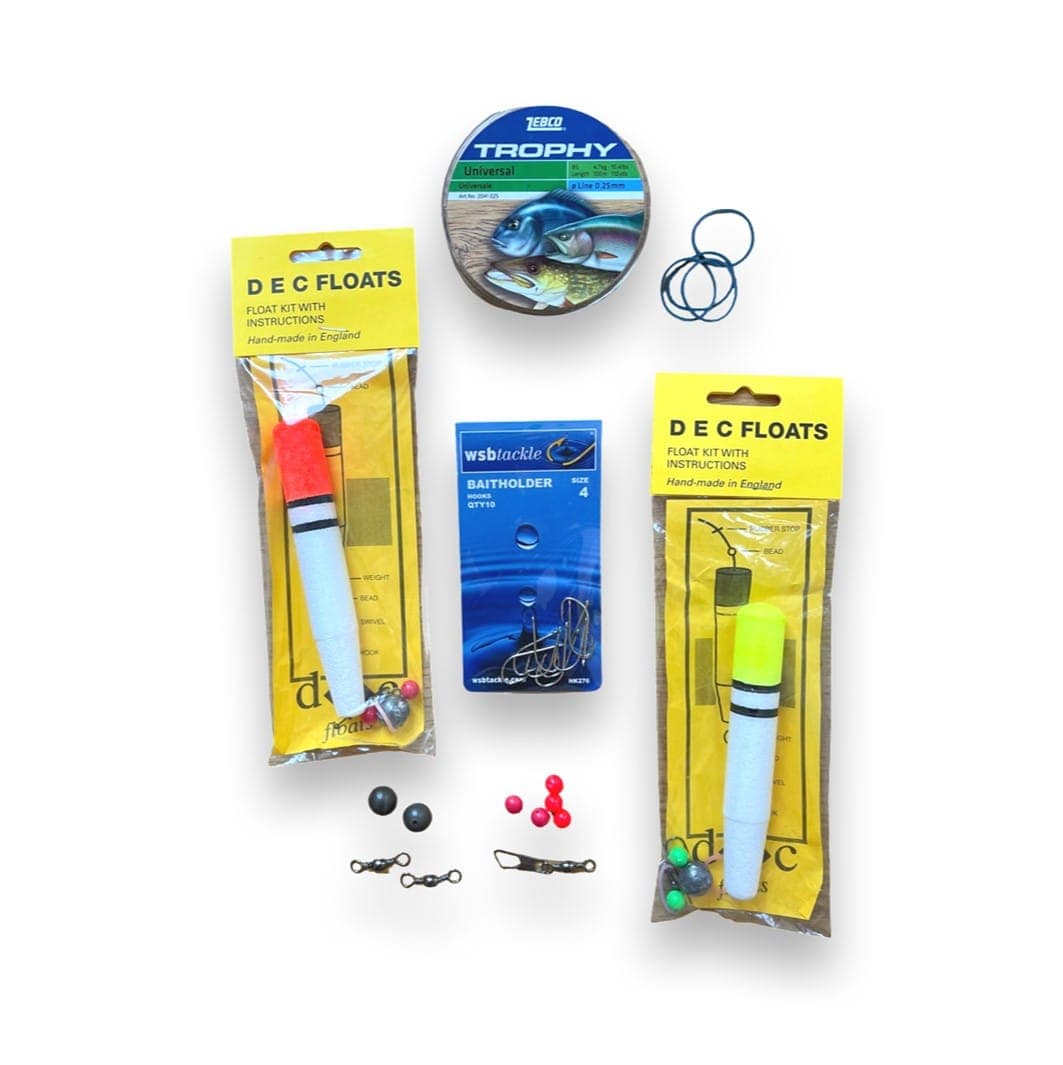
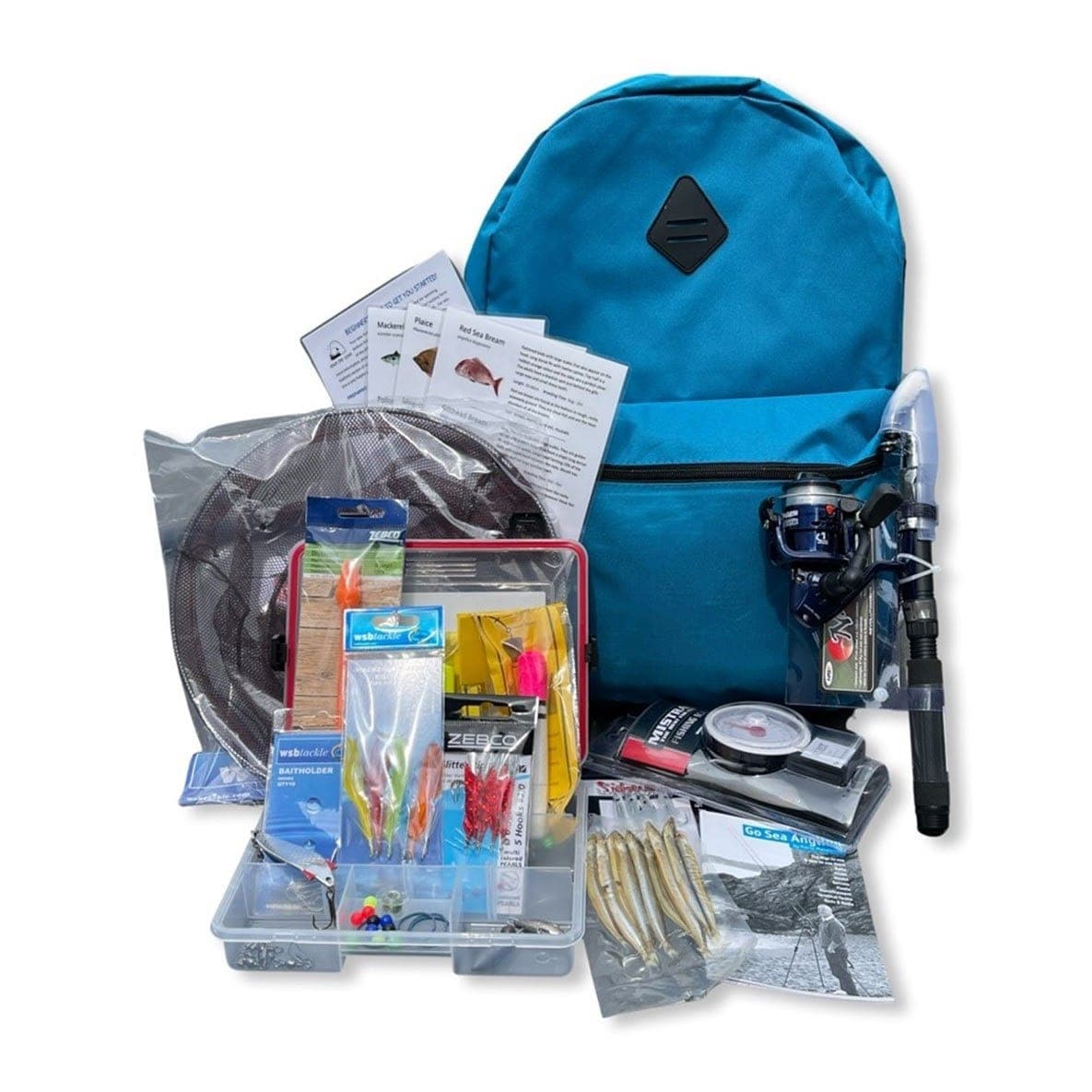
You need a compatible rod, reel and line as well as terminal tackle, bait and handling tools. Read the rod’s casting range against the weight of the complete baited rig. Check the actual contents of a tackle pack: a float pack and a bottom-fishing pack serve different methods, and neither should be assumed to include the core outfit.
Common questions
Is a bottom-fishing tackle kit a complete fishing kit?
Not necessarily. It may contain terminal tackle only. Check whether a rod, reel, line, bait and handling tools are included or needed separately.
Should I add more weight if the rig moves?
Not without checking the full casting load and suitability of the rig. If conditions exceed the outfit’s limits, stop or choose a more suitable method and location.