
Useful for your next trip
Useful kit connected to this guide, chosen to keep the next step simple.
Full megrim guide
How to spot it, where it lives, how it is caught and how to cook it — the complete guide, in one easy read.
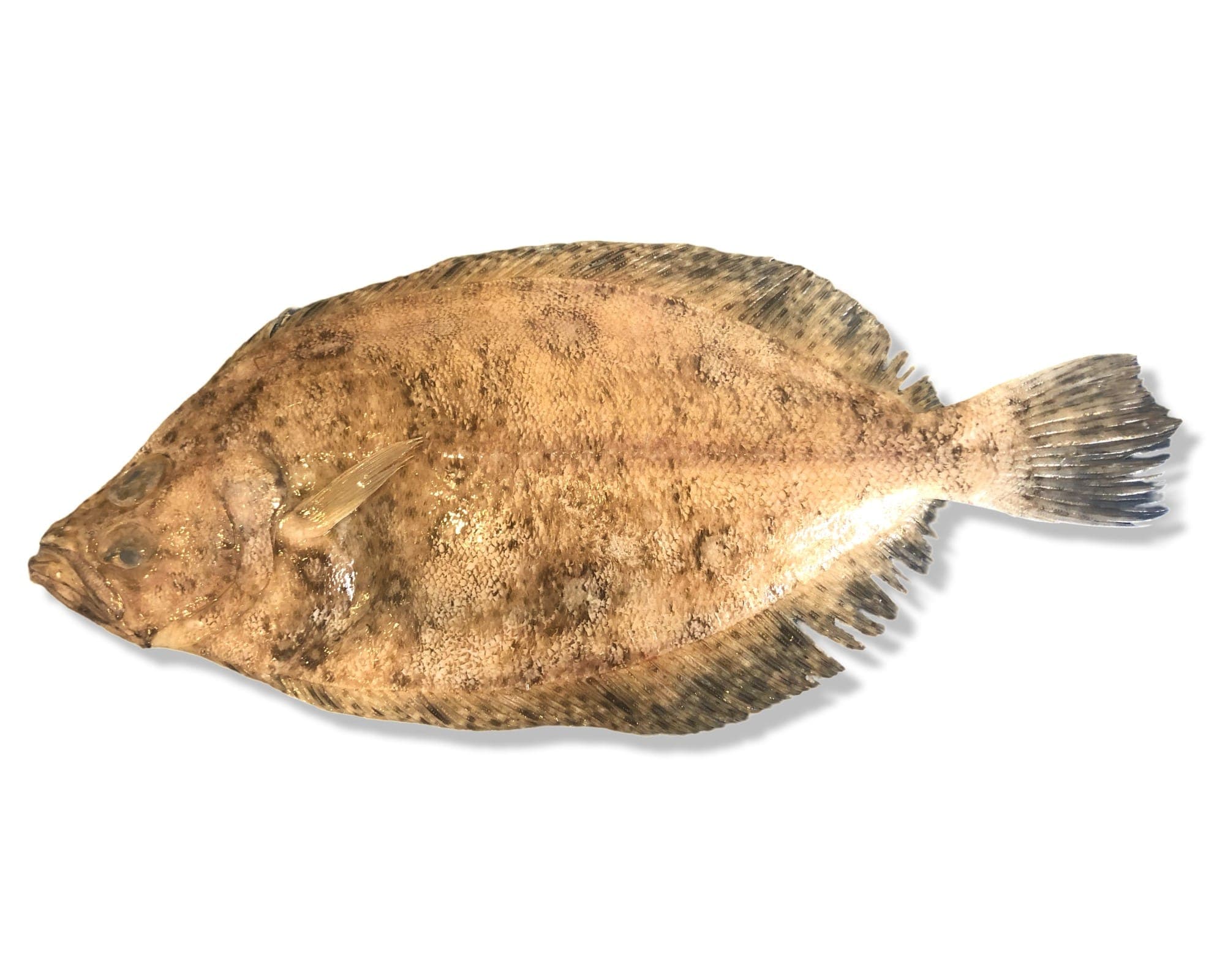
For years megrim was the fish the boats landed and somebody else got to eat. Most of the catch went straight onto lorries bound for Spain, where they have always known what we were missing. It is a slim, pale, left-eyed flatfish off the deeper sandy grounds, with thin white fillets that taste clean and faintly nutty, and it costs a fraction of what plaice or Dover sole will set you back.
How to spot it
Lay a megrim next to a plaice and the differences line up fast. Megrim is left-eyed, so with the dark side up both eyes sit on the left, the exact mirror of plaice. The body is a plain sandy brown that goes almost see-through at the fringes, and it is longer and narrower than most flatfish, with an oddly big head taking up a good third of its length. No red spots, no fuss. It is built to disappear into the seabed, but in the hand that pale, tapering shape and the left-set eyes are all you need to name it.
Where it lives
Megrim is an offshore fish through and through, lying flat on the clean sandy and muddy bottoms well off the coast. It wants open ground in proper depth, not rock pools or harbour walls, so a shore angler will almost never trip over one. Around Cornwall it works the wider sandy grounds the trawlers know, holding tight to soft seabeds where that drab colouring earns its keep. The fishing comes good in spring, when the grounds settle and the fish feed most reliably.
Related guides and gear
FAQs
Quick fish questions
Short answers for the questions families and coastal readers often ask first.
Is megrim sole good to eat?
Very. Megrim gives thin white fillets with a clean, lightly nutty taste, and it holds up well to a brisk pan-fry in browned butter. It is one of the most underrated flatfish landed in Britain, and far cheaper than plaice or Dover sole.
How do you identify a megrim?
Megrim is left-eyed, so both eyes sit on the left with the dark side up, the mirror image of plaice. Add the long, narrow body, the unusually large head and the plain sandy-brown colour that turns almost translucent at the fringes.
How do you fillet megrim?
Megrim gives four thin fillets, two off each side. Run a flexible knife down the backbone, then work it along the bones at a shallow angle to lift each fillet clean. The frame makes excellent stock, so it is worth keeping.