
Useful for your next trip
Useful kit connected to this guide, chosen to keep the next step simple.
Full plaice guide
How to spot it, where it lives, how it is caught and how to cook it — the complete guide, in one easy read.
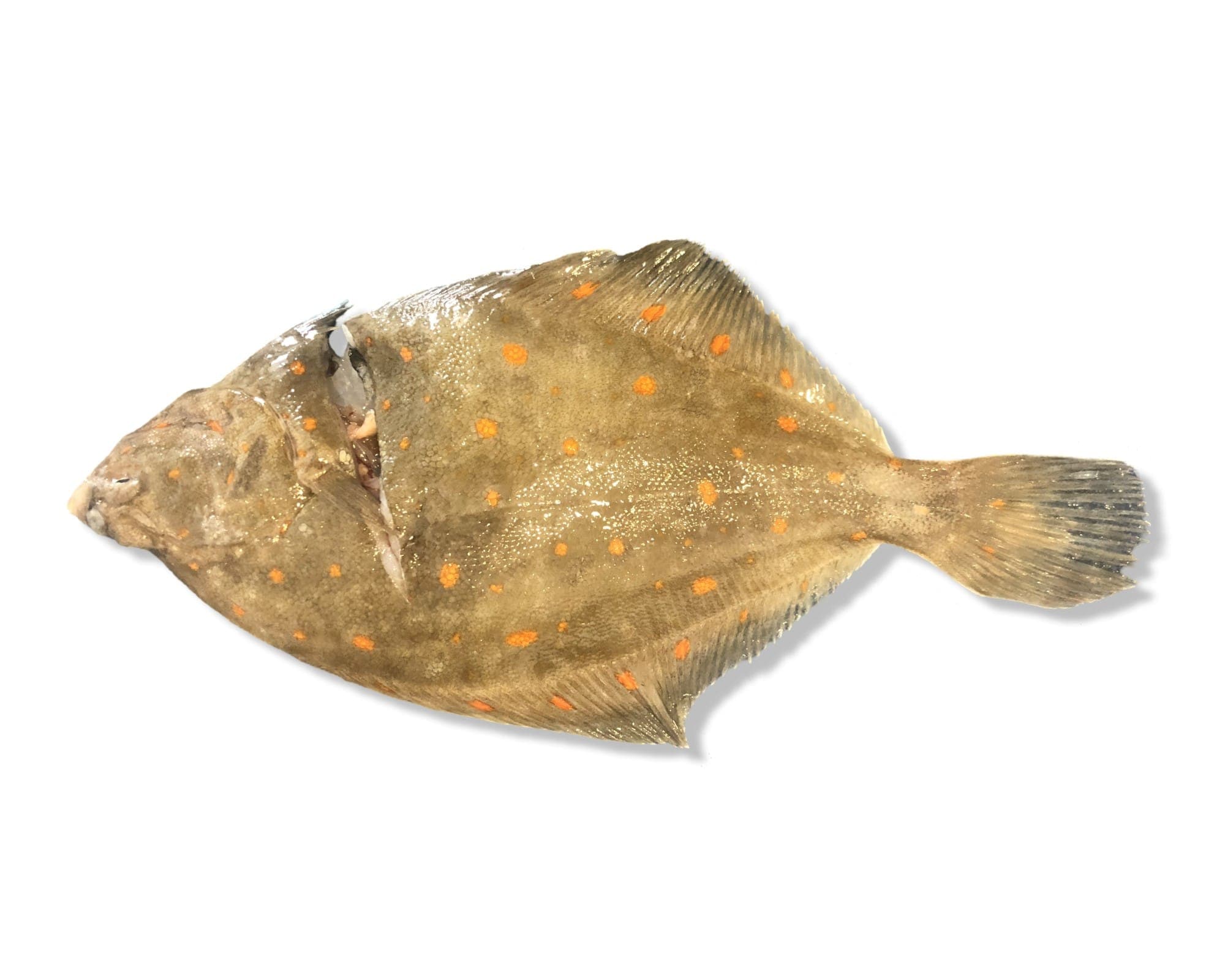
Spread that olive back scattered with bright orange spots out on the sand and you have the best-looking flatfish on our inshore ground. Plaice matters to us because it is one of the very few quality flatfish a shore angler can land without a boat: it feeds within easy casting distance of the beach. The flesh is firm and clean, flaking into broad, generous pieces that barely need cooking.
How to spot it
No flatfish is easier to name. Plaice is right-sided, both eyes on the right with the eyed side up, over an olive-to-brown back freckled with bright red and orange spots. Flip it and the underside is clean, pearly white; run a thumb across the skin and the scales feel smooth rather than rough. The clincher is a row of small bony knobs that crosses the head behind the eyes. Set it beside a flounder, which is duller and rough to the touch, or a dab, rough-scaled and muted, and those vivid spots plus the bony ridge settle it.
Where it lives
Plaice want sandy and pebbly ground off beaches and estuaries, and the good news for anyone without a boat is that they come in shallow, often feeding within a comfortable cast of the shore. Find a clean sandy run in an estuary mouth and you are in the right water; plaice tolerate brackish and even fresh water surprisingly well and will push a long way up. They move onto clean inshore ground from February to April, and that spell is when they become a real target off the beach rather than a lucky boat fish.
Related guides and gear
FAQs
Quick fish questions
Short answers for the questions families and coastal readers often ask first.
How do you fillet a plaice?
Lay the plaice dark-side up and cut down the lateral line from head to tail. Slide a flexible knife along the bones, keeping it flat, to lift one fillet, then repeat on the other side. Flip the fish and do the same, giving four broad fillets in all.
What is the plaice size limit in the UK?
The minimum landing size for plaice across much of UK and South West waters is 27cm, measured from the snout to the tail fork. Some districts set their own higher limit, so always check the local byelaw and return undersized fish carefully.
What is plaice nutrition like?
Plaice is a lean white fish, low in fat and calories but a solid source of protein, along with B vitamins and minerals such as selenium and phosphorus. It is a light, easily digestible option that suits most plates without sitting heavy.