Reel guide
Which Sea Fishing Reel
Choose a sea-fishing reel that matches the rod, line and fishing method. Compare line capacity, weight, retrieve and drag information together; a larger size number, faster ratio or higher bearing count is not automatically a better choice.
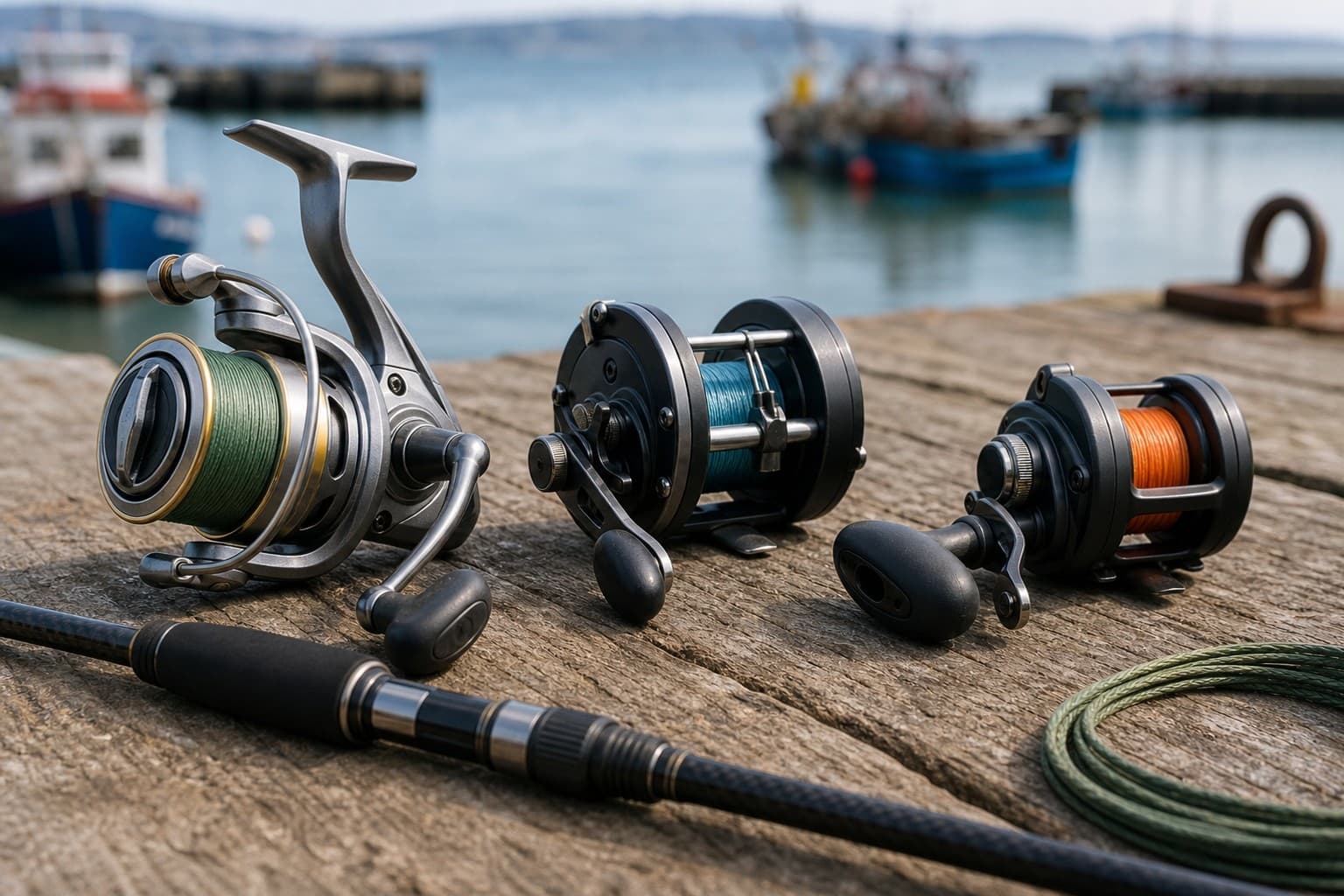
The right reel balances the rod, holds enough line for your method, and gives a smooth drag that protects your line when a fish runs.
- Best for
- Anglers matching a reel to their rod and method, from light spinning to distance beach casting.
- How it fishes
- Choose by type and size first: a smooth fixed spool covers almost everything a beginner will do.
- Tackle
- Look for a sensible size (2500-5000 for lure and float, 6000-8000 for the beach), a progressive front drag and a smooth, well-bedded retrieve.
- Safety
Stay safe
A reliable drag set correctly is your insurance against a snapped line, so prioritise smoothness over a long list of bearings.
Choose a sea-fishing reel that matches the rod, line and fishing method. Compare line capacity, weight, retrieve and drag information together; a larger size number, faster ratio or higher bearing count is not automatically a better choice.
Start with the rod and method
Identify the rod’s intended reel type and line guidance. Repeated lure casting, float fishing and heavier bait fishing place different demands on an outfit. Check that the reel fits securely and that its weight is manageable with the rod. Reel size numbers are not a universal specification across every brand.
Fixed spool or multiplier?
On a fixed-spool reel, line leaves the spool during casting and the rotor and bail wind it back during retrieval. A multiplier has a revolving spool and different casting controls. Choose a system you can use correctly; get practical instruction before changing to unfamiliar controls.
Read line capacity properly
Capacity is expressed for a particular line diameter or rating and length. Compare like with like and check the manufacturer’s line guidance. Do not assume that a quoted capacity for one line will be identical for another, or that more capacity is always needed for your method.
Common questions
Is a reel with more bearings better?
Not on bearing count alone. Compare its intended use, construction, line capacity, drag, weight and care requirements as a complete specification.
Are gear ratio and retrieve rate the same?
No. Gear ratio describes turns within the mechanism; line retrieve states length recovered per handle turn. Compare both alongside spool specifications.