Glossary guide
Fishing Jargon Buster
Fishing terms describe different things: a method such as spinning, a component such as a swivel, or a specification such as line capacity. Use the definitions below to read a product page without confusing the method with the equipment.
Fishing has its own language, and this guide turns the most common words — rigs, traces, leaders and lures — into plain, usable English.
- Best for
- New anglers and families who want sea fishing terms explained in plain English, with no silly questions.
- How it fishes
- A friendly translator: learn a few terms at a time and connect them to real tackle and real marks.
- Tackle
- Start with the words you'll see on rods, reels, line and terminal tackle: casting weight, fixed spool, mainline, leader, hook size and rig.
- Safety
Stay safe
Some terms matter for safety — shock leader, grip lead, swell, spring tide and cut-off — so they're worth understanding before you fish.
Fishing terms describe different things: a method such as spinning, a component such as a swivel, or a specification such as line capacity. Use the definitions below to read a product page without confusing the method with the equipment.
Methods: spinning, float fishing and bottom fishing
Spinning means casting and retrieving a suitable lure. Float fishing suspends bait below a visible float. Bottom fishing presents bait on or near the seabed. Trolling is drawing a lure behind a moving boat. A fishing mark is a location, not an assurance of access, permission or safety.
Actions: casting, retrieve and sink-and-draw
Casting sends the rig or lure out using the rod and reel. Retrieve means bringing line back with the reel. Sink-and-draw is a controlled change in a lure’s movement using pauses and rod movement. Learn these actions with appropriate instruction and clear space around hooks.
Terminal tackle: rig, trace, swivel and sinker
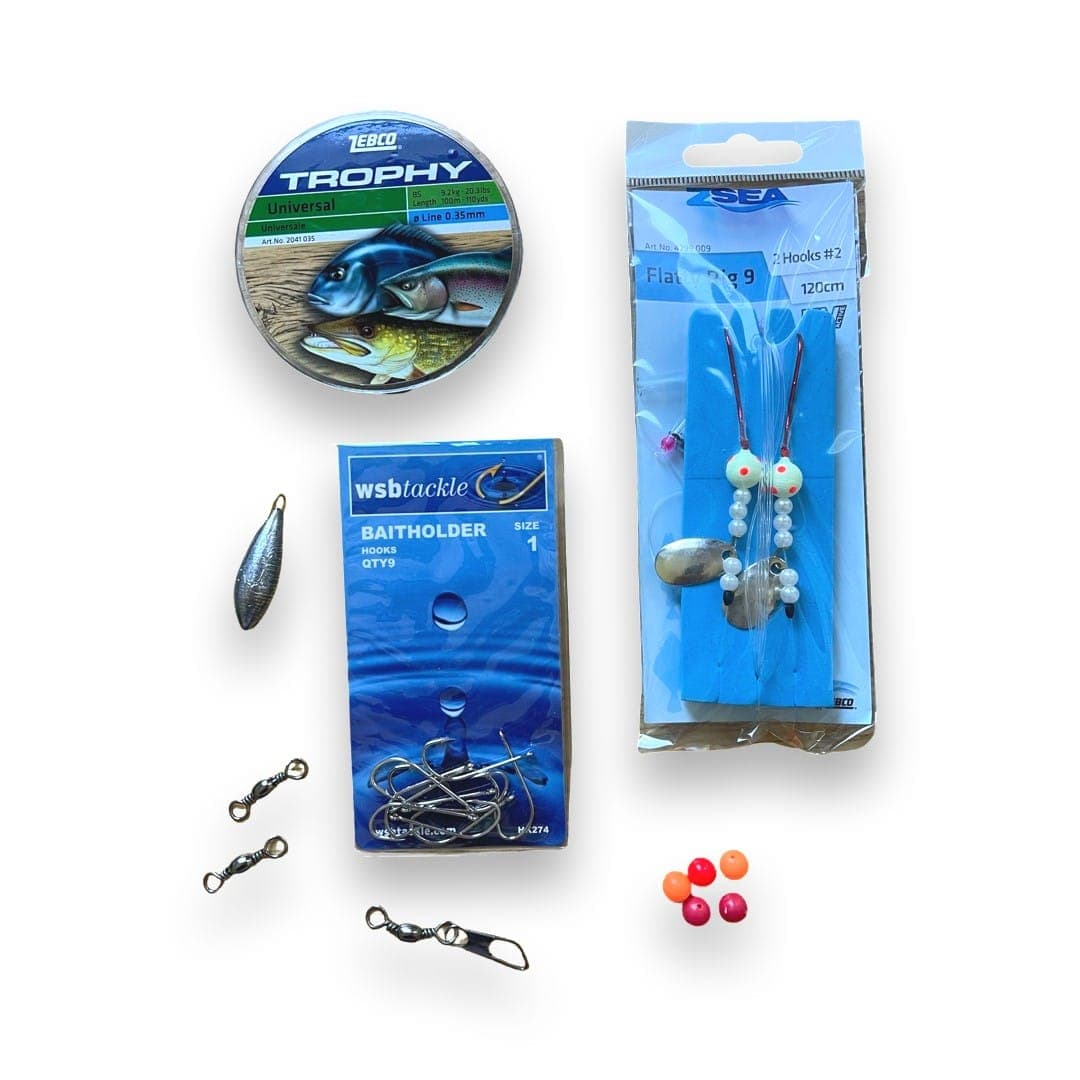
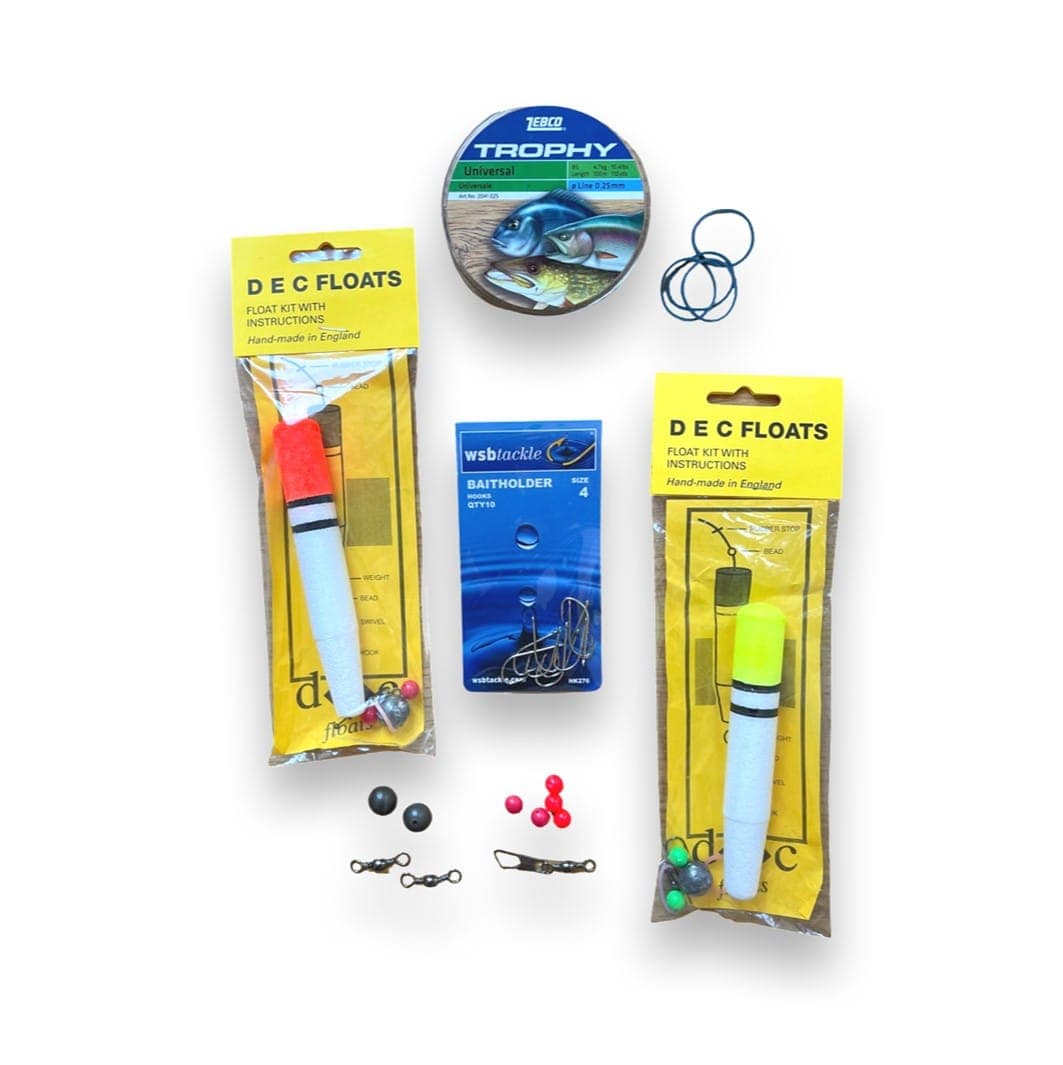
Terminal tackle is equipment at the fishing end of the line. A rig is its arranged combination; a trace is a length of line forming part of that arrangement. A swivel connects components while allowing rotation. Sinker and weight describe ballast. A bead may have a particular protective or spacing role: follow the rig diagram rather than adding parts at random.
Common questions
Does a higher gear ratio mean more line retrieved?
Not necessarily when comparing different reels. Check the separate line-retrieve-per-turn figure and the spool specification, not ratio alone.
Is a tackle kit the same as a rod-and-reel kit?
No. Tackle can mean terminal components only. The exact product contents determine what you are buying.