Fishing method
Float Fishing
Float fishing suspends a bait at a chosen depth and uses the float as a visible indicator. Match the float, loading, line and hook arrangement, then adjust depth for the location rather than assuming one setup works everywhere.

The essentials
A float suspends your bait at a chosen depth and doubles as a bite indicator, so you present the bait naturally and see every touch.
Best for
Beginners and relaxed sessions from harbour walls, piers and rocks, targeting mackerel, pollack, garfish and wrasse.
How it fishes
Calm, visual and watchful: you set the depth, watch the float and strike when it dips or slides away.
Tackle
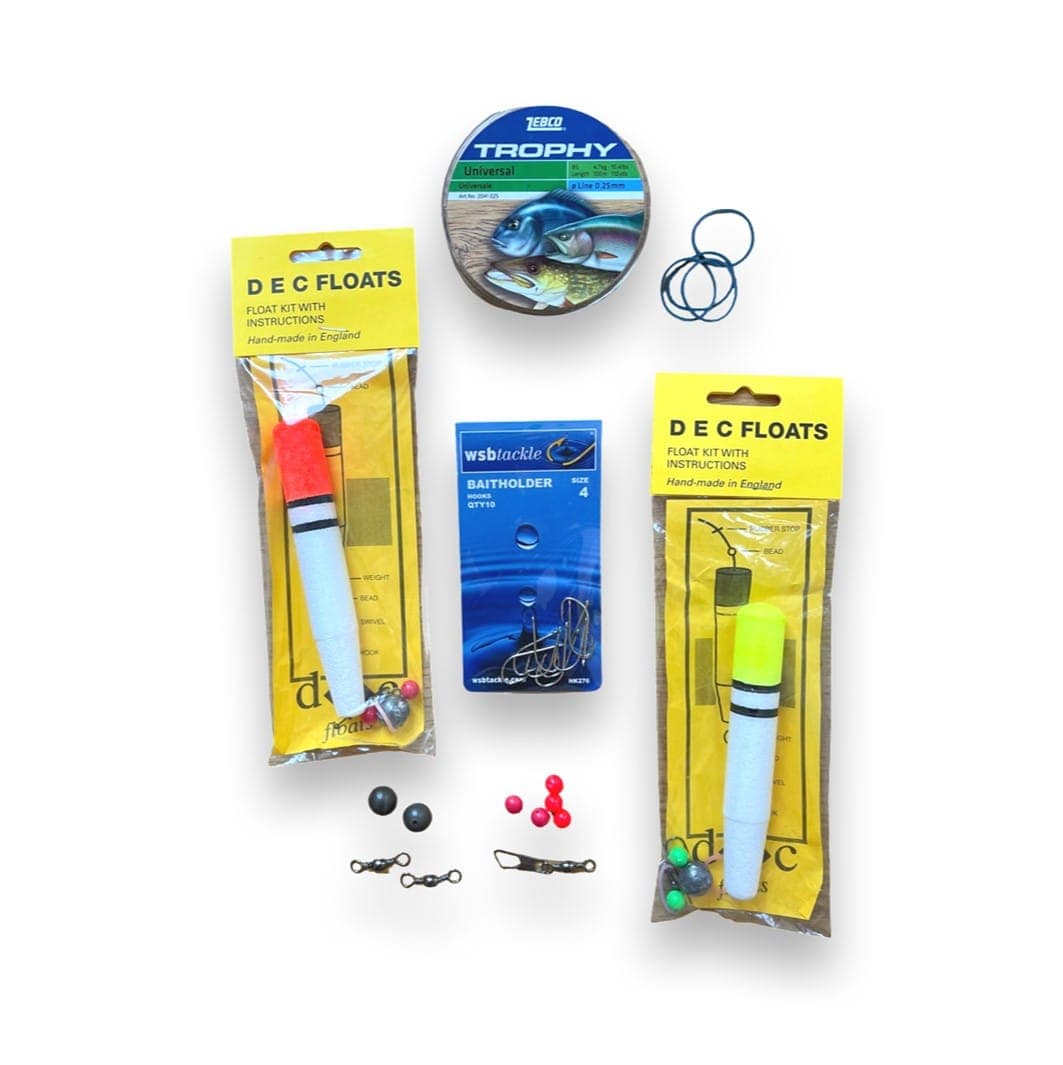
A light or multi-purpose rod, a fixed-spool reel, a float to suit the conditions, a little shot or weight and a hook to match the bait.
Stay safe
Choose sheltered marks in gentle weather, keep back from slippery edges, and watch the swell on harbour walls and rocks.
Float fishing suspends a bait at a chosen depth and uses the float as a visible indicator. Match the float, loading, line and hook arrangement, then adjust depth for the location rather than assuming one setup works everywhere.
Fixed and sliding floats
A fixed float is attached at a set position on the line. A sliding float moves along the line until a stop limits its travel, allowing the fishing depth to be adjusted. Follow the supplied diagram for the exact float; beads, stops and weights have specific places and should not be assembled from a guess.
Match the float and its loading
Read the float’s loading guidance and use the maker’s recommended arrangement. Too much loading can submerge the float; too little can prevent it sitting as intended. Check the complete casting load against the rod rating, including the float, weights and bait. Get practical help if the required parts or ratings are unclear.
Set and reassess the bait depth
The distance between the float’s stop position and the hook affects how far below the float the bait can hang. Begin with local guidance for the permitted location and target species. If the bait catches the bottom or the float drifts into obstructions, bring the rig back and adjust on land rather than leaning out after it.
Common questions
How deep should I set a sea-fishing float?
It depends on the location, target species and rig. Use local advice and the float’s instructions, then adjust under control; there is no universal depth.
Why does my float keep sinking?
Check loading, obstructions and conditions as well as the possibility of a bite. Reassemble or adjust on land if the float is not sitting as its instructions describe.