Tackle guide
Sea Fishing Kits
Understand the rod, reel, line and tackle in a first sea-fishing kit, check that they work together and prepare the outfit before a trip. For choosing between kit formats, use our separate beginner comparison.
Tackle guide
Understand the rod, reel, line and tackle in a first sea-fishing kit, check that they work together and prepare the outfit before a trip. For choosing between kit formats, use our separate beginner comparison.

Guide, gear and practical advice
Start with the beginner comparison, then choose a balanced rod and reel before adding the small set of rigs and tackle needed for a first trip.
By the Down The Cove editorial team in Cornwall
Shop the equipment used
Shop the range
Hand-picked Down The Cove ranges that pair with this read.
Down The Cove Editorial Team
Cornish coastal retailer with practical sea-fishing kit and tackle knowledge.
Reviewed by
Down The Cove Editorial Source Check
Source-linked editorial guidance, not an independently verified expert endorsement or first-hand product test.

Learn what the rod, reel, line and terminal tackle do, and check compatibility before assembly.
Your first setup
Follow rod, reel and rig specifications and get practical help with unfamiliar casting.
Check the notices and conditions for the place you plan to visit.
Kit for this
Check tide, weather and local rules. Use a clear casting area and get practical instruction when needed.

First-outfit component checklist
Check the rod, reel, line and terminal tackle as a compatible system. Follow manufacturer instructions and get practical help before using an unfamiliar rig or casting method.
Location decides rod length, casting demand and terminal tackle more reliably than an all-purpose label.
| Component | Purpose | Check before use | Do not assume |
|---|---|---|---|
| Rod | Supports the chosen casting and fishing method | Casting range and secure joints | Every travel rod suits an exposed beach |
| Reel and line | Stores and controls the line | Line guidance, condition and drag | Any reel and line match any rod |
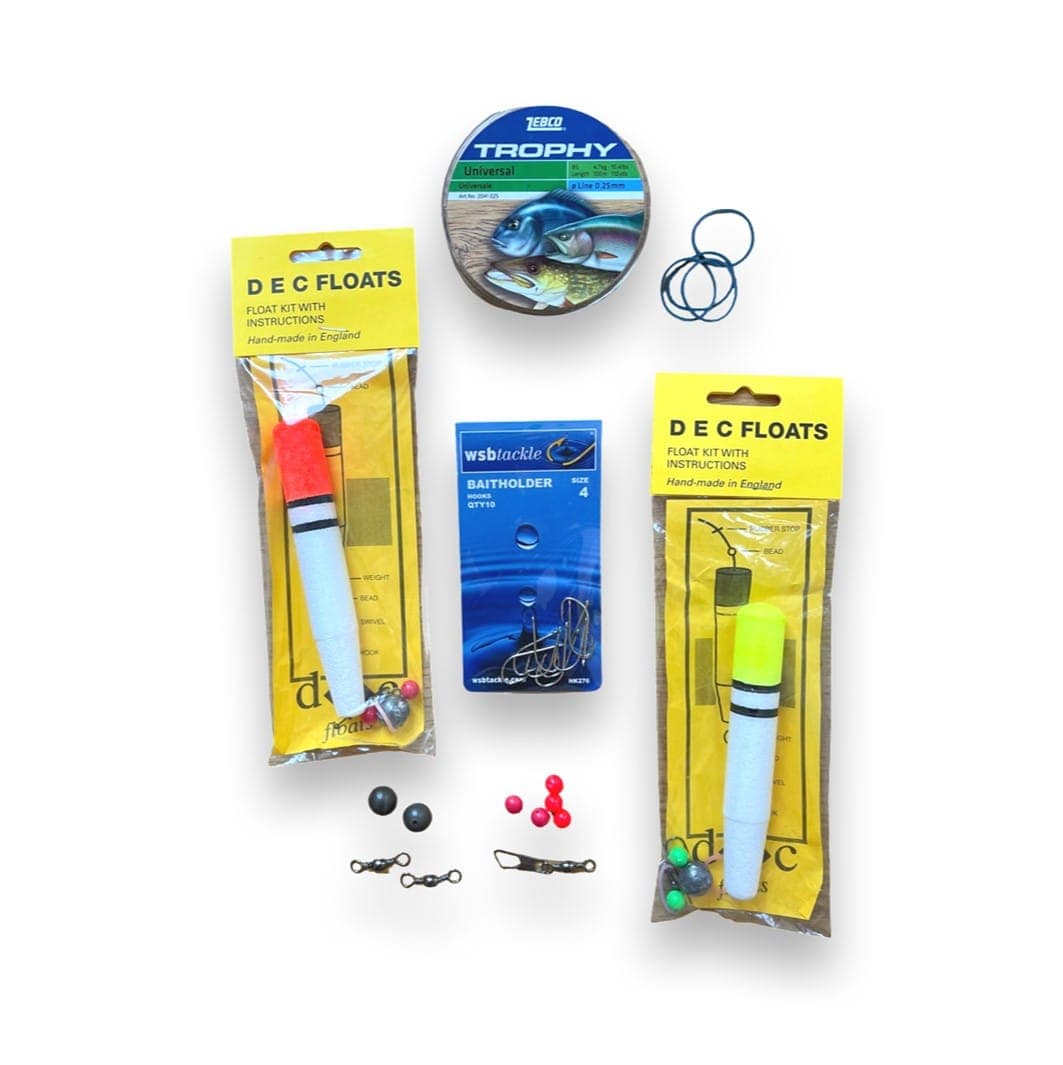
| Rig, weight or lure | Presents the bait or lure | Method, connections and full casting load | A tackle pack includes a rod and reel |
Tick off the checks as you work through them. This is a personal reminder, not a safety approval.
Understand the rod, reel, line and tackle in a first sea-fishing kit, check that they work together and prepare the outfit before a trip. For choosing between kit formats, use our separate beginner comparison.
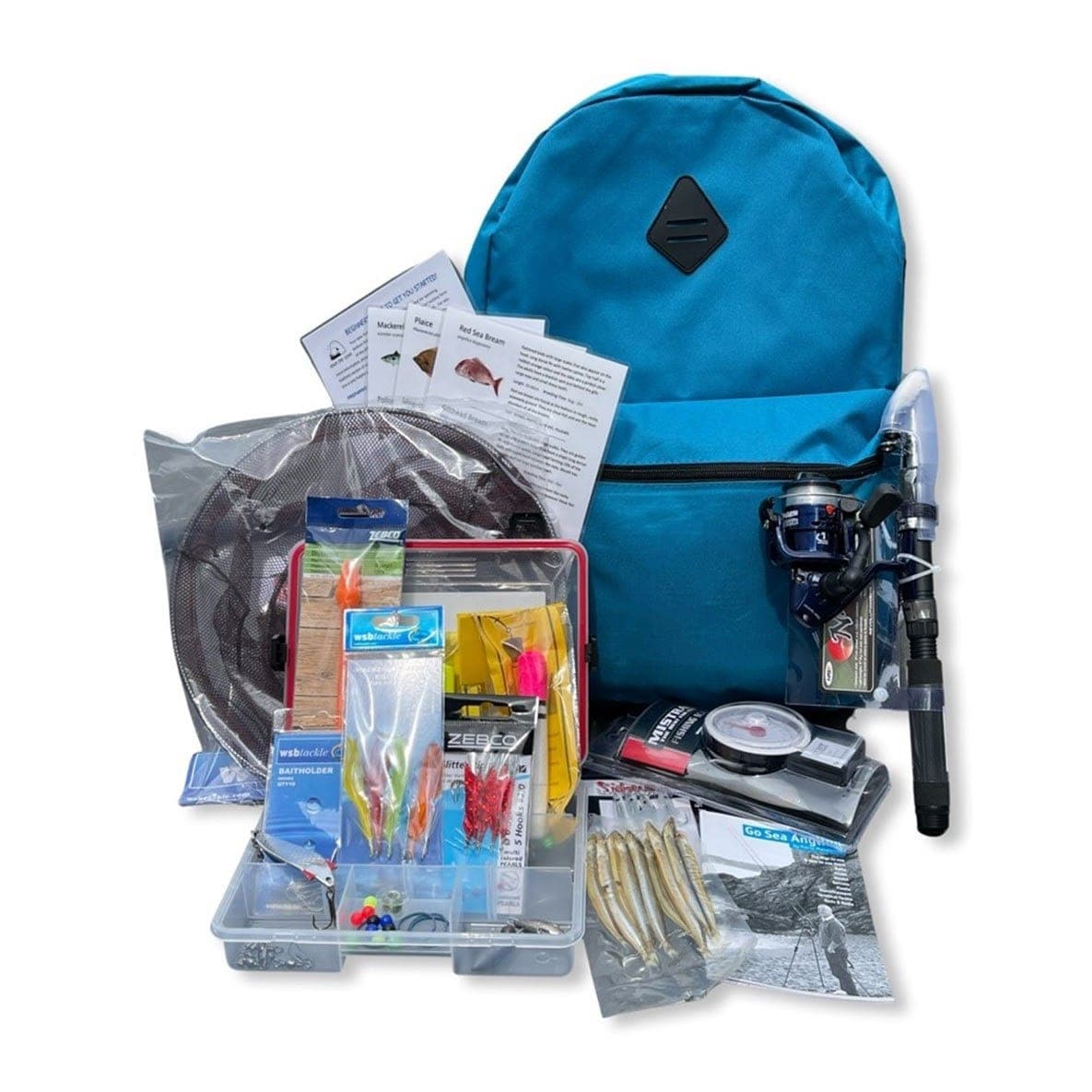
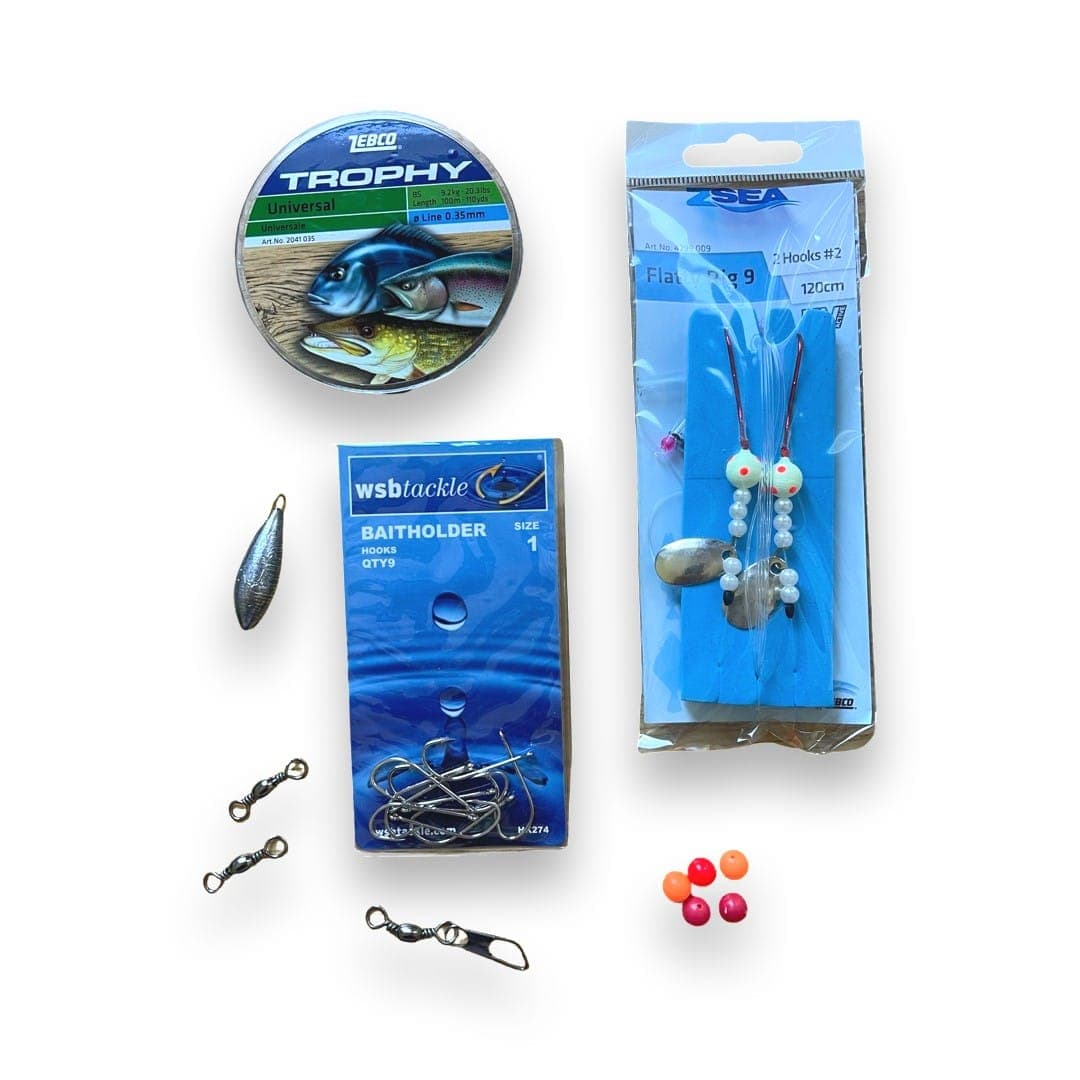
The core is a rod, reel and suitable line, with a rig, hooks and weights or lures appropriate to the intended method. Keep pliers or an unhooking tool and secure hook storage with the kit. A product called a tackle kit may contain terminal tackle only, not a rod and reel: read the contents before assuming it is a complete outfit.
Read the rod’s casting range, reel and line guidance and the rig or lure specification. The full casting load includes the weight of the rig and bait, not just the lead. If the ratings or connections are unclear, ask the retailer or a competent instructor before casting.
Follow the manufacturer’s instructions for the rod sections and reel seat. Align the guides, check that joints are secure without forcing them, and inspect the line for damage. Keep hooks covered while checking the outfit, with people well clear of any practice movement.
Float fishing, bottom fishing and lure fishing use different terminal arrangements. The dedicated beginner-rigs guide covers those choices. Do not attach an unfamiliar rig simply because it came in a mixed tackle box; learn its setup and operating limits first.
Check knots and connections, set the reel drag using its instructions and confirm there is a clear casting area. Have an experienced angler demonstrate unfamiliar techniques. This component guide is not a substitute for hands-on casting instruction or location-specific safety advice.
Follow the manufacturer’s cleaning instructions, remove bait and loose line, dry equipment before storage and inspect hooks and connections before the next outing. Replace damaged components rather than hiding them in the tackle bag. Use the buying comparison only when deciding what to replace or add.
Check what you already own before replacing a whole outfit. A missing rig, unsuitable line or damaged connection is a different problem from needing a new rod and reel.
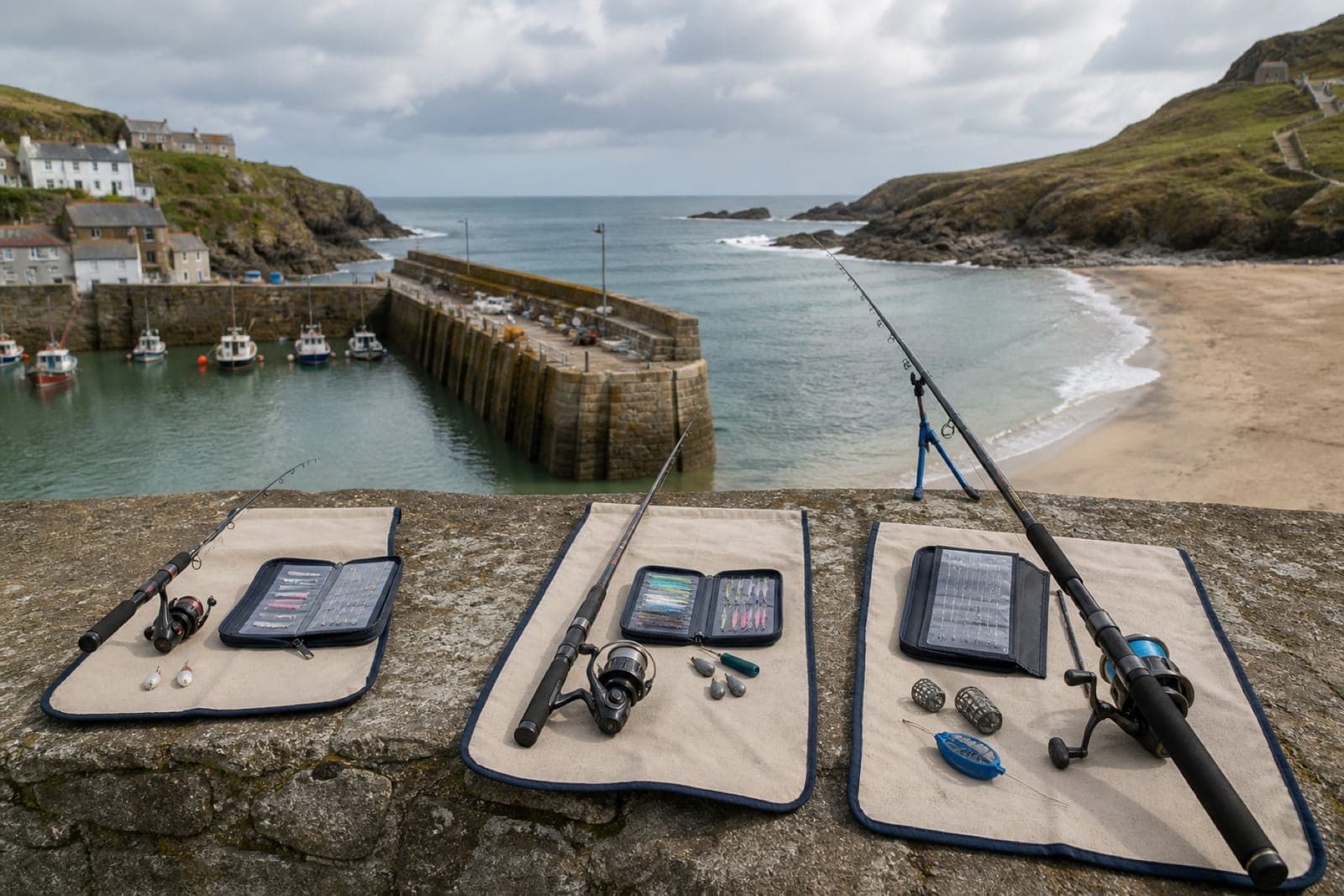
Lay out the outfit on clear ground with hooks covered. Make three groups: rod and reel; line and terminal tackle; handling and storage equipment. Compare each group with your intended method. A float pack will not fill the same gap as a bottom-fishing pack, and neither automatically supplies a rod, reel or unhooking tool.
Use the contact page to send the exact rod and reel names, the casting rating printed on the rod, the line specification and a photo of the unopened rig or its packaging. Tell us whether you plan to float fish, bottom fish or use lures. Those details are more useful than asking for the strongest or biggest kit. Do not test an uncertain combination by casting it.

No. A terminal-tackle kit can be only rigs and accessories. Check the product’s included-items list and selected option.
This page explains components and preparation. The separate beginner comparison helps you choose a kit format for your location and transport needs.
No. Choose terminal tackle for the method, conditions and compatible outfit. See the beginner-rigs guide and ask for practical instruction if unsure.
Not necessarily. A terminal-tackle pack may contain rigs, floats or weights only. Check the exact contents and selected option on the product page.
If the core outfit is sound and suitable, compare the missing terminal tackle first. If you cannot identify its ratings, or want to change fishing method, use the separate beginner-kit comparison before buying. Check current product contents and selected options; photographs may show equipment that is not included.