What size fishing rod does a child need?
Length and weight are the two things that decide whether a child enjoys fishing or gets fed up within ten minutes. A rod that is too long is hard to control, catches on railings and other people, and makes casting tiring. A rod that is too heavy ends up propped on the floor. As a rough guide, think about how tall the child is and how strong their arms are rather than going by age alone.
For younger children a rod of around 4 to 5ft is plenty. From about eight, a 5 to 6ft rod is a comfortable size for piers, harbour walls and rocks, where you rarely need to cast far. Lighter is better at every age, and a rod that breaks down into two pieces or collapses telescopically is far easier to carry to the water and fit in the car.
Hand size matters too. Check that the child can hold the handle with the reel seat comfortably under their hand and reach the reel handle without stretching. If they have to grip it awkwardly, the rod is too big for them for now.
Which fishing rod suits which age?
Roughly 4 to 7: start with crabbing rather than a rod. A hand line, a bucket and a bit of bait off a harbour wall gives quick results, short attention spans are well served, and there are no casting hooks to worry about. A kids crabbing kit with bucket and line covers it, and our guide to the best crabbing kits for kids explains what to look for. If they are desperate for a proper rod, a short combo used with an adult doing the casting works well.
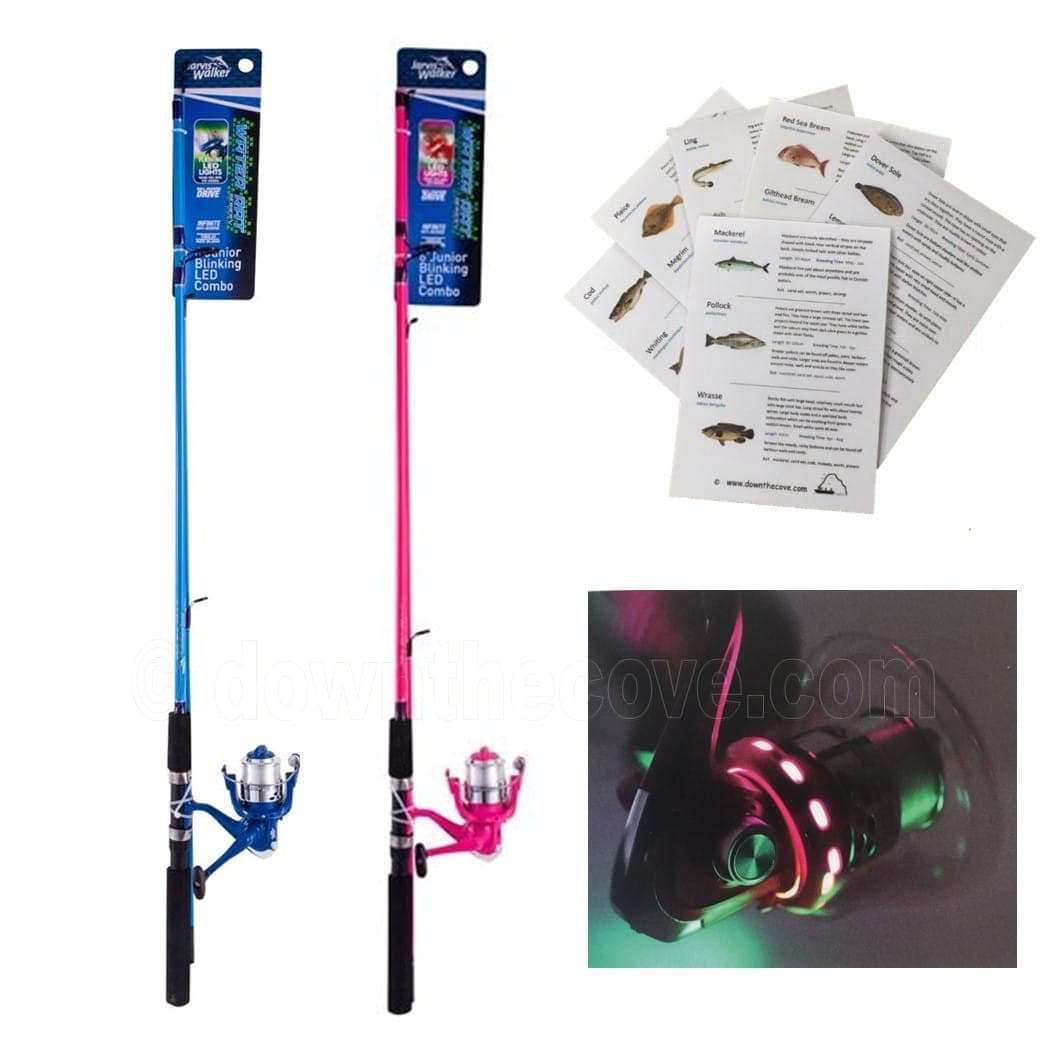
Roughly 8 to 11: this is the age most children are ready for their own junior rod. They can learn to cast underarm, wind in steadily and watch a float. The Jarvis Walker Water Rat LED 6ft junior combo is a good example of what to look for: a two-piece 6ft rod with a reel supplied spooled with line, so there is nothing to set up before the first trip. The flashing reel lights are a gimmick, but they do keep younger anglers interested.
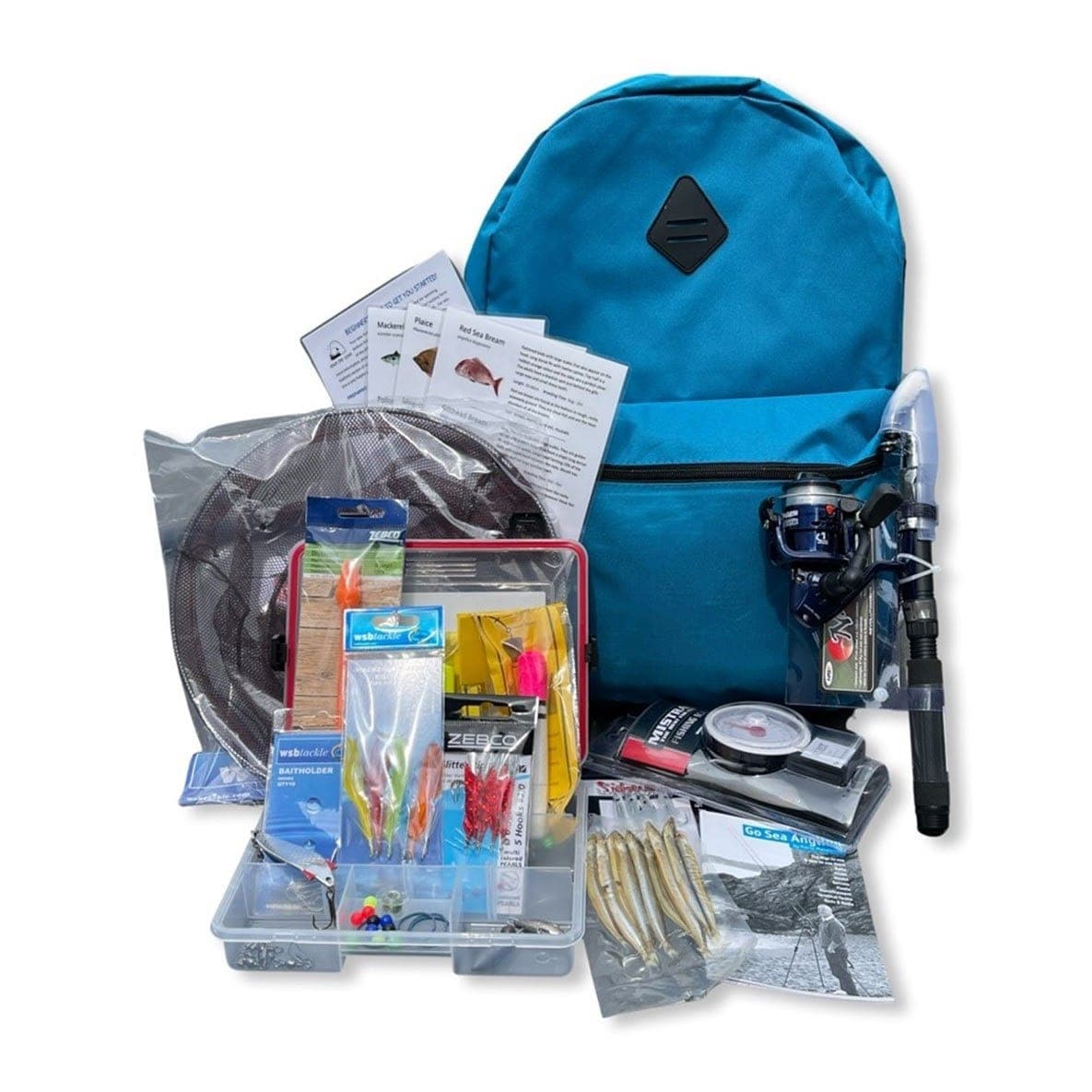
Roughly 12 and over: older children with a season or two behind them can handle a slightly stiffer rod, overhead casting and fishing for mackerel. A compact sea kit such as the Telescopic Plus travel sea fishing kit, built around a 5ft telescopic rod and reel combo with a backpack and waterproof tackle box, is easy to carry and gives them room to try different methods. You can see everything we stock for younger anglers in our junior fishing collection.
Rod and reel combo or buy them separately?
For a child's first rod, a combo is almost always the better choice. The rod and reel are matched, the reel usually comes with line already loaded, and you avoid the common mistake of putting a heavy reel on a light rod or the wrong line on the spool. It is also simpler to sort out on the pier when something goes wrong.
Buying separately makes sense later, once a child knows what kind of fishing they enjoy and is ready for something more specific. At that point you can pick a rod for the job and a reel to suit it. Until then, keep it simple.
Spinning reel or closed-face reel for children?
Most junior combos come with a small fixed-spool spinning reel, the type with an open spool and a wire bail arm that you flip over to cast. They are the standard reel for float fishing and light sea fishing, and learning to use one early is a skill a child keeps for years. The trickiest bit is remembering to hold the line with a finger and open the bail before casting, then close it before winding. An adult demonstrating a few times usually sorts it.
Closed-face reels hide the spool under a cover and cast with a push-button. They are easy for very young children and tangle less on the cast, but they suit light freshwater fishing better than the sea. Whichever reel you choose, rinse it in fresh water after a saltwater trip and let it dry before putting it away.
Are telescopic fishing rods good for kids?
Telescopic rods slide down into a short tube, which makes them easy to carry in a backpack, keep in the car for holidays and pack away quickly when a child has had enough. For piers and harbours where you are not casting far, they work well, and many families like having one ready for spontaneous trips.
The trade-off is that they are generally less refined than a two-piece rod of the same length, and the sections need wiping and drying after use so sand and salt do not make them stick. Teach children to extend the sections firmly and in order, and to collapse the rod before walking anywhere with it.
What should children fish for first?
Crabs are the best starting point for most families. Shore crabs feed off harbour walls and pontoons for much of the year, and children get to see what they have caught straight away. Put them back gently where you found them at the end of the session. A crab drop net is a good next step once a hand line gets old.
After crabbing, float fishing from a pier or harbour wall is the natural progression. A small hook, a little bait and a float that bobs under when a fish bites gives children something to watch, and it suits smaller fish close in. The float fishing tackle kit adds two complete float rigs and a spool of line to a junior rod, and our guide to fishing from a harbour wall covers where and how to start.
Mackerel feathers are best kept for older children, usually 12 and over. A set of feathers has several hooks, and when a shoal comes through it is common to land more than one fish at once, which means flapping fish and loose hooks. Supervise closely, and have the adult unhook the fish. Our mackerel fishing guide explains when and where to try. If you plan to keep any fish, only take what you will eat and check current MMO and local IFCA guidance for minimum sizes and any limits.
How do I keep children safe when fishing?
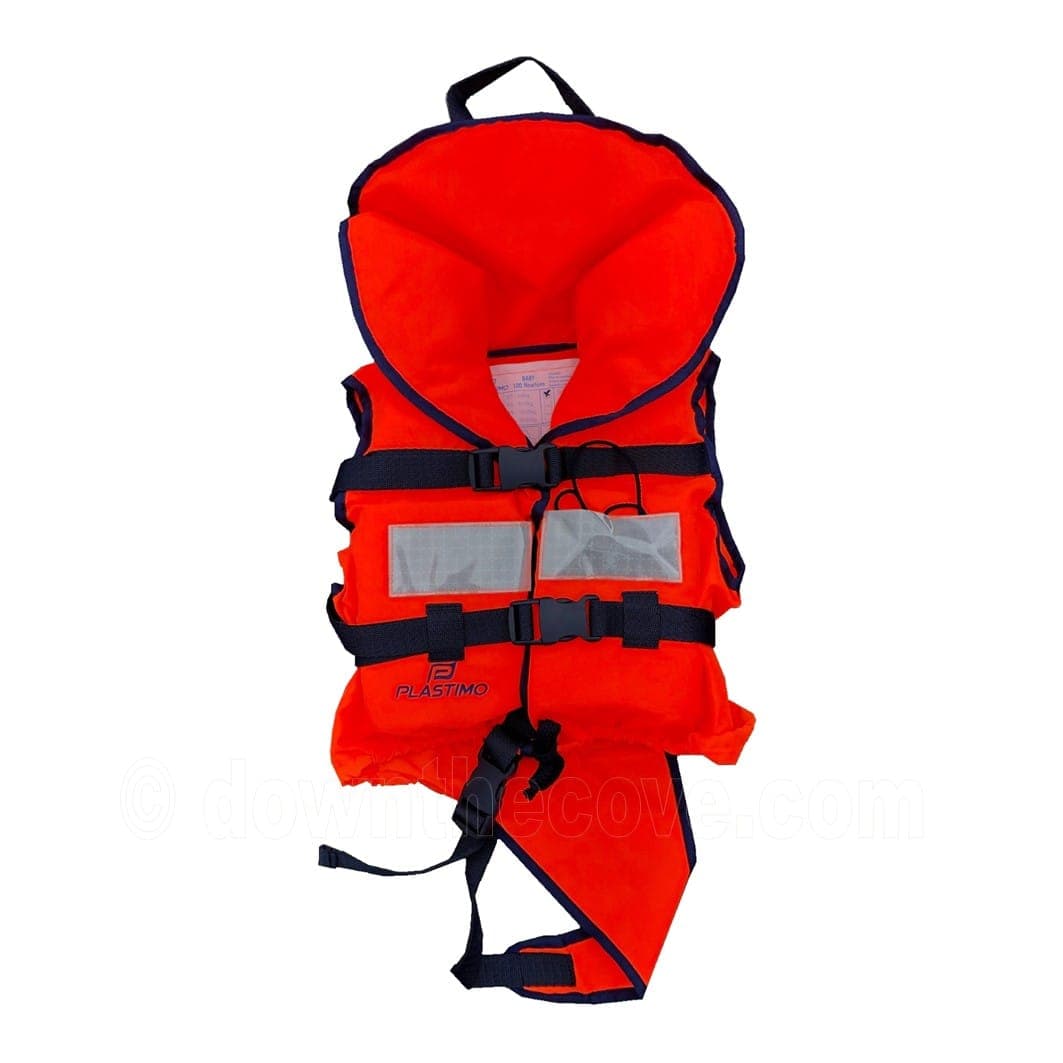
Water is the biggest risk, not hooks. Children should always be supervised by an adult close enough to grab them, not watching from a bench. Near deep water, including harbour walls, piers, rocks and boats, a properly fitting lifejacket or buoyancy aid is sensible. A lifejacket such as the Plastimo child's 100N lifejacket is sized by body weight and designed to turn a child face-up in the water, which a basic buoyancy aid does not do. Neither replaces supervision.
Avoid slippery steps, weed-covered rocks and wave-washed edges, and keep away from the edge when the sea is rough. Check tide times before you go, so you are not cut off on rocks or a beach, and remember that the shore gets cold and dark quickly outside summer. Pack warm layers, a hat and a torch or headlamp, and head home before a child gets cold. Our coastal safety guide goes through the basics in more detail.
Hook safety and barbless hooks
Most hook accidents happen while casting or unhooking, so those are the moments to slow down. Teach children to look behind them before every cast and to keep a clear space around them, and do the overhead casting yourself until they are reliable. Sunglasses or clear glasses are worth wearing for eye protection.
Barbless hooks, or barbed hooks with the barb squashed flat using pliers, are much easier to remove from a fish, clothing or a finger. They make unhooking quicker and kinder to fish you are returning. Keep spare hooks in a closed box, never loose in a pocket, and have an adult handle unhooking with a disgorger, such as the Zebco disgorger priest, until the child has been shown how. If a hook goes deep into skin, do not try to force it out; get medical help.
When should a child move up to a proper beach rod?
A full-length beach rod, often 12ft or more, is built for casting heavy weights a long way from open beaches. That needs height, strength and good casting technique, and the long rod and heavy lead can be dangerous in a crowd. Most children are not ready until their mid-teens, and some later. A good sign is when they can cast a junior rod overhead accurately and safely, tie their own rigs and are asking to fish beaches rather than piers.
Until then, a 6 to 8ft rod from a pier, harbour or rock mark will catch plenty. When the time comes, our guide to beach and surf rods explains what to look for.
Quick checklist for a child's first fishing trip
Rod and reel: a short, light combo around 5 to 6ft with line already loaded, or a crabbing line for under-sevens.
Tackle: floats, small hooks (barbless or barb flattened), a few weights and swivels, plus bait. Feathers only for older children.
Safety: a correctly sized lifejacket or buoyancy aid near deep water, an adult within reach, tide times checked, and a small first aid kit.
Comfort: warm layers, a hat, sun cream in summer, snacks, a towel for wet hands and a torch if there is any chance of staying past dusk.
Tools: a disgorger or pliers for unhooking, scissors for line and a bag to take all old line and rubbish home with you.