Rod guide
Beach & Surf Rods
Choose a beach or surf rod by the method, full casting load, reel compatibility and transport needs. Rod length alone does not tell you whether it suits your tackle or the beach you plan to fish.

A proper beachcaster gives the leverage and casting weight to reach distant gutters and hold bottom where shorter rods simply can't.
- Best for
- Anglers fishing open surf beaches who need distance and the backbone to hold bottom in a running sea.
- How it fishes
- Long and powerful: built to cast a grip lead beyond the breakers and keep your line above the surf.
- Tackle
- Look for an 11-13ft length (12ft is the popular all-rounder) rated around 100-200g, paired with a large 6000-8000 fixed-spool reel.
- Safety
- Power casting needs space and a shock leader; match the lead to the rod's rating and keep well clear of other people when you cast.
Stay safe
Power casting needs space and a shock leader; match the lead to the rod's rating and keep well clear of other people when you cast.
Choose a beach or surf rod by the method, full casting load, reel compatibility and transport needs. Rod length alone does not tell you whether it suits your tackle or the beach you plan to fish.
Start with the fishing you will actually do
Bait fishing from an open beach and repeatedly casting a light lure are different jobs. Before comparing rods, identify the method, the likely complete rig or lure weight and the conditions in which you can fish safely. Do not buy a heavier rod simply because the location has surf in its name.
Read the casting range
The printed casting range describes the intended load, not a promise about the size of fish you can catch. Include lead, rig and bait in the total for a bait setup. For lures, check the complete assembled lure weight. If a rig falls outside the range, change to a suitable combination rather than trying a harder cast.
Check reel and line compatibility
Look for the intended reel type and the manufacturer’s line guidance. Confirm that the reel fits securely and that the outfit is manageable for the angler. A product described as a rod is not necessarily a combo; a photographed reel may be separate.
Length in use versus length in the car
Compare assembled length, number of sections and packed length separately. A multi-piece travel rod may solve a storage problem but still needs its joints assembled and checked correctly. Check transport space before ordering, especially when travelling with other equipment.
Build the real shopping list
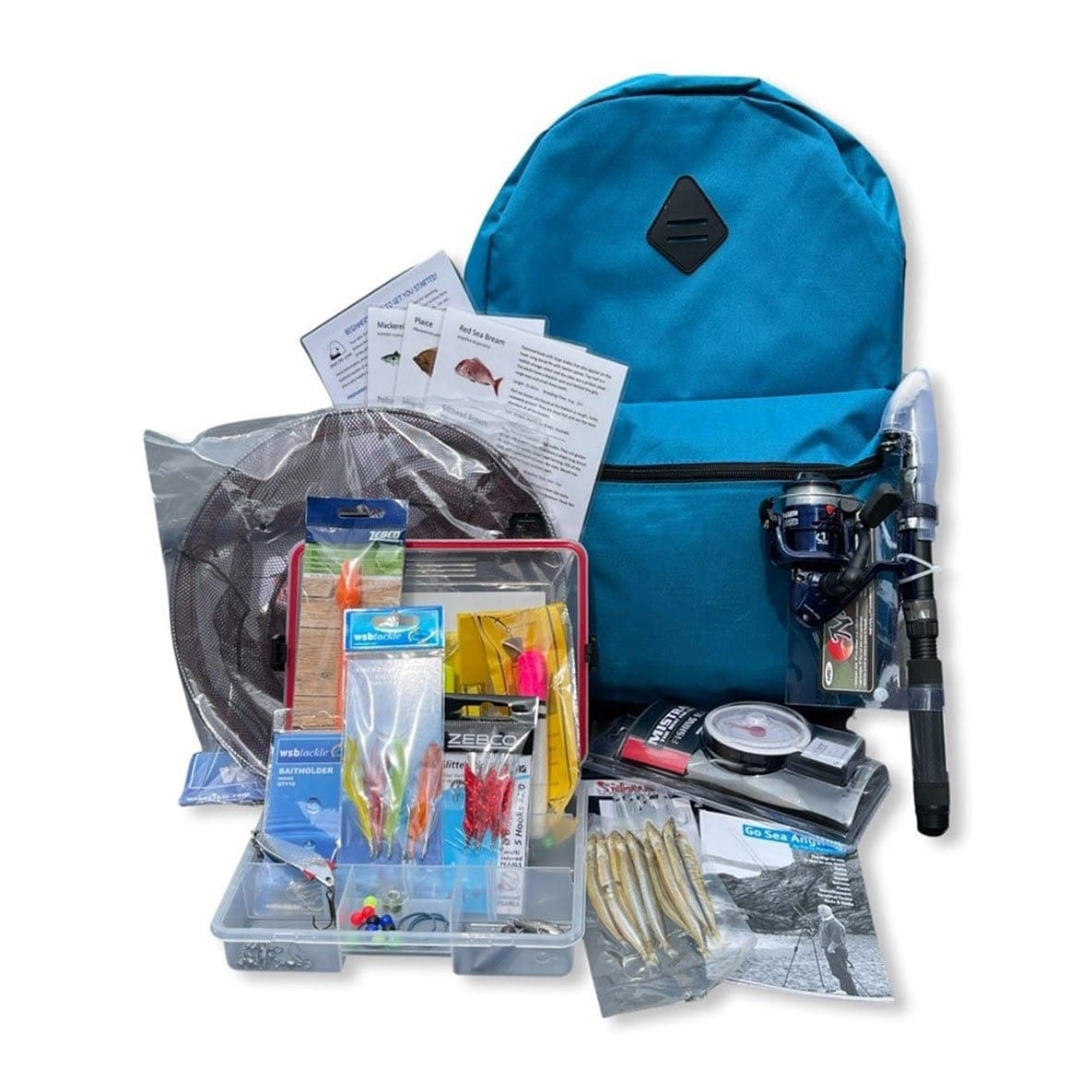
Allow for the compatible reel and line, terminal tackle, handling tools and safe storage as well as the rod. Check what a combo supplies and what it leaves out. Use current product contents and selected options, not an old list of recommended models or a sale price copied into a guide.
Distance is not the only consideration
A longer rod does not guarantee a longer or safer cast. Technique, load and clear space matter. Get practical casting help and assess weather, tide and the return route before fishing. Equipment choice cannot compensate for unsafe waves or access.
Before you order
Write down the method, complete casting load, required reel type and maximum packed length. Compare those four checks on the product page. If a specification is missing, use our contact page to confirm it before buying.
Common questions
Is a longer beach rod always better?
No. Choose a manageable rod suited to the method, load and location, then check packed length and reel compatibility. Length alone is not a performance guarantee.
Does a beach rod include a reel?
Only if the selected product explicitly includes one. Check whether it is a rod, a combo or a broader kit, and read the contents.