

Details
About the Plastimo 100N Child's Lifejacket
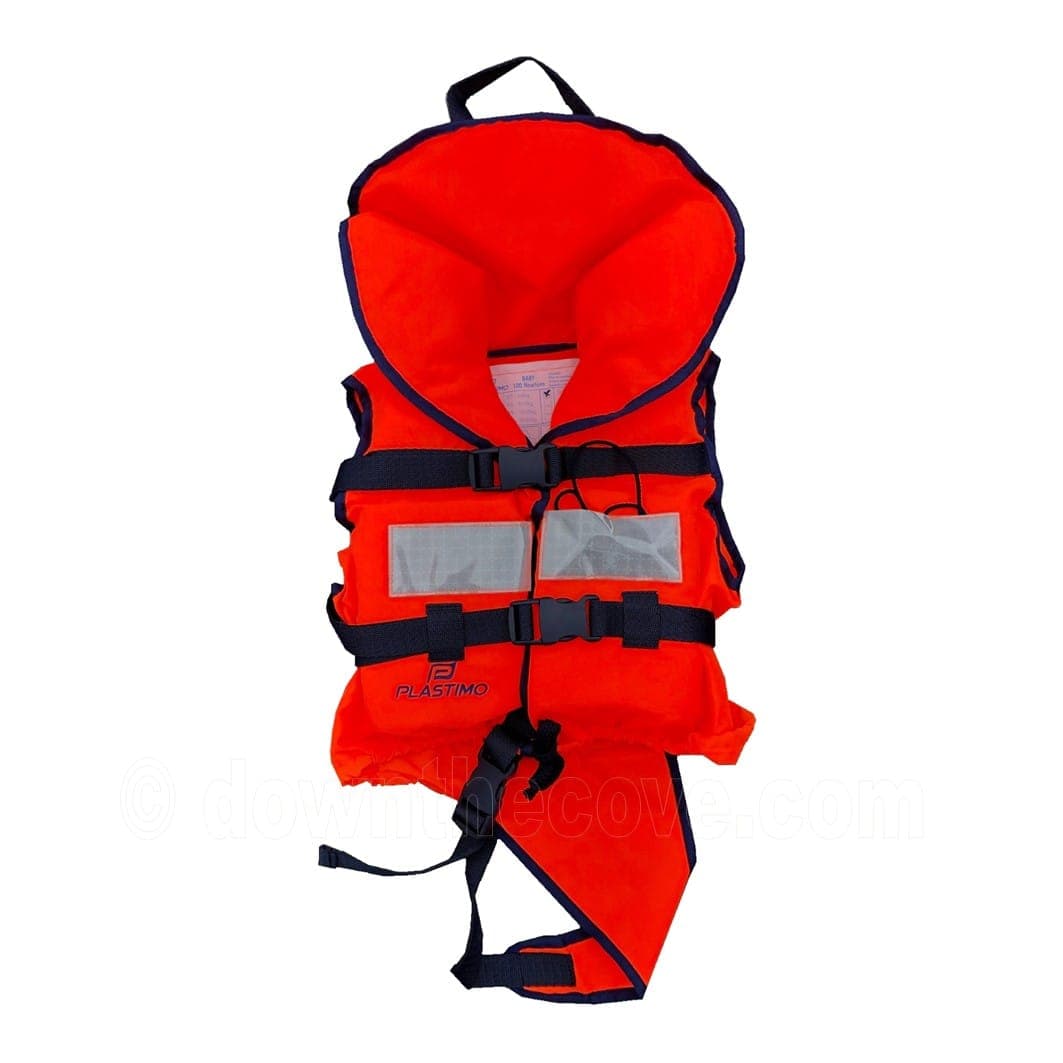
This is a kids life jacket for sheltered and calm water: harbours, calm estuaries and calm rivers, and short boat trips close to shore. The sewn-in label says it's for sheltered waters and coastal areas, and the RNLI recommends level 100 lifejackets for sheltered and calm water. Choosing one comes down to three things: the right level, the right size and a proper fit.
It's a foam lifejacket, so it floats the moment a child goes in, with nothing to inflate. The RNLI lists that as the big advantage of foam for children, along with warmth and some protection from knocks in a fall; the trade-off is bulk. Two reflective patches on the front help a child show up in a torch beam.
The 100N is the performance level, not the buoyancy of every size. A small child needs less lift than an adult, so the label gives each size's actual buoyancy: 30N for 3 to 8kg and for 8 to 15kg, 40N for 15 to 30kg and 50N for 30 to 40kg. That's what you'll see written as 100/30N on a baby life jacket.
Plastimo's lifejacket chart says level 100 jackets turn most wearers onto their back within 10 seconds, with the roll collar supporting the head. Clothing can reduce that, and the RNLI notes that a level 100 lifejacket may not roll an unconscious person on to their back. So it's for calm water with help close by, never a substitute for an adult watching.
Fit matters as much as the jacket. The RNLI warns that a jacket that's too big is dangerous too: a child can slip out, or it can ride up and leave the mouth and nose under water. Buy the size that fits now, not one to grow into, do up the crotch strap every time, and use the RYA's lift test: hold the jacket at the shoulders and lift, and it shouldn't move more than 2.5cm.
It's the Plastimo Baby life jacket, made to ISO 12402-4, the standard for level 100 lifejackets; the RNLI says all new lifejackets sold in the UK must meet ISO 12402. The ages shown on each size are only a rough guide, so go by weight.
Specifications
The details
Compare
Baby 100N, orange or Typhoon 100N, lime yellow?
 Baby 100N, orangeYou're here
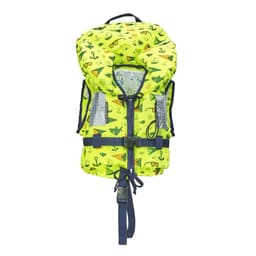 Typhoon 100N, lime yellow
How to use
In five simple steps
Weigh your child and choose the size whose range they're in now.
Practise at home first. Open both buckles, put it on like a waistcoat, then fasten the chest buckle and the waist buckle.
Bring it between the legs and buckle it at the front, as short as is comfortable.
Pull the straps snug, then lift at the shoulders: it shouldn't rise more than 2.5cm.
Re-tighten as clothes settle, and keep the whistle where they can reach it.
Nice thing
The order matched what I expected from the photos and description.bit disappointed
The problem showed up most with the rest of the order. I am leaving this because it was disappointing, not to be awkward.Lovely
Great buy, very happy.Very happy
Brill.Nice thing
Basic idea, but useful. I am fussy with online orders and this order felt worth leaving feedback for. It felt closer to the photos than some online orders do.Every review is shown, low scores included. The breakdown chart appears from 10 reviews.
FAQs
Questions about the Plastimo 100N Child's Lifejacket
What size should I choose for my child?
Choose by weight, not age: 3 to 8kg, 8 to 15kg, 15 to 30kg or 30 to 40kg. The RYA suggests taking the child with you to try jackets, because two with the same weight range can fit differently. Buy for now, not to grow into, as a loose jacket can slip off.
Is it suitable as a baby life jacket?
Yes. The smallest size is an infant life jacket for babies from 3 to 8kg, and the next is a toddler life jacket for 8 to 15kg. Plastimo's label warns against nappies under the jacket, as they add buoyancy, so read the label before the first use, and keep a baby within arm's reach.
Does it keep a child's head out of the water?
It's designed to help. Plastimo's chart says level 100 jackets turn most wearers onto their back within 10 seconds, and the collar supports the head. But clothing can reduce this, and the RNLI says a level 100 jacket may not roll an unconscious person over, so use it in calm water with an adult close by.
Is this a lifejacket or a buoyancy aid?
A lifejacket, performance level 100, with a head-support collar. A buoyancy aid (level 50) is for swimmers where help is close at hand and isn't designed to turn anyone face-up. For children and non-swimmers, the RYA recommends a lifejacket rather than a buoyancy aid.
What does 100/30N mean?
100 is the performance level, and 30N is the jacket's actual buoyancy. Small children need less lift, so the label lists 30N for the 3 to 8kg and 8 to 15kg sizes, 40N for 15 to 30kg and 50N for 30 to 40kg. All four are level 100 lifejackets.
Do I need 100N or 150N life jackets?
The RNLI recommends level 100 for sheltered and calm water and level 150 for coastal and offshore use, where conditions are rougher and help may take longer. This jacket's label says sheltered waters and coastal areas; we'd use it in harbours, calm estuaries and on short trips close to shore, not on open-sea passages.
Are foam kids life jackets better than inflatable ones?
For young children, foam has clear advantages: the RNLI notes it floats straight away, keeps a child warmer and gives some protection in a fall. An inflatable only works once it's inflated, and a frightened or cold child may not manage a manual pull. Foam's downside is bulk.
Why does it have a crotch strap?
The RNLI says crotch straps stop a lifejacket riding up, keeping the mouth and nose higher in the water. Always do it up, never leave it hanging, and keep it as short as is comfortable. On this jacket it passes between the legs and buckles at the front.
How do I look after it?
Rinse it in fresh water after use and let it dry naturally. Don't use it as a cushion, which squashes the foam. Check the straps, stitching and buckles before each trip; the label recommends a yearly check, and the RNLI says foam that has compressed means it's time for a new one.
Does a lifejacket replace adult supervision?
No. The label says lifejackets reduce the risk of drowning but are not a guarantee of rescue. Keep children within sight and reach near water, and teach them how the jacket works, including the whistle, before you need it.
Still deciding?
Message our team
We are a small family-run shop. Ask us anything before you order.
Send us a message support@downthecove.comDelivery and returns
Before you order
Packed and posted by our own small team.
 Est. 2012
Down The Cove · founded in Cornwall, 2012
A small family-run shop with Cornish roots
- Order by 3pm on a working day and we usually dispatch the same day
- Questions answered by our own small team
- Cove Club members get free delivery and member discounts
- We donate 1% of all profits to Compassion UK
We donate 1% of all profits to Compassion UK, supporting its work with children and communities facing poverty: clean water, healthcare and education. Compassion UK is an independent charity. Visit Compassion UK