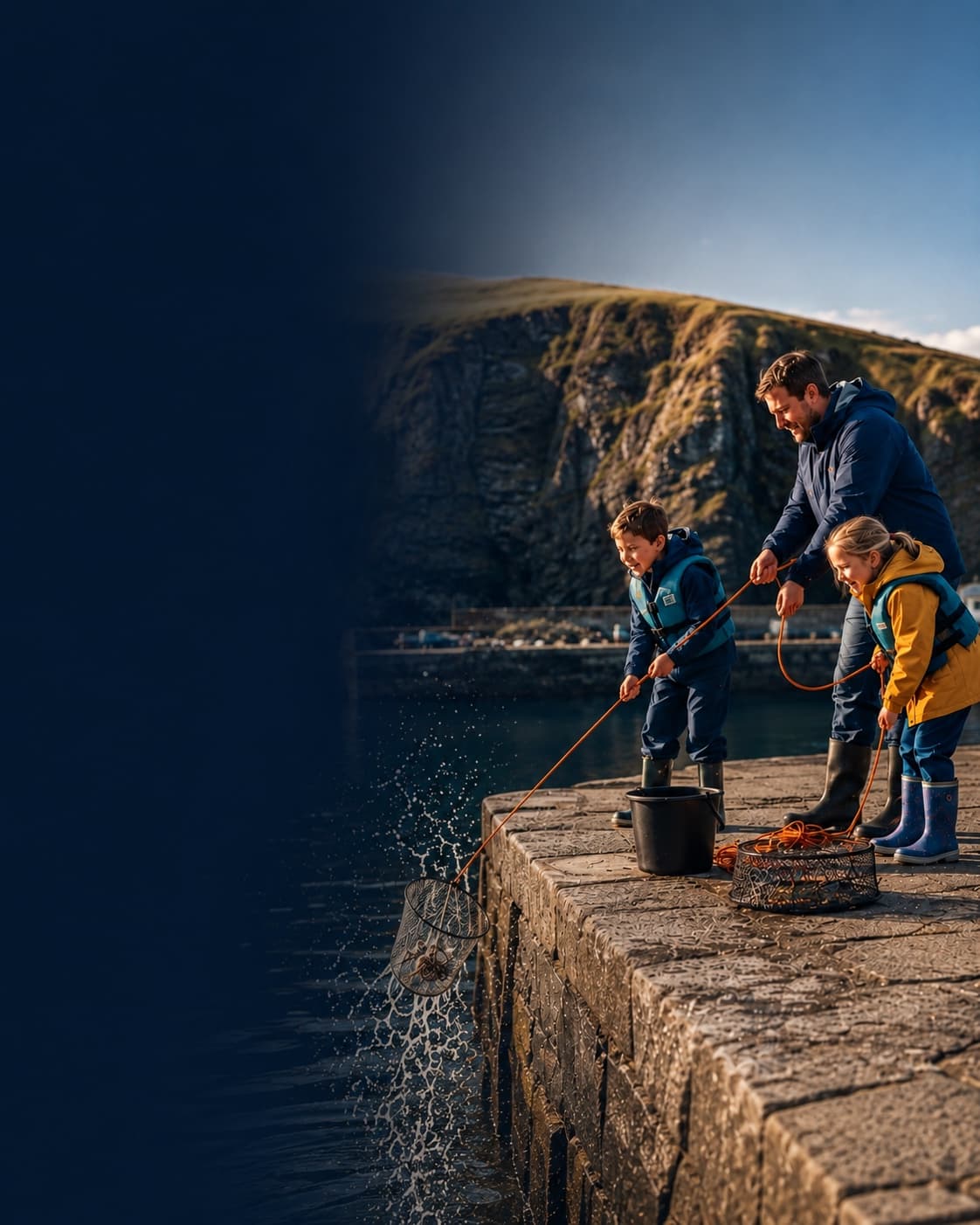
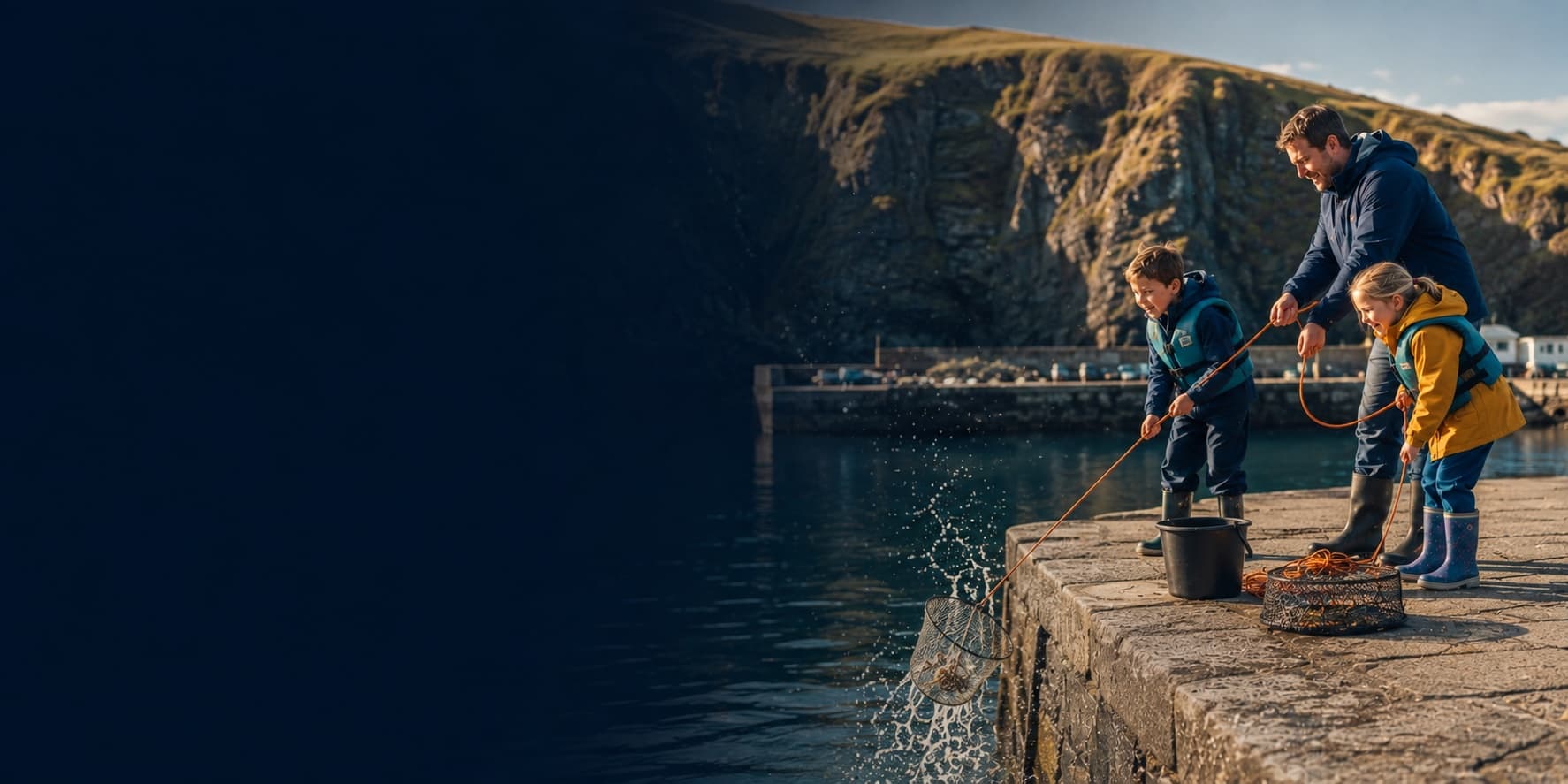
Family crabbing with lines and a bucket from a stone harbour wall

Catch · observe · return

Catch the moment. Return the crab.

A joyful, welfare-first guide to family crabbing—what to pack, how to keep children safe, and how to send every crab home well.

Designed for catch-and-return family sessionsFact-checked 12 September 2026

Hook-free bait bag

Cool water and shade

Gentle return at the waterline

The Cornwall crabbing code

Six small rules. One brilliant day.

This is the welfare-first code used by Cornish marine groups. Make it the family challenge: can everyone remember all six?

  1. 01

    Refresh the seawater

    Use a large bucket and replace the water regularly so it stays cool and oxygenated.

  2. 02

    Use a bait bag—never hooks

    A weighted, hook-free line with a secure net bait bag is all a crab needs to hold on.

  3. 03

    Three crabs maximum

    Keep no more than three crabs in one bucket and give them plenty of space.

  4. 04

    Keep the bucket shaded

    Sun warms shallow water quickly. Put the bucket in deep shade, away from hot concrete.

  5. 05

    Separate any fighters

    If claws come out, return one crab immediately rather than letting stress become injury.

  6. 06

    Return them at the waterline

    Carry the bucket down and lower each crab gently into the sea—never drop it from a wall.

From car park to release

Your family session, step by step.

Good crabbing feels unhurried. Use these four stages to give children a clear job without losing sight of the water.

Before you leave

Choose the day, not just the place.

A familiar harbour or quay in calm weather is a better family mark than an exposed edge with a dramatic view.

  • Check the tide, weather and local harbour signs.
  • Choose a broad, guarded edge with room behind the children.
  • Agree that one adult watches the water, not a phone.
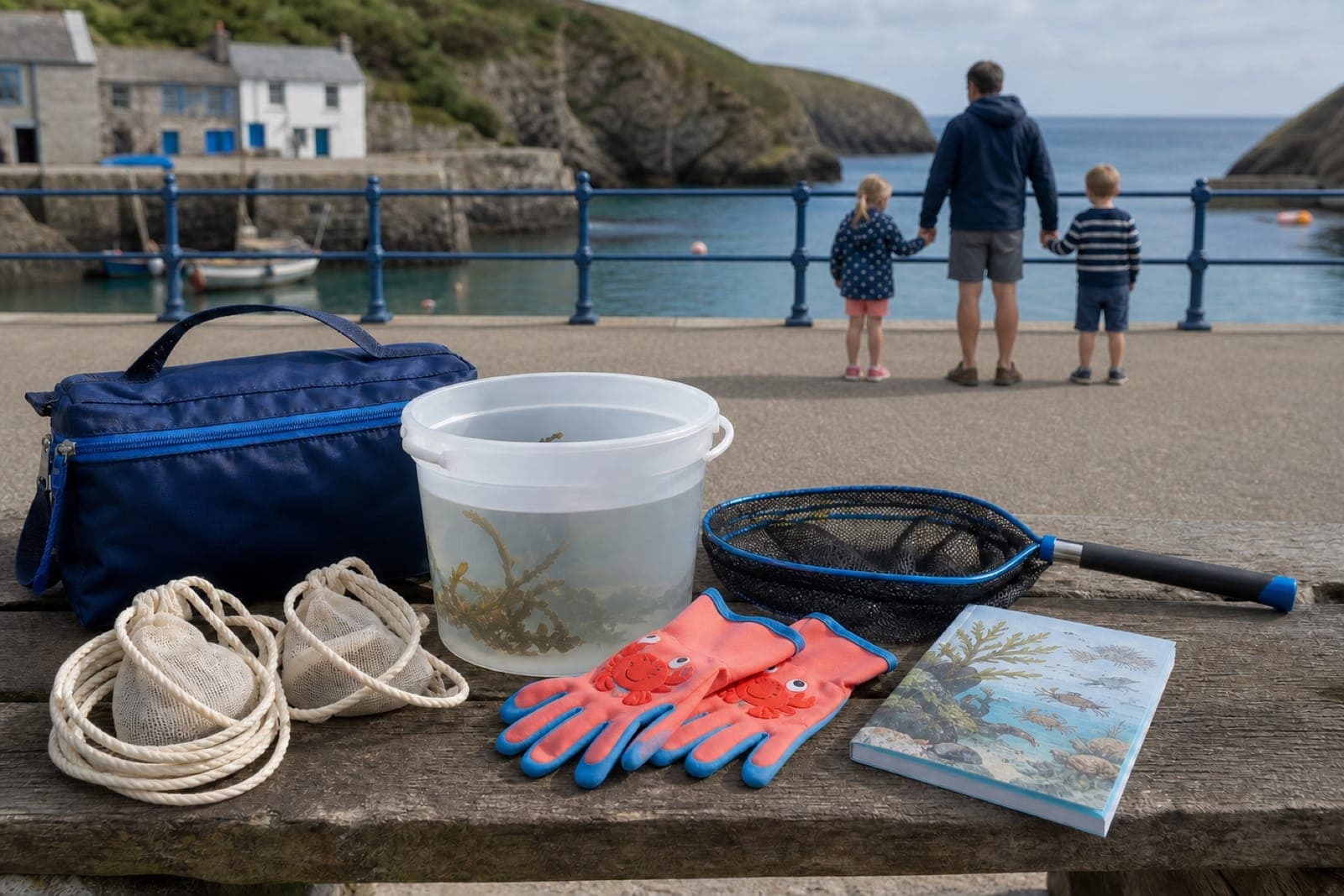
Pack light. Pack kind.

The eight-item checklist

Tap each item as it goes in the bag. A hook is deliberately not on this list.

0/8
Family crabbing kit beside a Cornish harbour while an adult supervises children

The adult’s one job

Stay close enough to reach the child, keep the waterside edge clear, and watch the water throughout the session.

Spot your catch

Three crabs children may meet.

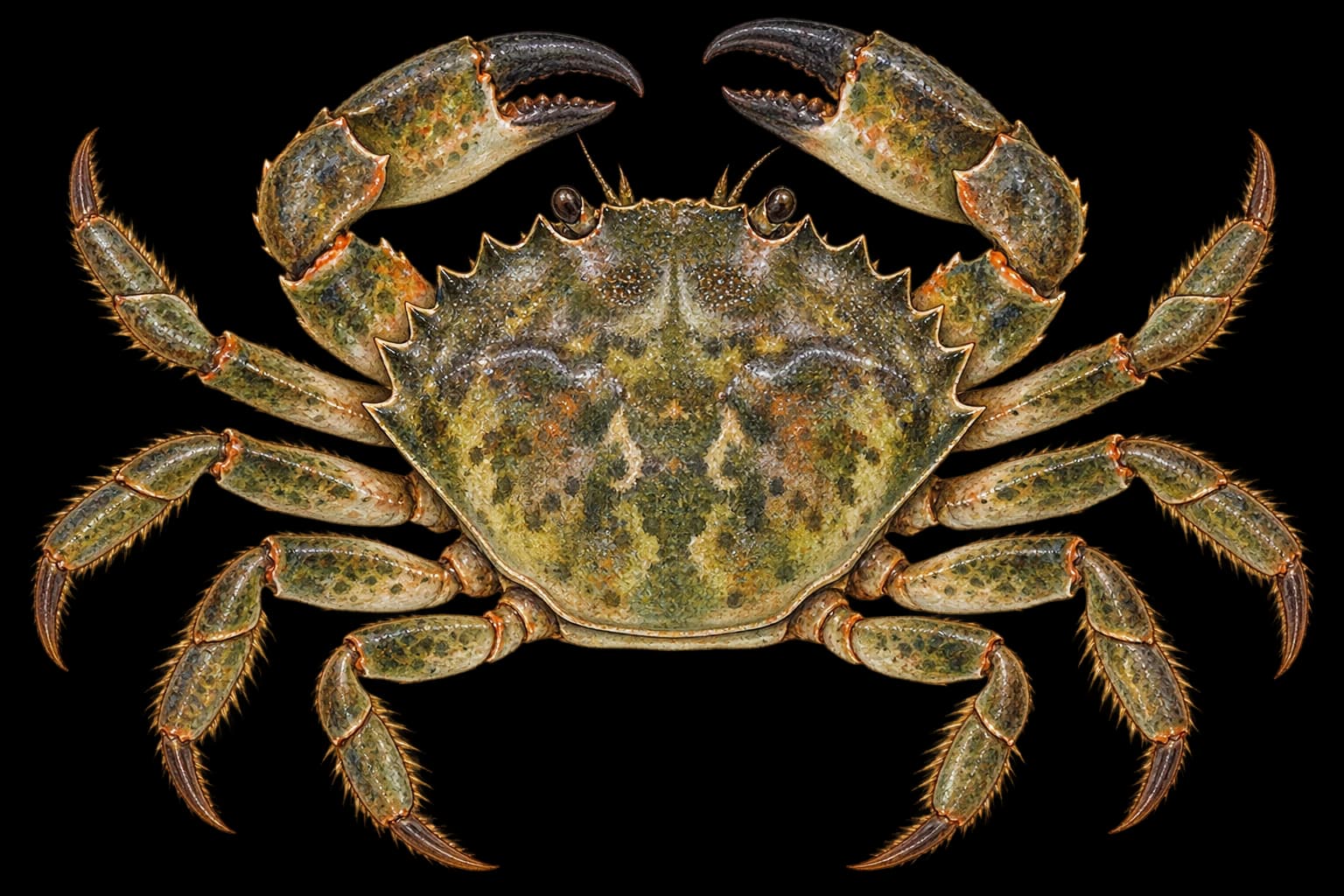
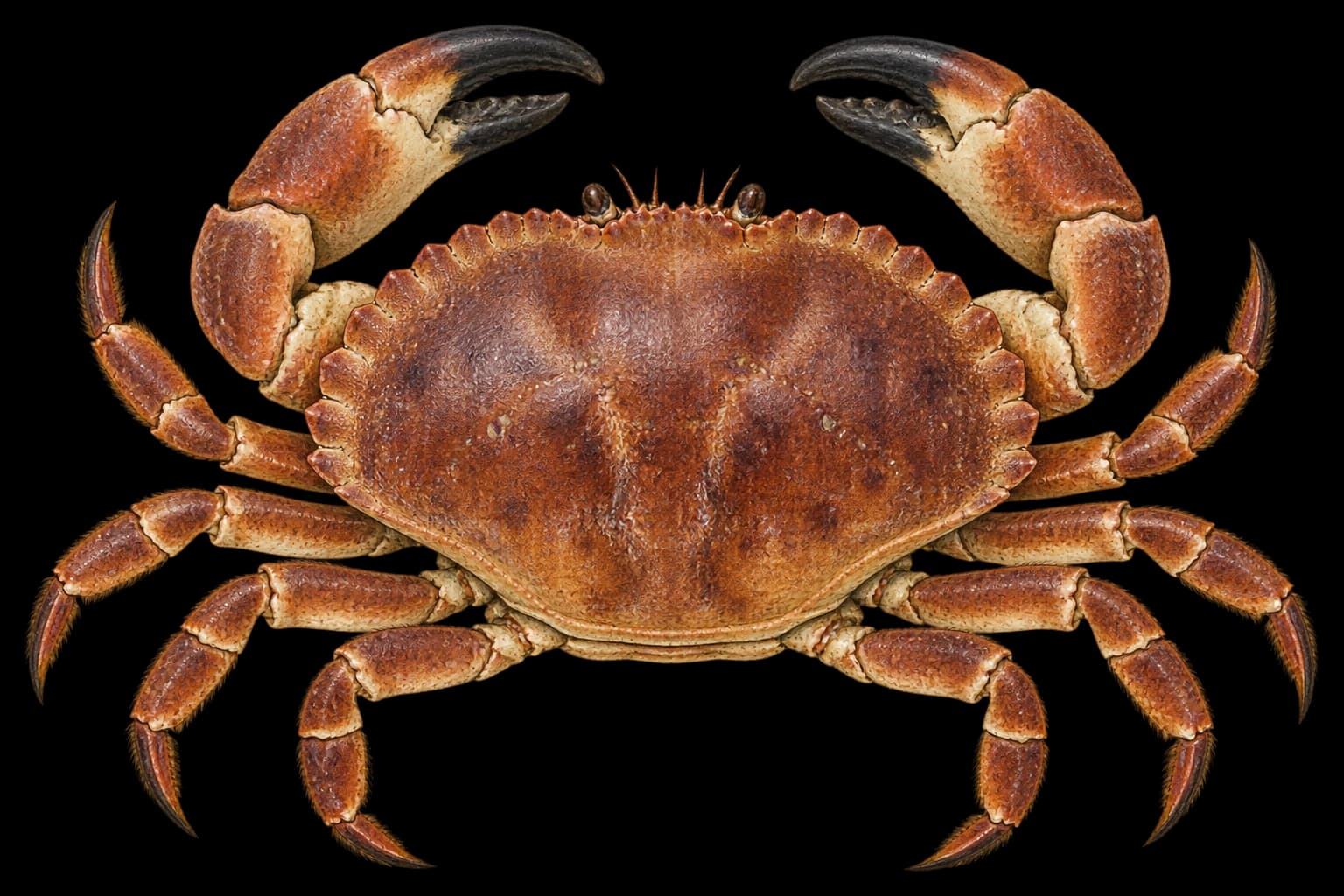
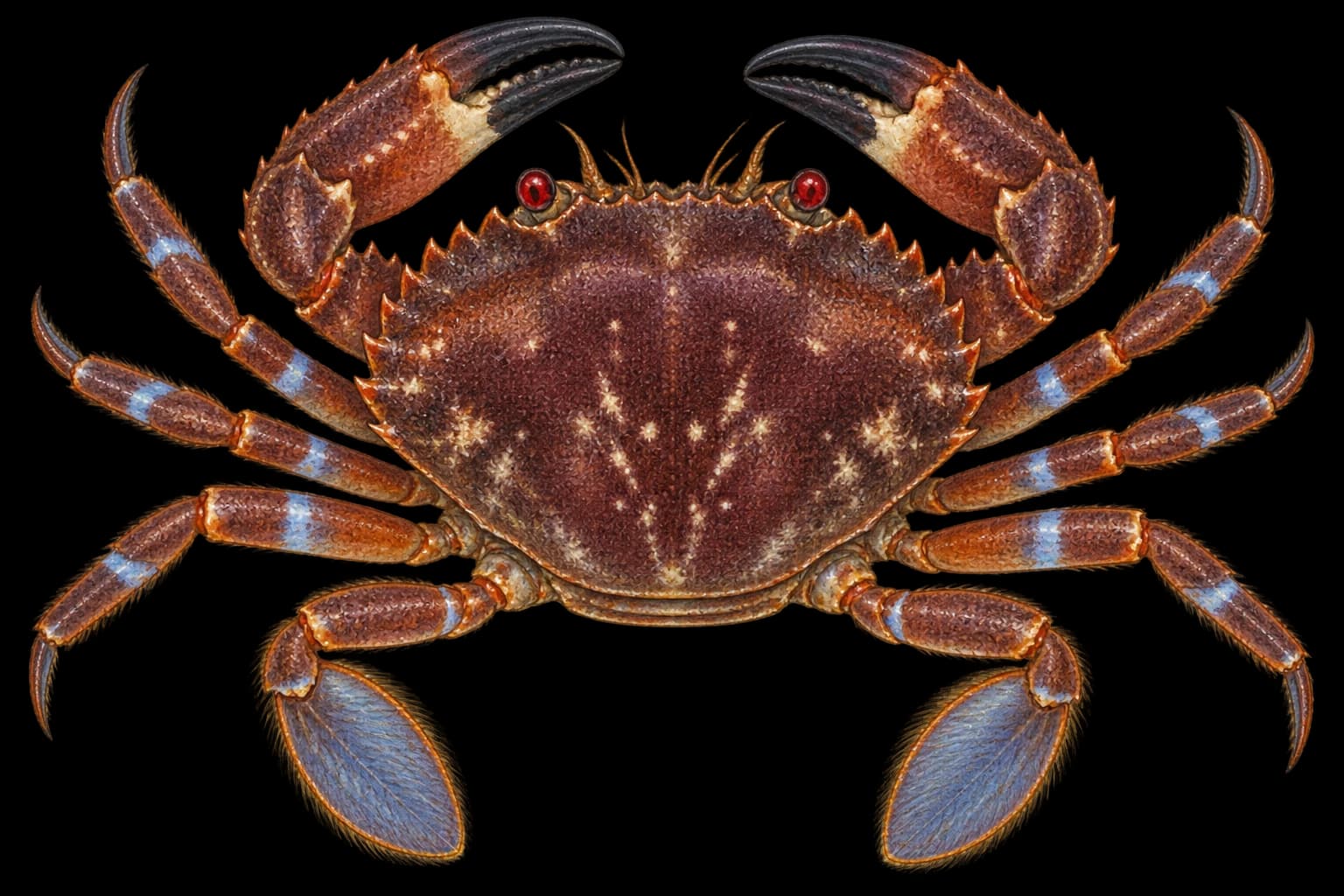
Colour varies, so look at shape, eyes and back legs. If you are unsure, admire the crab briefly and return it gently.

Common shore crab identification illustrationCrab card 01

Common shore crab

Carcinus maenas

Look for: Five points beside each eye and a colour that can run from green to orange or dark brown.

The classic harbour catch: adaptable, quick and often the first crab a child meets.

Edible crab identification illustrationCrab card 02

Edible crab

Cancer pagurus

Look for: A broad reddish-brown shell with a neat pie-crust edge and heavy black-tipped claws.

A powerful crab best admired in the water. This family guide is catch-and-return, whatever its size.

Velvet swimming crab identification illustrationCrab card 03

Velvet swimming crab

Necora puber

Look for: Bright red eyes, blue markings and flattened back legs that work like paddles.

Fast and defensive. Give it space, keep fingers clear and return it promptly if it raises its claws.

Our family rule: all crabs go home. Legal minimum sizes apply if anyone intends to retain shellfish, and local rules vary—check Cornwall IFCA first.

Explore shellfish
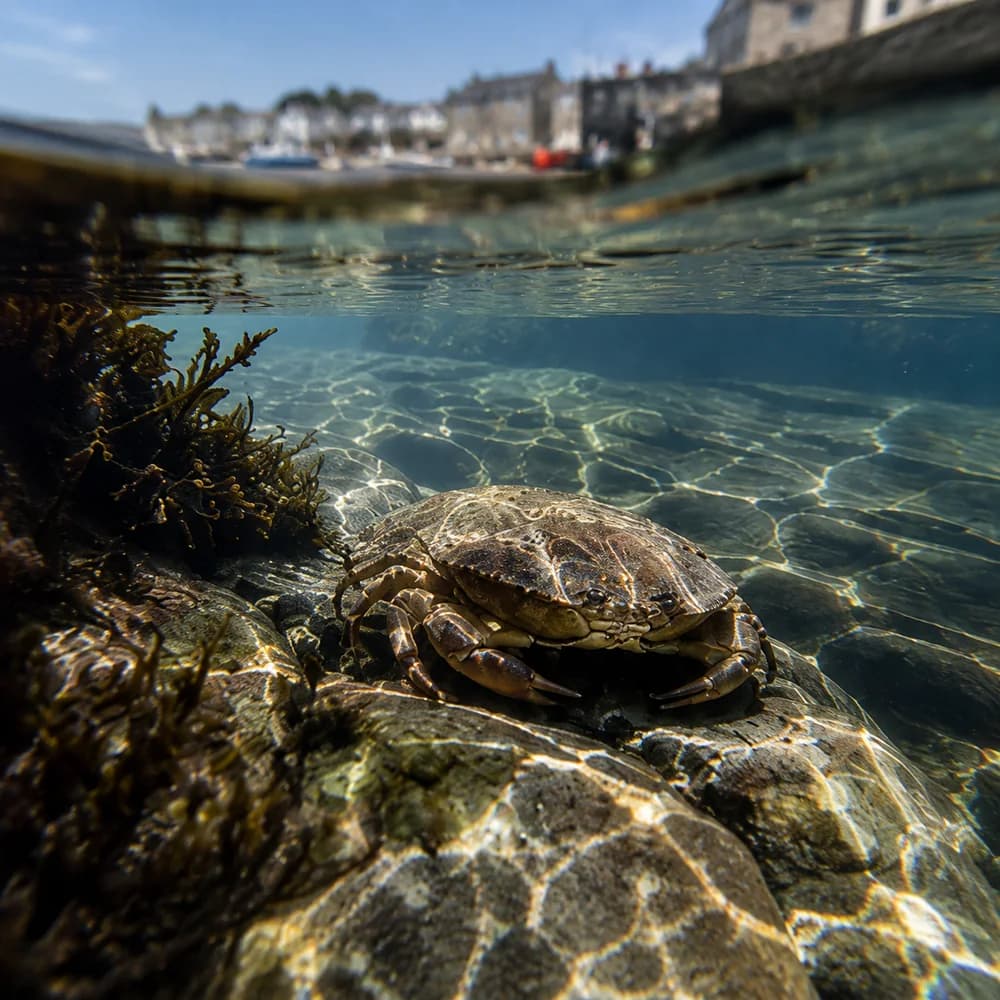
A shore crab resting in a clear shallow rockpool

Best view in the house

Watching a crab in the water is safer for everyone.

Handling without the drama

Hands off is the easiest rule.

Children do not need to pick up a crab to enjoy it. Watch how it walks, count its legs, compare colours and take a photograph over the bucket.

If an adult needs to move one

Keep the crab low over water, stay behind the claws, support the shell securely and make the move brief. Never lift it by a leg or claw.

If a crab is carrying eggs

Do not handle or keep it in the bucket. Return it gently and immediately. The same applies to any injured or very soft crab.

Family safety

The crab line is simple. The water isn’t.

Harbours are working places with deep water, slippery edges and moving boats. A calm day still needs active adult supervision.

One adult watches the edge

Stay close enough to reach a child and keep everyone standing back from unguarded edges. Supervision is an active job.

Check tide and weather

A familiar spot changes with tide, swell, rain and wind. Leave if the water or footing no longer feels easy to manage.

Read the harbour signs

Permission, boat movements and local restrictions vary. Keep lines clear of people, moorings and working vessels.

Know how to call for help

Carry a charged phone. At the UK coast, call 999 or 112 and ask for the Coastguard in an emergency.

Straight answers

Family crabbing FAQs

What is the most responsible way to go crabbing?+

Use a hook-free bait bag, keep no more than three crabs in a large shaded bucket of frequently refreshed seawater, handle them as little as possible and return every crab gently at the waterline.

How many crabs can children keep in a bucket?+

The Cornish crabbing code recommends no more than three crabs in one large bucket. Return a crab immediately if the bucket is crowded or the animals begin fighting.

Can you use hooks for crabbing?+

There is no need. Put strong-smelling bait in a secure net bait bag on a weighted hand line. A small landing net beneath the line helps lift the crab without a hook.

What is the safest place to take children crabbing?+

Choose a calm, familiar harbour or quay where crabbing is permitted, with a broad working area and a barrier or clearly protected edge. Check local signs, tide and weather, and keep an adult within reach of every child.

How should we put crabs back?+

Carry the bucket to a safe waterline and lower the crabs gently into shallow seawater. Never throw or drop them from a harbour wall, and take all line, bait and rubbish home.

How this guide was checked

Local welfare advice, current rules and RNLI safety guidance.

The six-point code follows Cornwall Wildlife Trust’s guidance, developed from the Looe crabbing code. Legal notes were checked against Cornwall IFCA, and family safety advice against the RNLI. Last reviewed 12 September 2026.

Our editorial policy

Make a day of it

Choose a simple, hook-free kit for your family.

Older children ready for a rod? See our kids' fishing rods and gifts.

Shop crabbing kits