From the Cove shop
Friendly tackle picks chosen to make the guide easier to put into practice.
The best crabbing bait, how to keep it in a bait bag and a simple family method that catches shore crabs without hooks or waste.

Fishing guide
Get started with confidence. A simple route through marks, tides, tackle and safer days by the water.
Best Bait for Crabbing in the UK is written to make sea fishing feel approachable: clear method notes, useful kit context and no needless jargon.
The best crabbing bait is something oily and tough enough to stay in the bag: fish heads and trimmings are excellent, bacon rind is convenient, and squid lasts longest....
Friendly tackle picks chosen to make the guide easier to put into practice.
Use straightforward tackle that suits the method, mark and species you are likely to meet.
Keep bait and rigs simple while you learn the mark, tide and target species.
Check tide, swell, footing and local signs before fishing. If the mark does not feel safe, choose another day or another spot.
Read straight through, or use the fishing notes above to keep marks, tides and tackle easier to follow.
The best crabbing bait is something oily and tough enough to stay in the bag: fish heads and trimmings are excellent, bacon rind is convenient, and squid lasts longest. Put a small piece in a secure bait bag, lower it gently to the bottom and wait a few minutes before lifting slowly. You need far less bait than most families bring.
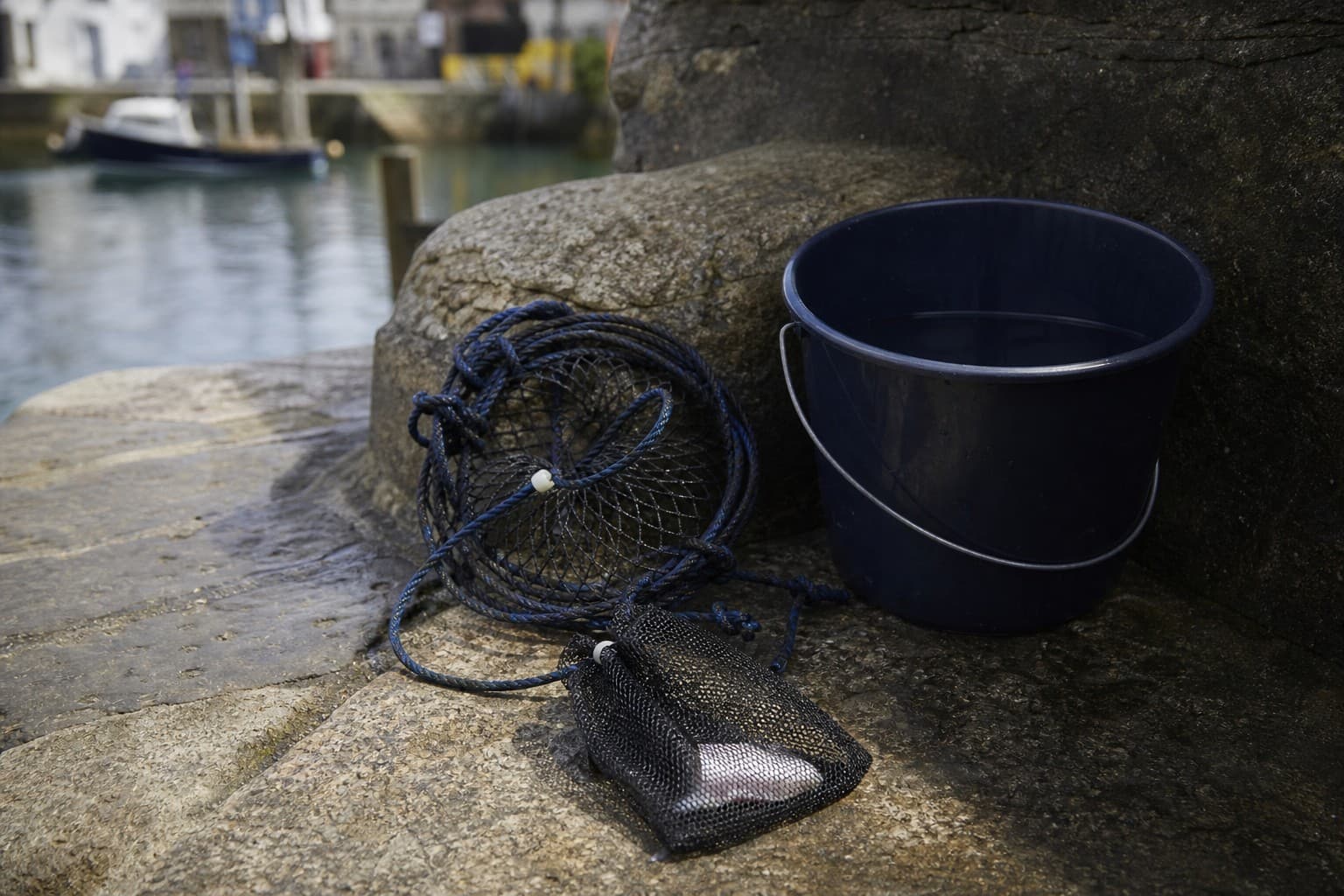
Use fish scraps if you have them, bacon rind if convenience matters, or squid when you want bait that survives repeated drops. A mesh bait bag is safer and tidier than a bare hook, especially with children. Replace the bait when the scent has washed out rather than adding a huge handful at the start.
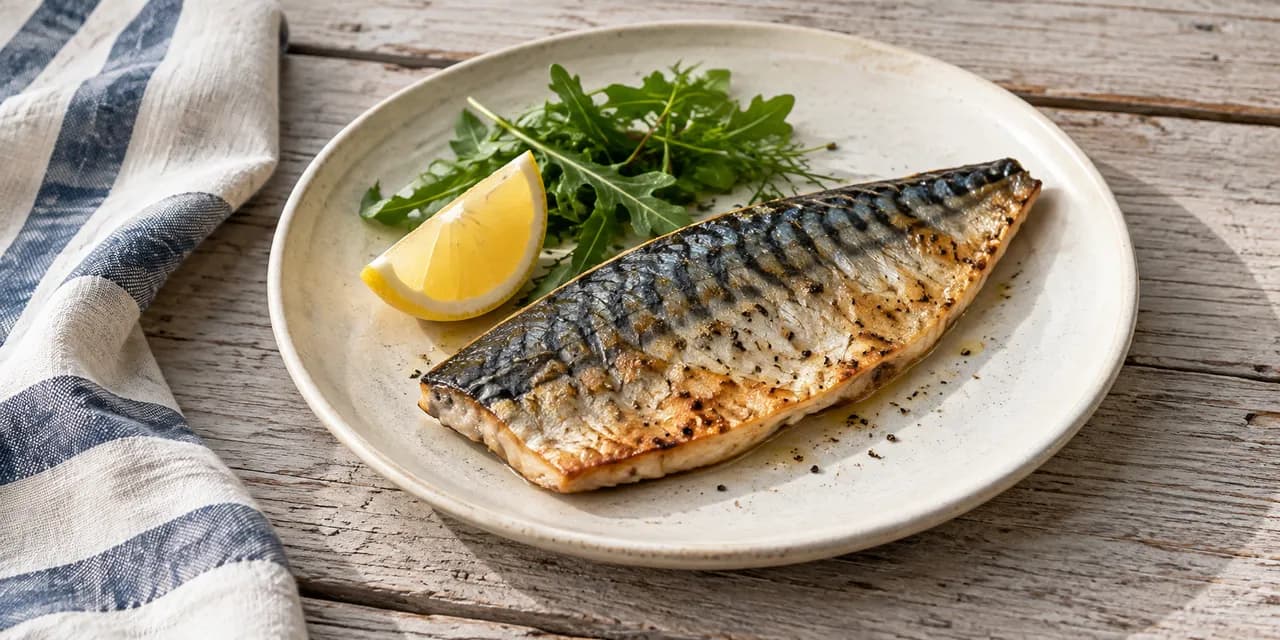
Oily fish heads, frames and offcuts release a strong scent and stay attractive for several drops. Ask a fishmonger for scraps or save the clean trimmings from your own supper. Secure them inside the bag so curious crabs can pull at the bait without carrying it away. Do not leave unused fish or packaging at the quay.
Bacon is popular because it is easy to buy, easy to cut and tough enough to remain in a bait bag. Rind or a small fatty offcut lasts better than a thin rasher. It is not magic—crabs respond to plenty of foods—but it is a dependable family option when there is no fish bait to hand.
Squid is firm and rubbery, so a strip can survive a long session without dissolving. It is useful at busy holiday spots where the line is lifted often, or when small fish keep stealing softer bait. A thumb-sized piece is enough; more bait does not mean more crabs once the scent is moving through the water.
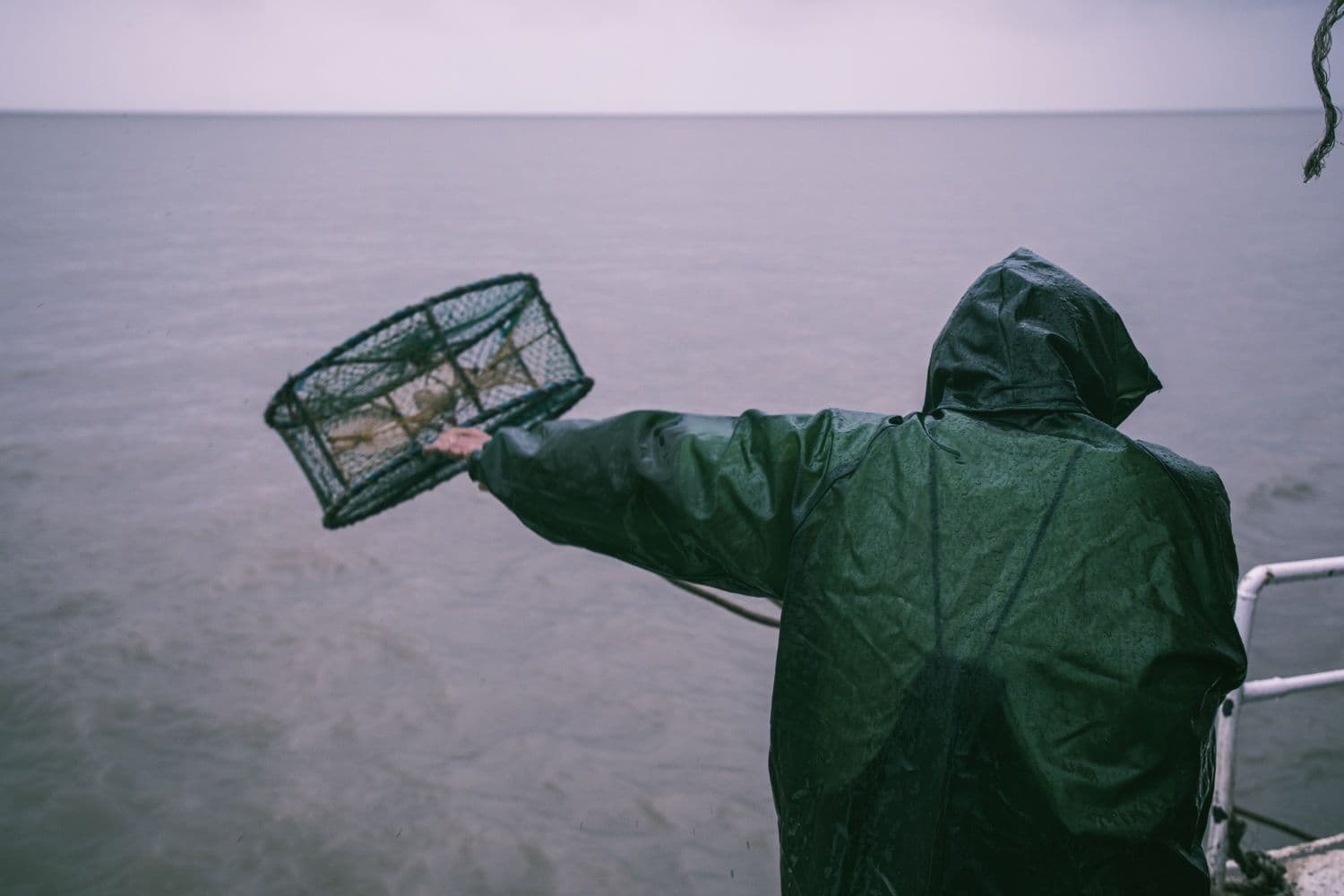
Avoid loose bread, which clouds the water and disappears quickly, and never use plastic-wrapped food. Do not leave bait, lines or bags behind. Hooks are unnecessary for ordinary family crabbing and add avoidable risk to children, wildlife and the crabs themselves. A line with a proper bait bag or a drop net does the job cleanly.
Open the mesh bag, add one small piece and close it firmly. Lower it rather than throwing it so the line does not tangle. Let it settle on the bottom beside a harbour wall, pontoon or quay, then wait three to five minutes. Lift steadily and slowly; a sudden jerk gives the crab time to let go.
Use a bucket of seawater kept in the shade, add a little weed for cover and avoid crowding it. Change the water during a longer session and never leave the bucket in the sun. Handle crabs gently from the back of the shell, return them close to where they were caught and tip the bucket slowly at water level rather than dropping them from the wall.
Choose calm water with a solid barrier or plenty of space behind the edge. Keep children within arm's reach and watch for slippery weed, ropes and boat movement. Local harbour signs take priority. The crabs are often busiest as water moves through the harbour, but the safest accessible spot is always better than the most productive edge.
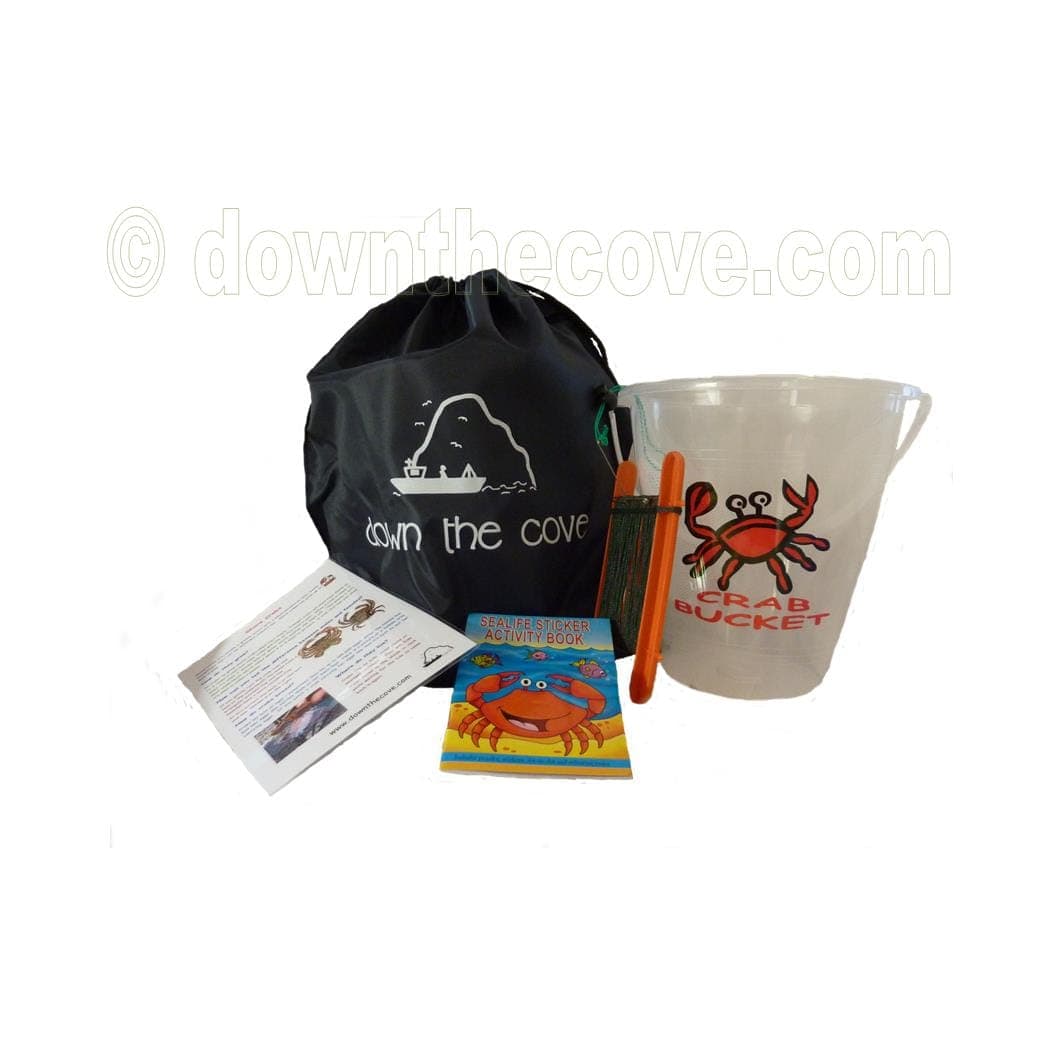
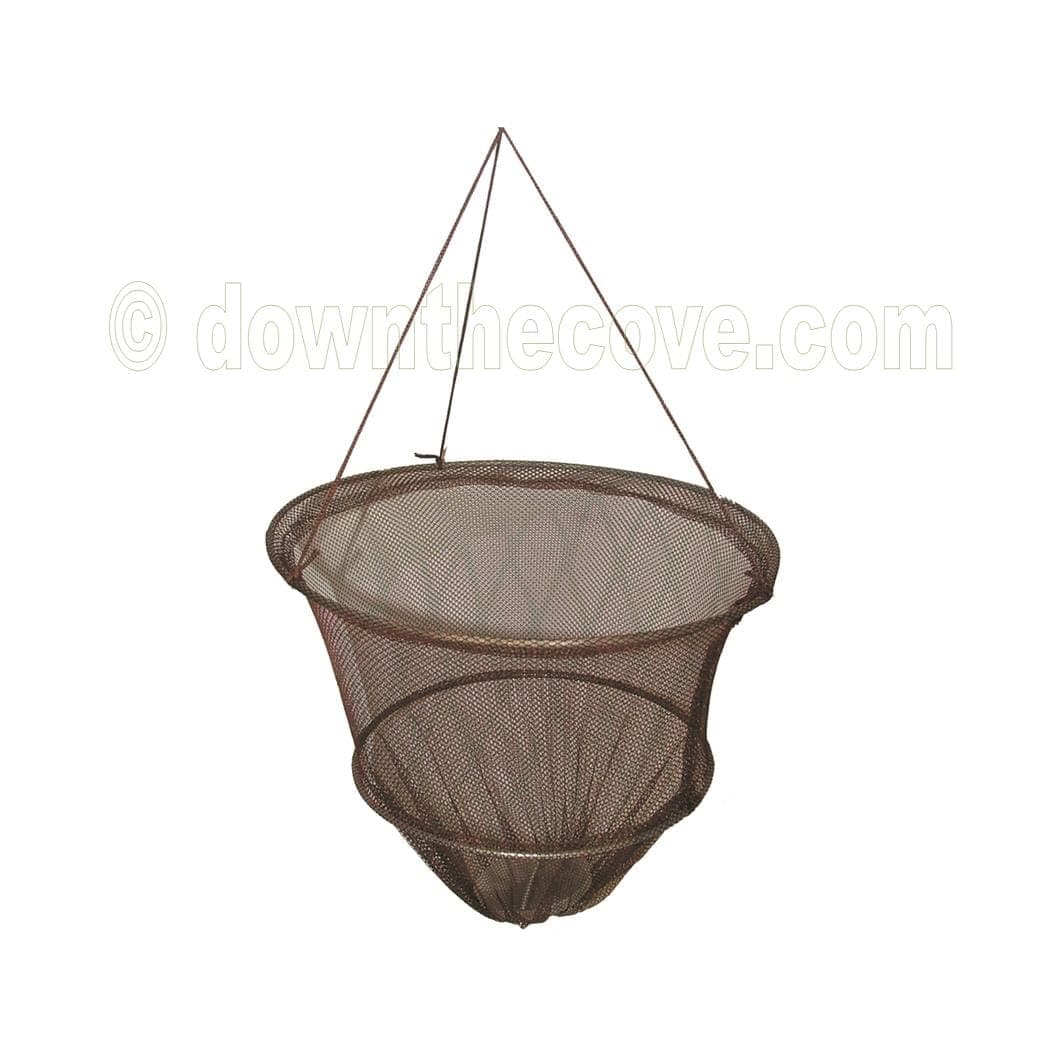
A line or drop net, bait bag, bucket, small towel and the bait are enough. A complete family crabbing kit avoids buying the parts separately, and our best crabbing kits for children matches the setup to different ages.
Both work. Oily fish scraps give a natural strong scent, while bacon rind is easier to carry and stays in the bag well. Use whichever you can handle cleanly and avoid wasting food.
Three to five minutes is a good first wait. If nothing is there, try a little deeper, closer to structure or at a different stage of the tide before replacing the bait.
Yes, and for family crabbing it is the better approach. Put bait in a mesh bag on a hand line or use a drop net, then lift slowly so the crab stays attached.
For timing and location ideas, read our UK crabbing season and best spots guide.
Friendly tackle picks chosen to make the guide easier to put into practice.