
Useful for your next trip
Useful kit connected to this guide, chosen to keep the next step simple.
Full conger guide
How to spot it, where it lives, how it is caught and how to cook it — the complete guide, in one easy read.
Powerful, secretive and seriously big, the conger eel is one of the most formidable fish you can hook from our shores. It lies up in kelp and gullies through the day, then slips out to hunt once the light goes. Recognise that blunt, scaleless profile and you'll see why every angler who meets one comes away with a story.
How to spot it
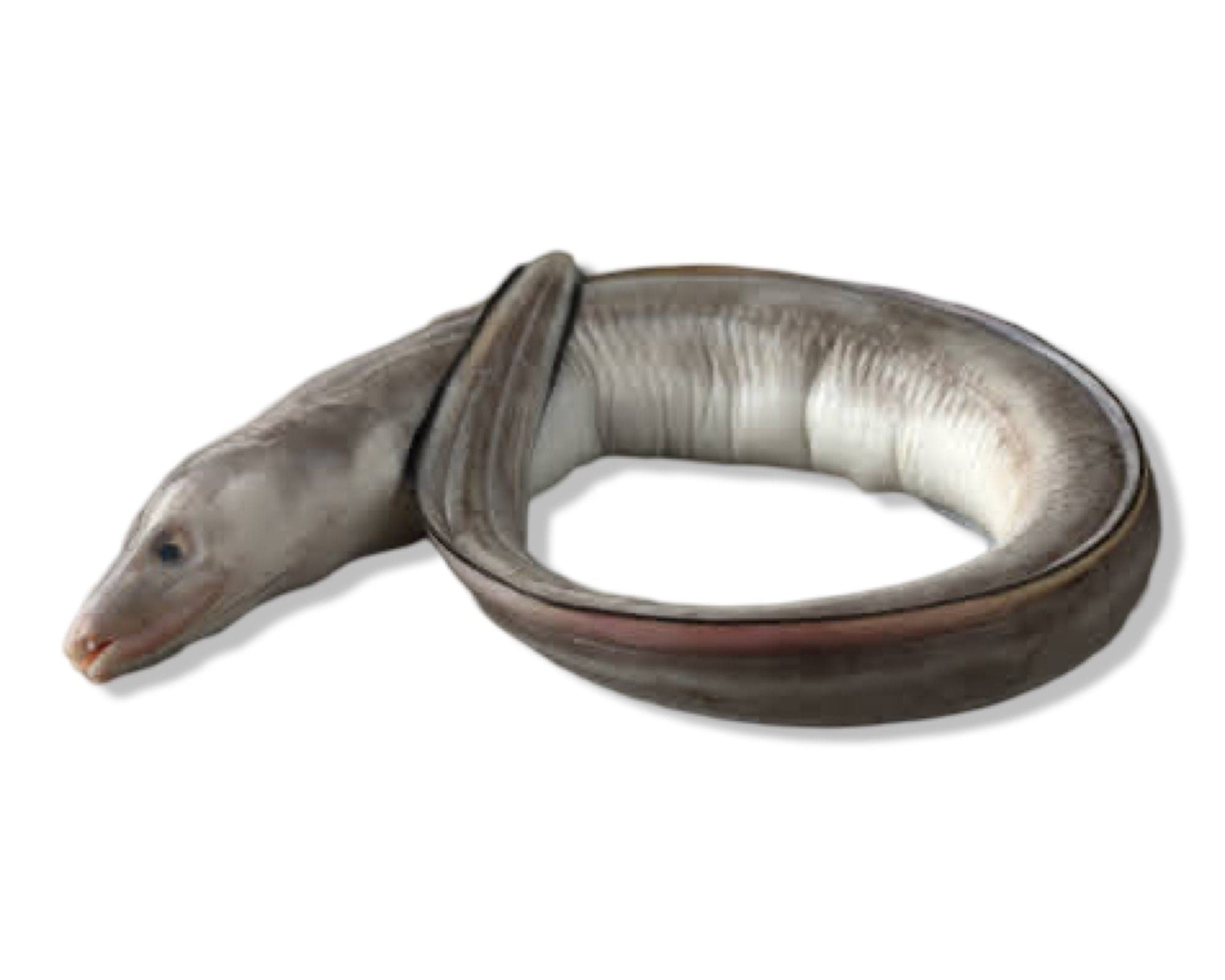
Smooth, scaleless skin and a deep charcoal-grey back fading to a paler belly mark a conger out at a glance. Look closer and you'll see neat black edging running the length of the dorsal and anal fins, a handy confirming detail. The body is long and eel-shaped; the head is blunt and powerful, packing strong jaws and very sharp teeth that earn it real respect. This is a big fish, reaching around 2 metres. Between the sheer size, the bare skin and that menacing blunt head, there's nothing else on our coast you'd confuse it with.
Where it lives
Conger are creatures of cover, holed up in kelp beds, rocky gullies, wrecks and along harbour walls where they can lie out of sight. They're nocturnal by nature, resting in cover through the day and emerging to hunt as the light fades. Cornwall offers no shortage of likely ground: Mousehole and Newlyn, Mevagissey, Sennen, Mullion and the Lizard, Porthtowan, Tintagel and Trebarwith Strand, and Cape Cornwall all hold fish. Because they feed in the dark, when you go matters as much as where, so think structure, depth and nightfall together.
Related guides and gear
FAQs
Quick fish questions
Short answers for the questions families and coastal readers often ask first.
How do I identify a conger eel in the UK?
Look for a long, eel-shaped body with smooth, scaleless skin, a charcoal-grey back fading to a paler belly, and black edging along the dorsal and anal fins. The head is blunt and powerful, with strong jaws and very sharp teeth.
How big do conger eels get in the UK?
Congers are genuinely large fish, reaching around 2 metres. Combined with their powerful build, scaleless skin and blunt, strong-jawed head, that size makes a good conger a seriously formidable catch from the shore.
What is the best bait for conger eel fishing?
Fresh mackerel or whole squid are the go-to baits. Fish them hard on the bottom with weighted hooks, tight to the cover where congers lie up, such as rocky gullies, wrecks and harbour walls.