The full guide
Read straight through, or use the fishing notes above to keep marks, tides and tackle easier to follow.
For most beginners in the UK, the best first sea fishing rod is a versatile one of around 9 to 11 feet (2.7 to 3.3m) that casts roughly 1 to 4oz (30 to 120g). That covers harbour walls, piers, rocks and gentle beaches, and it handles mackerel feathers, light bottom rigs and lures. If you mainly want to fish open surf beaches in winter for cod and whiting, you need a longer, stiffer beachcaster of 12 to 15 feet that casts heavier leads. If you want a rod to keep in the car or take on holiday, a telescopic or multi-piece travel rod is the easy choice. Below we explain the main types, what the numbers on a rod mean, and how to match a reel and line.
Useful tackle picks
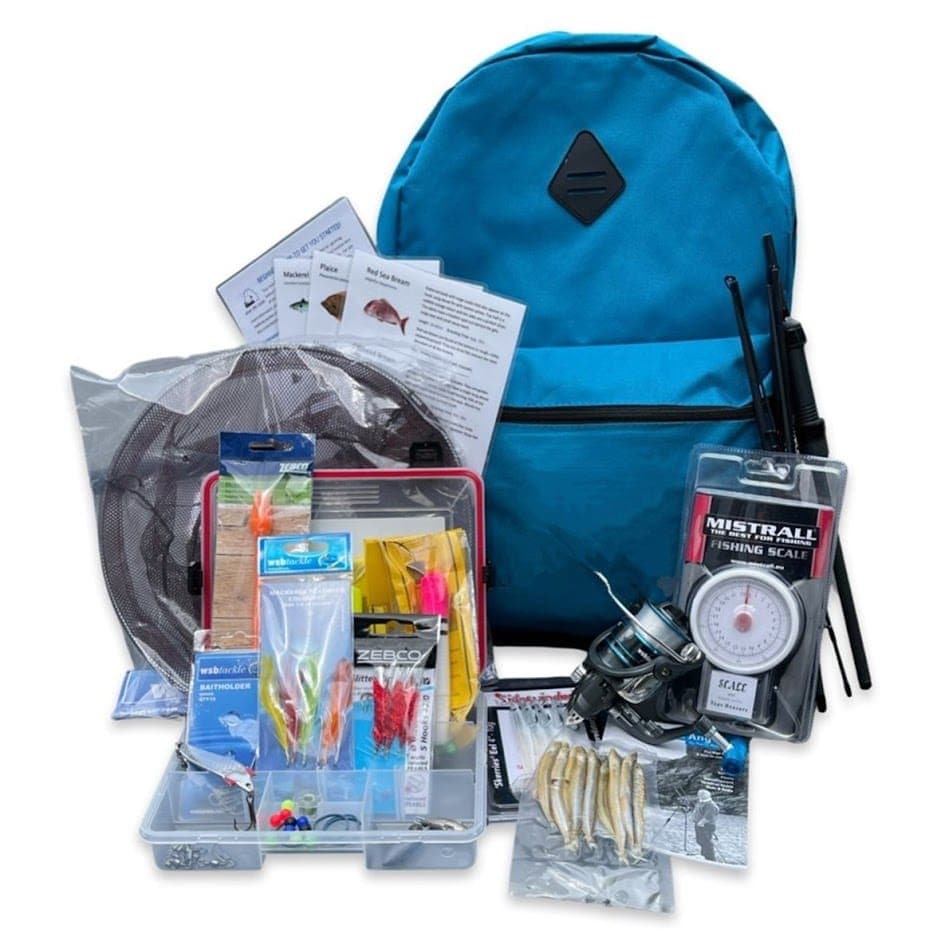
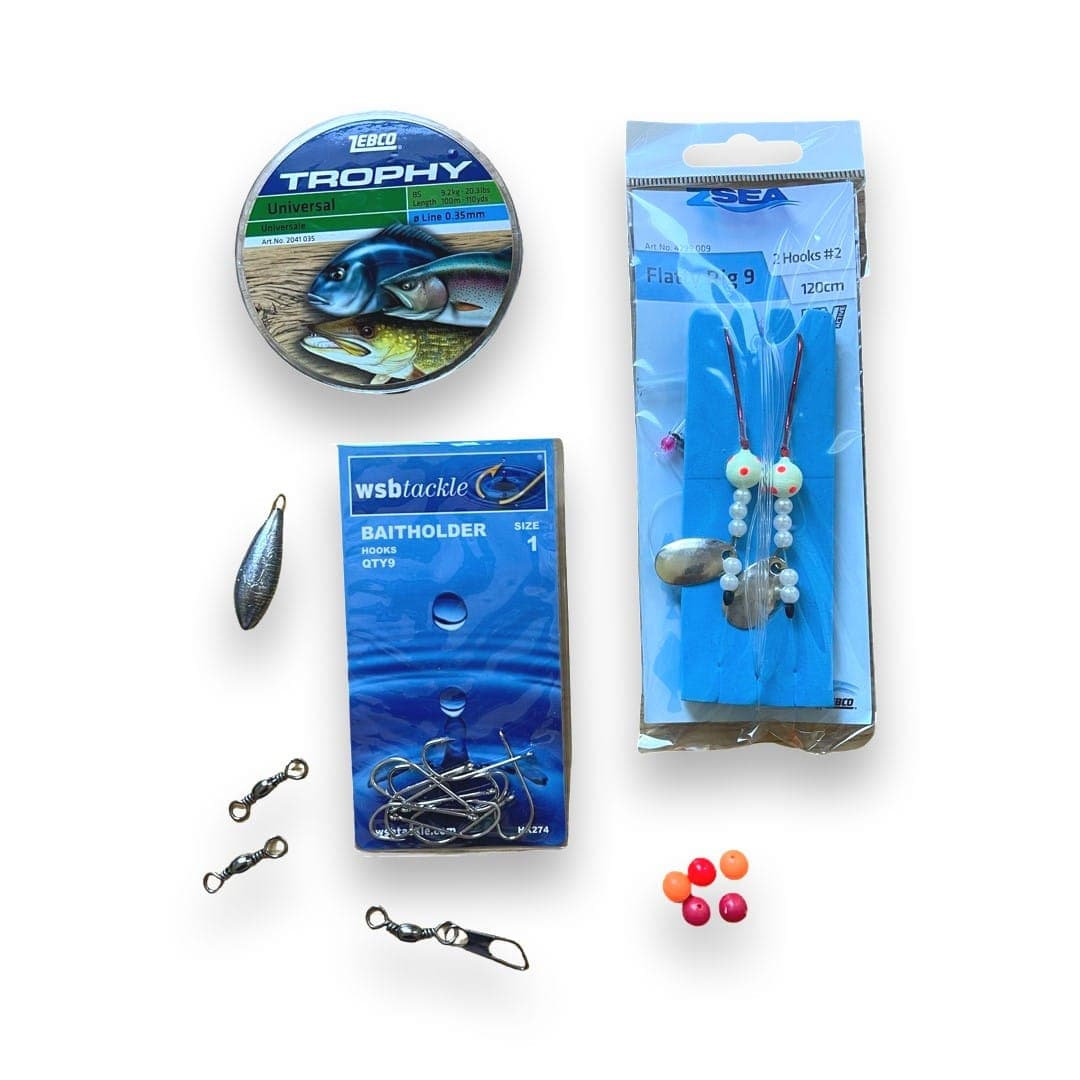
Friendly tackle picks chosen to make the guide easier to put into practice.
Start with where you will fish
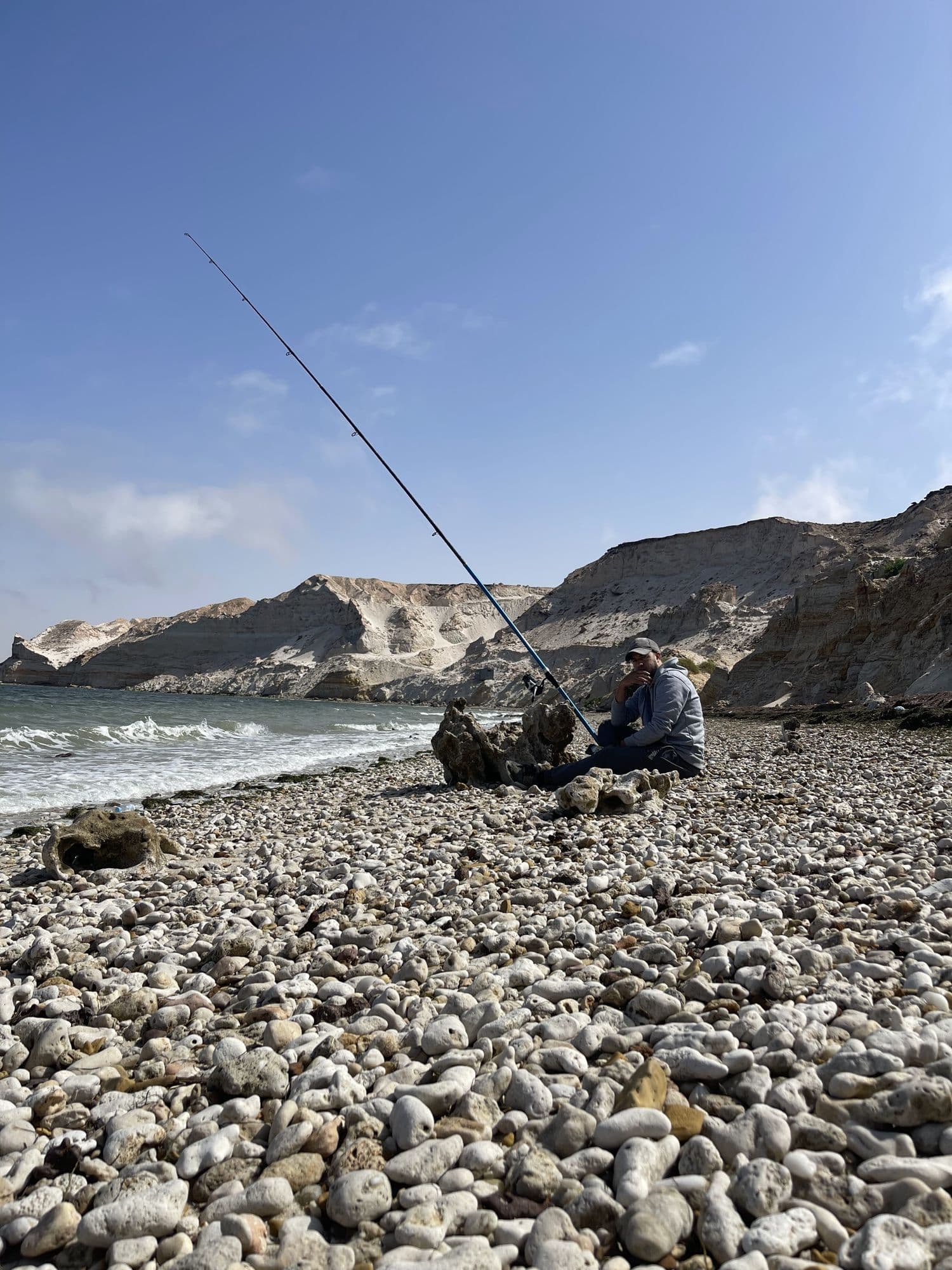
Rods are built for jobs, so the most useful question is where you will fish most often. On a harbour wall, pier or breakwater you are usually fishing close in, often straight down or with a short cast, for mackerel, pollock, wrasse, garfish and flatfish. A medium-length rod with a moderate casting weight is ideal, and you rarely need to cast a long way.
On a surf beach, the fish are often beyond the breaking waves, especially in winter, so casting distance and the ability to hold the bottom in a tide matter. That calls for a longer rod that can cast heavy grip leads.
From rocks you want a strong rod that can lift fish up and away from weed and ledges, and you will often be spinning with lures or float fishing. On a boat, short, powerful boat rods are used, because you are dropping your rig straight down rather than casting. Our guides to choosing a fishing location, fishing from a harbour wall, fishing from a beach and rock fishing go into each one.
The main types of sea fishing rod
Beachcasters are the long rods you see on open beaches: usually 12 to 15 feet (3.6 to 4.5m), stiff, and rated to cast around 4 to 7oz (115 to 200g). They are built for distance and heavy leads. That makes them a lot of rod for a beginner and tiring to hold, so most anglers fish them from a rod rest or tripod. Our beach and surf rods guide covers them in more detail.
Bass rods and light surf rods are around 10 to 12 feet (3 to 3.6m) and cast roughly 2 to 4oz. They are lighter, more sensitive and more enjoyable to hold, and they suit small surf beaches, estuaries, piers and harbour walls. For many beginners this is the most useful single rod.
Spinning rods are 7 to 10 feet (2.1 to 3m) and are usually rated in grams, typically somewhere between 10g and 60g. They are designed for casting lures for bass, pollock and mackerel and are light enough to hold and cast all day. See our spinning rods guide and sea fishing lures for beginners.
Boat rods are short, usually 6 to 8 feet, and are rated by line class, such as 12lb or 20lb class, rather than by casting weight, because you are not casting. If you are going out on a charter boat, ask the skipper whether rods are provided before you buy one.
Multi-purpose, travel and telescopic rods trade a little performance for convenience. Telescopic rods slide down into themselves, and multi-piece travel rods break down into four to six sections, so they fit in a car boot, a rucksack or a suitcase. They are ideal for holidays, for keeping in the car and for occasional anglers, though they rarely cast as far or feel as crisp as a two-piece rod of the same length. Our multi-purpose rods guide has more on them.
What the numbers on a rod mean
Length is usually printed in feet, sometimes in metres. Longer rods cast further, keep your line above breaking waves and help when you are fishing from height, but they are heavier and harder to control. Shorter rods are lighter, easier to handle and better in tight spots.
Casting weight, written as something like '2-4oz', '60-120g' or 'CW 40-120g', is the range of lead or lure weights the rod is designed to cast. Stay within it. Casting a lead much heavier than the rating with a full swing can break the rod, and casting much lighter weights feels dead and does not travel well.
Sections and materials matter less than you might think. Two- or three-piece rods give the best action, while telescopic and travel rods give the best portability. Carbon rods are lighter and stiffer; glass and composite rods are heavier but tougher and more forgiving of knocks, which makes them a good choice for children and rough, rocky ground.
Which rod for which kind of fishing?
Harbour walls, piers and breakwaters: 9 to 11 feet, casting 1 to 4oz. Light enough for mackerel feathers, float rigs for garfish and wrasse, and light bottom fishing for flatfish.
Surf beaches in summer and autumn: 10 to 12 feet, casting 2 to 4oz, for bass, flatfish and dogfish at moderate range.
Open beaches in winter: a 12 to 15 foot beachcaster casting 4 to 7oz, for cod, whiting and dogfish when you need distance and grip leads to hold in the tide. Our winter shore fishing guide and night fishing guide cover the rest of the kit.
Rocks and lure fishing: an 8 to 10 foot spinning rod rated around 10 to 60g, for bass, pollock and mackerel on lures, or a 10 to 11 foot rod for float fishing from ledges.
Children: a short, light, tough rod of 5 to 7 feet. Our guide to kids' fishing rods explains how to choose by age.
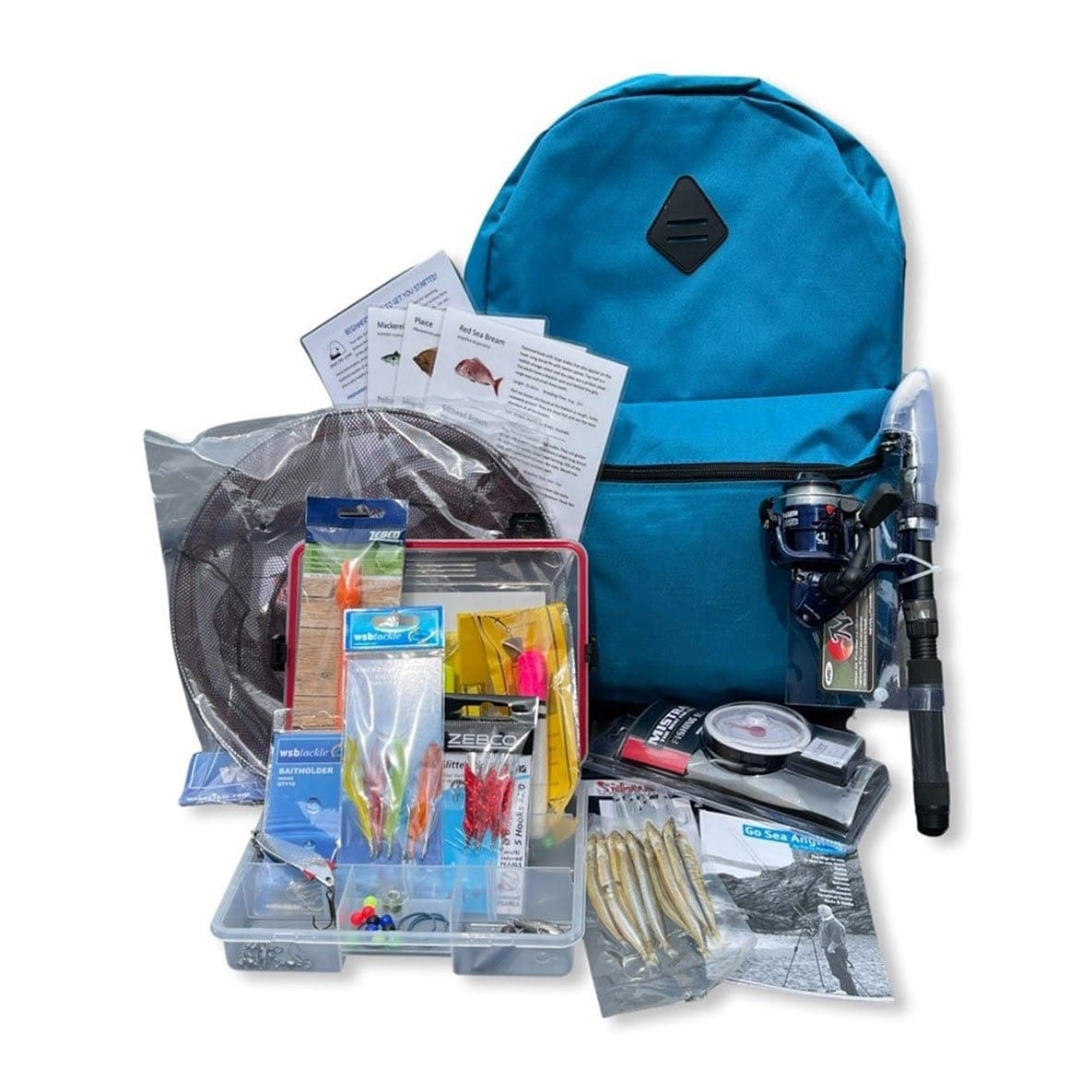
Holidays and the car boot: a telescopic or travel rod, ideally in a kit with a matched reel and tackle, such as our Telescopic Plus travel sea fishing kit. It is a compact 5ft set-up, so it suits harbour walls, piers and rock edges rather than long casting from open beaches.
Matching a reel and line to your rod
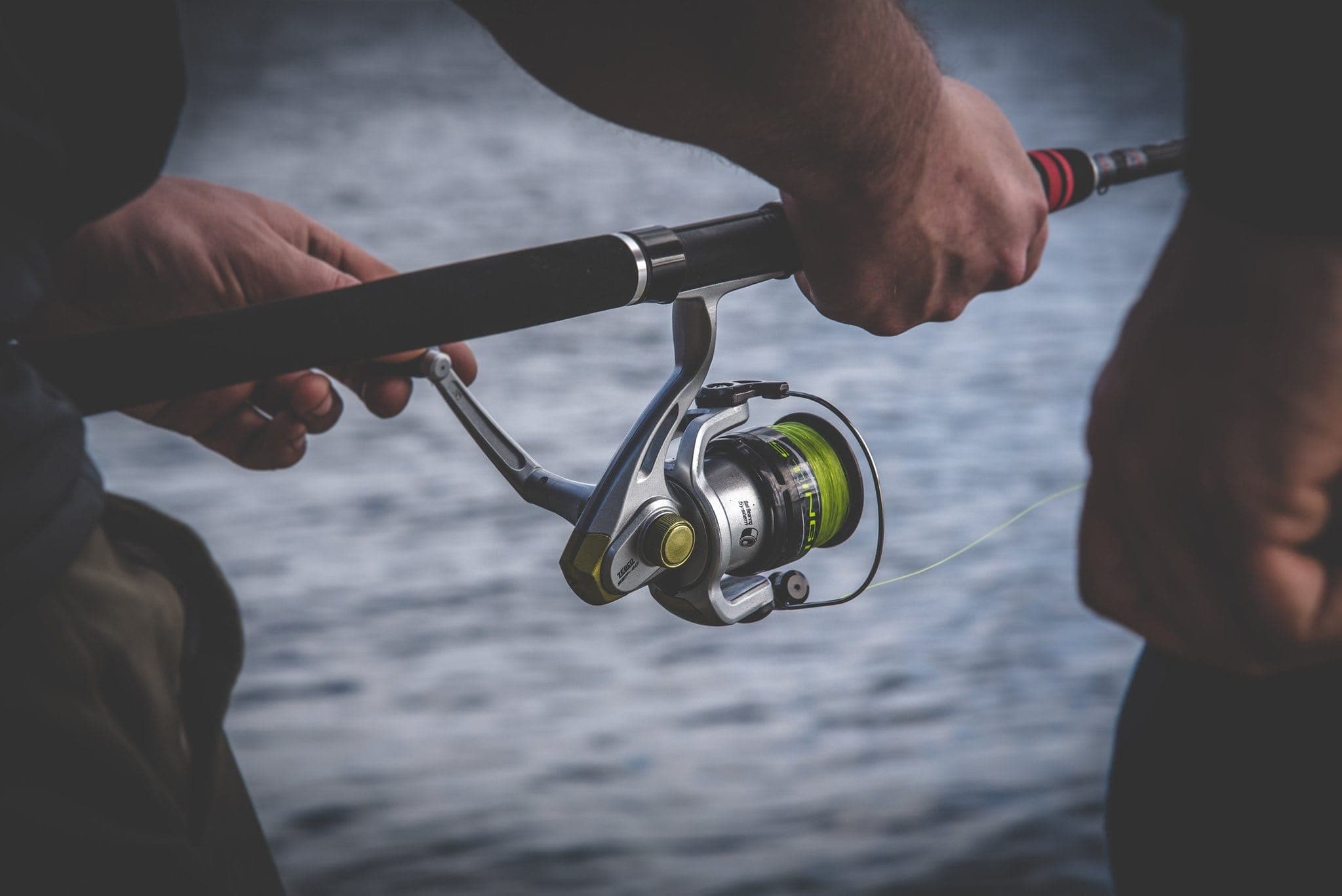
A fixed-spool reel is the easiest choice for beginners: it is simple to cast and far less likely to tangle than a multiplier. Match the reel to the rod so the outfit balances in your hand. Reel sizes vary between brands, but as a rough guide, small reels (often labelled 2500 to 4000) suit spinning rods, medium reels (around 5000 to 6000) suit bass and light surf rods, and large reels suit beachcasters. Our guide to choosing a sea fishing reel explains the differences.
For line, 12 to 15lb monofilament is a good all-round choice on a general-purpose rod, and 15 to 20lb suits a beachcaster. Braided line casts further and shows bites clearly, which makes it popular for lure fishing, but it is less forgiving for beginners.
If you cast leads of 3oz or more with any force, use a shock leader: a length of much stronger line tied to the end of your main line, long enough to run from the lead, up through the rod rings and several turns onto the reel. The usual rule of thumb is 10lb of breaking strain for every 1oz of lead, so a 5oz lead needs a 50lb leader. It stops the line snapping on the cast and sending the lead flying, which is genuinely dangerous to anyone nearby. Always check behind you before you cast.
Beyond the rod and reel, a first outfit needs very little: some ready-tied rigs, a few leads, hooks and swivels. Our bottom fishing tackle kit and float fishing tackle kit put the basics in one box, our sea fishing rigs for beginners guide explains what each rig is for, and our best beginner sea fishing kits guide compares complete set-ups.
Should a beginner buy a rod and reel combo?
Often, yes. A combo or complete kit takes the guesswork out of matching a reel and line to the rod, usually costs less than buying the parts separately, and gets you fishing straight away. The main thing to check is that it suits the kind of fishing you plan to do: a short travel combo is perfect on a harbour wall but will struggle on a surf beach in winter.
Spending more on your first rod mainly buys lighter weight, a crisper action and longer casts. Those matter more as you improve, so it is worth starting with something sensible and upgrading once you know which kind of fishing you enjoy most. Our rods and combos and beginner kits show what is in stock now.
Looking after a sea fishing rod
Salt water is hard on tackle. After every trip, rinse the rod and reel gently with fresh water (do not blast the reel with a hose), wipe them down and let them dry before you put them away. Check the rod rings for cracks or grooves, which can fray and cut your line, store the rod in a bag or tube so the tip is protected, and loosen the reel's drag when you put it away.
Whatever rod you choose, check the tide times before you go, tell someone where you will be, and keep an eye on the sea and the weather. Our coastal safety guide and lifejacket or buoyancy aid guide cover staying safe on the shore, and our fishing jargon buster explains any terms that are new to you.