The full guide
Read straight through, or use the fishing notes above to keep marks, tides and tackle easier to follow.
To cast a sea fishing rod with a fixed-spool reel, let the lead hang a short way below the rod tip, trap the line against the rod with your index finger, open the bail arm, then swing the rod smoothly from behind you to in front and lift your finger to let the line go as the rod passes just beyond straight up above your head. Close the bail arm by hand once the lead lands, and wind in the slack. That is the whole movement, and most people get the hang of it within an hour. Below we break it into steps, cover the side cast for light lures and the shock leader you need for heavier leads on the beach, and go through the safety rules and the common faults, with simple fixes for each.
Useful tackle picks
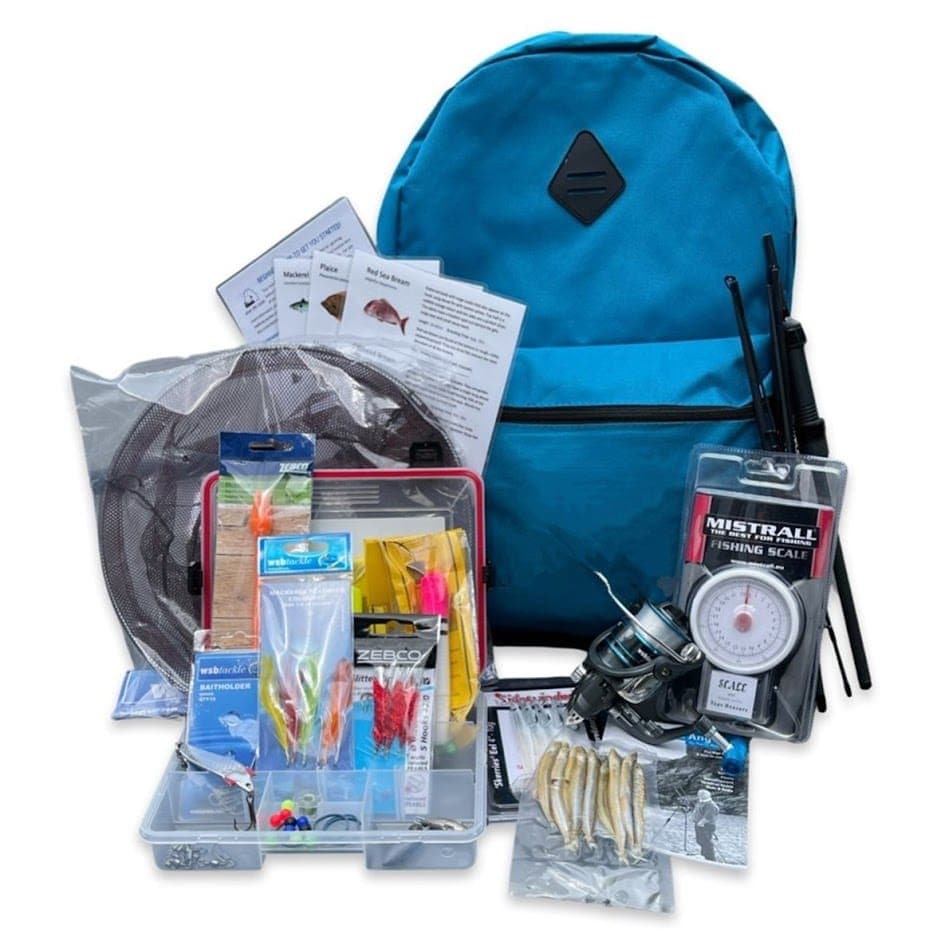
Friendly tackle picks chosen to make the guide easier to put into practice.

Before you cast: check the reel and line
Most casting problems start before the cast. A fixed-spool reel works best when the spool is filled with line to just below the lip. If the line sits well down inside the spool, it rubs on the lip as it peels off and you lose distance. If the spool is overfilled, loose coils spring off together and tangle. Line laid on loosely or with twist in it causes the same trouble, so wind it on under a little tension, and turn the spool over if it starts to twist.
Set the drag, the knob on the front of the spool, firm enough that a hard cast does not make the spool slip. A slipping spool can burn or cut the finger holding the line. You can back it off once the lead is in the water.
Then check the rig. Make sure the lead or lure is clipped on properly, that no hook is caught round the line or the rod tip, and that the bait is tied or tucked on well enough to survive the cast. If you are not sure which rig to use yet, our beginner's guide to sea fishing rigs explains the main ones, and our guide to choosing a first rod covers matching rod, reel and casting weight.
What is the drop, and how long should it be?
The drop is the length of line hanging between the rod tip and the lead or lure when you start the cast. It matters because the drop decides how the rod loads. Too short, and the rod barely bends, so the lead just flops out. Too long, and the lead swings about, hits the ground behind you or wraps round the rod.
For a light spinning or general rod of 7 to 10 feet, start with about 30 to 60cm (one to two feet), roughly level with the bottom rod ring. For a longer beach rod of 12 feet or more cast overhead, beginners usually find a drop of around 1 to 1.5 metres easier, with the lead hanging roughly level with the reel or a little below. These are starting points. If the cast feels weak, try a little longer. If the lead is clipping the ground or rocks behind you, shorten it.
Keep the line clear of the rod rings and the tip.
How to hold the line and open the bail
Hold the rod with your stronger hand on the reel seat, with the reel stem between your middle and ring fingers (or between your middle and index fingers, whichever is comfortable). Your other hand goes on the bottom of the handle.
Wind the reel until the line roller on the bail arm is at the top, nearest your index finger. Reach forward with your index finger, hook the line just in front of the roller, and press it against the rod handle. Hold it with the pad of the finger, not the crease of the joint, so it comes off cleanly when you straighten your finger.
Now flip the bail arm open with your other hand. The line is held only by your finger, and the lead should not move. If it slides down, press harder. On heavier set-ups the line can bite into the finger, which is what a finger stall is for (more on that below).
How to do a basic overhead cast, step by step
Step 1: stand side-on to the water, with your feet about shoulder-width apart and your front foot pointing roughly where you want the lead to go. Pick a target, such as a buoy or a rock.
Step 2: with the line trapped and the bail open, lift the rod back over your shoulder until it points up and behind you. Picture a clock face beside you with twelve straight up, nine pointing out over the water and three behind you: the rod should be at about two o'clock. Let the lead settle behind you so it is hanging still. Look behind you first, every time.
Step 3: start the cast with a smooth, steady push and pull. Push forward with the top hand and pull the bottom of the handle down towards your chest with the lower hand. This lever action is what bends the rod.
Step 4: as the rod passes above your head and heads forwards, straighten your index finger to release the line. On that clock face the release comes at around eleven o'clock, just past vertical. Watch your target, not the rod, and feel for the pull of the lead on your finger. A smooth cast is far easier to time than a hard one.
Step 5: follow through. Carry on bringing the rod forward and down to about ten o'clock, pointing towards your target. Stopping the rod dead costs distance.
Step 6: as the lead nears the water, let the line brush your index finger to slow it, so slack does not pile out when it lands. Then close the bail arm by hand, as below.
Close the bail arm by hand
Once the lead or lure lands, close the bail arm by flipping it over with your free hand, rather than turning the reel handle to snap it shut.
Shutting the bail with the handle works, but it puts a little twist into the line each time and can leave a loose loop under the roller. Over a session those loops and twists build up into tangles. Closing it by hand takes a second and saves a lot of trouble. When fishing on the bottom, wind in until the line is just tight to the lead, then set the rod in a rest.
Side casts and lobs for light lures and floats
Not every cast needs to be overhead. For light lures, floats and soft baits that might fly off, a side cast or a gentle lob is often better and more accurate.
For a side cast, hold the rod out to the side, roughly level with your waist, with a short drop of around 30cm. Sweep the rod forward across your body and release as it points about 45 degrees to the side of your target. It keeps the lure low under the wind and is useful under a cliff or from a crowded harbour wall where an overhead cast would be awkward. Check sideways for people, rods and lamp posts, because that is where the lure goes if you get it wrong.
For a lob, used with a float or delicate bait, let the rig hang a little longer, swing the rod gently forward from in front of you and release early so the rig floats out in a slow arc. It will not go far, but it lands softly and the bait stays on. Our guides to float fishing and sea fishing lures for beginners cover the rigs and lures to cast this way.
Heavier leads on the beach: shock leaders and finger stalls
When you cast leads of 3oz (about 85g) or more from a beach or pier, you need a shock leader. This is a length of much stronger line tied to the end of your main line. The force of a hard cast with a heavy lead can snap ordinary 12 to 18lb main line, and a lead that snaps off in mid-cast (a crack-off) flies off at high speed in any direction. That can badly injure anyone in its path. Many anglers regard casting heavy leads from a beach or pier without a leader as irresponsible, and most clubs insist on one.
The usual rule of thumb is 10lb of breaking strain for every ounce of lead. So a 5oz (about 150g) lead needs a 50lb leader, and many anglers add a further 10lb margin for hard casting. The leader should be long enough to go from the lead, up through all the rod rings and onto the spool with at least six turns of line on the reel when you are ready to cast, plus the length of your drop. Tie it to the main line with a small, neat knot such as a uni-to-uni or an Albright, trim the ends short, and wind the knot to one side of the spool so it does not catch your finger.
A finger stall is a protective sleeve, often leather, worn on the index finger that holds the line. On heavier casts, thin line can cut or burn your finger, especially when the leader knot passes over it. Some anglers use a strip of rubber glove instead. Wear one as soon as you notice the line biting.
Leaders matter most on busy beaches and piers. Our guide to fishing from a beach goes further into heavier tackle.
How far do beginners cast, and does it matter?
Less than you might fear, and it matters less than you might think. Sea Angler magazine treats around 150 yards (about 140 metres) as an excellent target for an experienced beach caster, and that takes the right rod, line, lead and a lot of practice. On your first few trips with a general-purpose rod and a 2 to 3oz lead, a steady cast that lands straight and in roughly the same place each time is far more useful than a long one that goes anywhere.
A great many fish feed close in. Bass hunt in the white water of the surf, often within a few metres of your feet. Flatfish, rays and whiting move along the gullies just behind the breakers. Wrasse and pollock live at the foot of rocks and harbour walls, and mackerel come right up to the pier when the shoals are in. Fish the near water properly before trying to clear it. Our guide to which fishing location helps you match the cast to the mark.
Safety: what every caster needs to know
Look behind you before every cast, without exception. Hooks and leads swing behind you on the back cast, and walkers, children and dogs have a habit of appearing just as you start. If anyone is within a rod's length or two behind or to the side, wait.
Never cast over or towards people, boats, swimmers, paddleboarders or other anglers' lines. On a busy pier or harbour wall, cast straight out in front, not across, and use a side cast or lob if there is no room to swing overhead. Watch for overhead power cables near rivers and car parks, because a carbon rod or wet line can conduct electricity.
Check the tide and the weather before you go. Strong onshore wind makes casting harder and waves dangerous on rocks and piers, and the Met Office inshore waters forecast gives wind and sea state for coastal areas. Our coastal safety guide and tide times cover the rest. On rocks and harbour walls, a buoyancy aid or lifejacket is sensible. If someone gets into trouble in the sea, call 999 and ask for the Coastguard.
Wear sunglasses or clear glasses. A hook coming back at you on a bad cast is rare, but eyes do not recover.
Common faults and how to fix them
Birds' nests (a tangle of loops coming off the spool): usually an overfilled spool, line wound on loosely, or loops left under the bail. Take a little line off an overfilled spool, close the bail by hand, and after every cast tighten the line with your finger before winding. If loops keep appearing, wind on a fresh line under tension.
Casting into the ground or the water at your feet: you are letting go too late, or the drop is too long. Release slightly earlier and shorten the drop. Casting straight up or very high and short: you are letting go too early. Hold on a fraction longer.
Line wrapped round the rod tip: the line caught the tip before or during the cast, often in a crosswind or with a slack drop. Check the tip before every cast and start with the lead hanging still. Lead going off to one side: you are pulling across your body. Face your target with your front foot and finish the follow-through pointing at it.
Line snapping on the cast: a damaged line, a worn knot, a slipping spool or no shock leader with a heavy lead. Cut back and retie any line that feels rough, and use a leader with leads of 3oz or more.
How to practise casting on a field
A playing field or a large, empty patch of grass is the best place to learn. Ask permission first if it is not public land, choose a quiet time, and make sure there is nobody within well over a hundred metres in front and to the sides. Never use hooks. Tie on a plain lead or a rubber casting weight of the same weight you will fish with.
Set out a target, such as a jumper or a bag, and practise ten casts at a time, concentrating on a smooth start and a clean release, not distance. Pace out the result. When the casts start landing in a tidy group, move the target further away. Twenty minutes, two or three times, will help more than an hour of hard casting on the beach.
Once the basics feel natural, you are ready for the real thing. If you are still choosing gear, a balanced beginner fishing kit or our kit finder is the easiest place to start.