Coastal
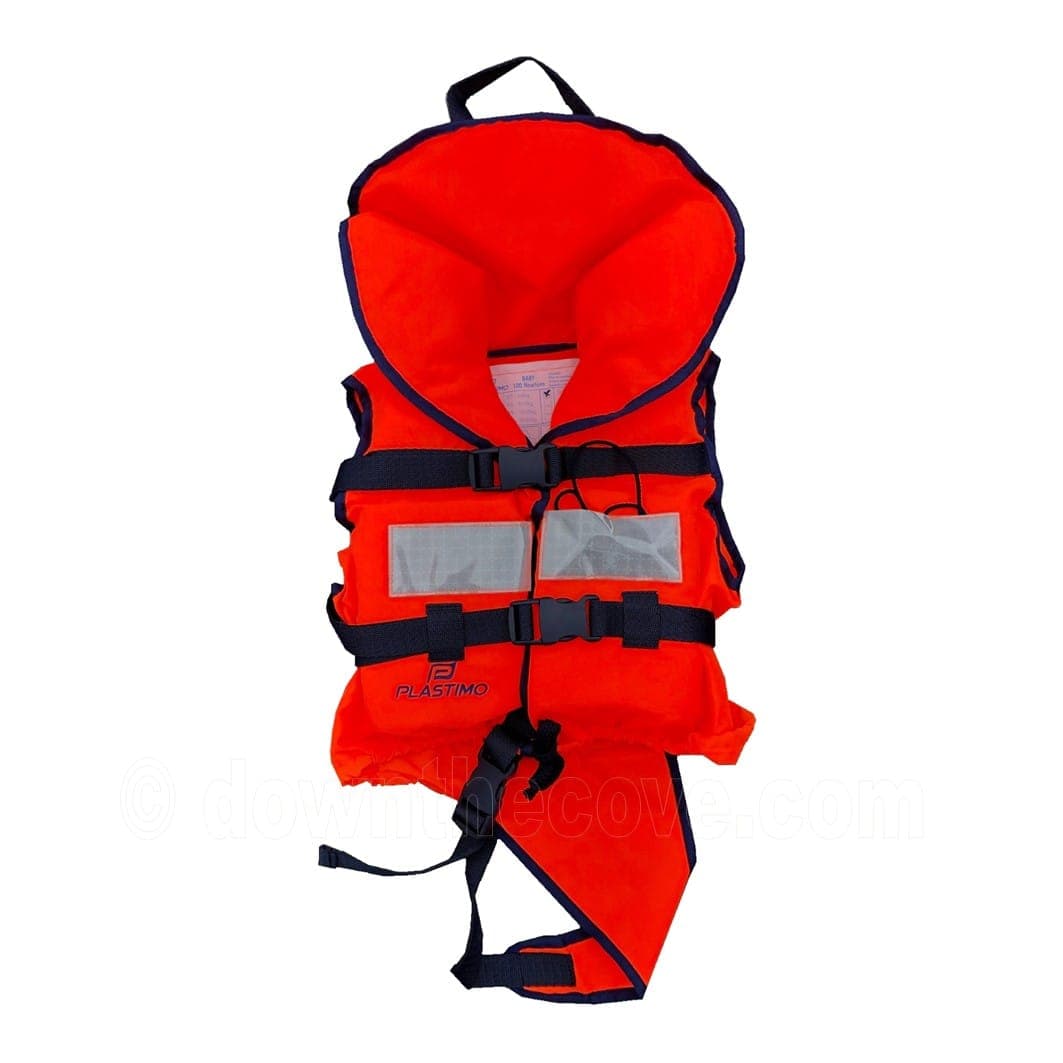
Children's life jackets for sheltered and calm water, sized by weight from babies up to 40kg, and a 50N buoyancy aid waistcoat for able swimmers fishing in sheltered water with help close at hand. Choose by weight, do up the crotch strap every time, and check the fit before going near the water.
Showing 1-4 of 4 products
Our range is deliberately small: two Plastimo 100N children's life jackets, a 50N buoyancy aid for fishing and a 50N unisex buoyancy aid. Below is what each is for and how to fit it, based on RNLI and RYA advice.
A 100N life jacket is level 100, a class of jacket made to the ISO 12402-4 standard, not the buoyancy of every size: lighter children need less, so on the Plastimo 100N Child's Lifejacket the 3–8kg and 8–15kg sizes give 30N, 15–30kg gives 40N and 30–40kg gives 50N. Each label states its weight range and buoyancy.
The RNLI recommends a level 100 lifejacket for sheltered and calm water, and says it may not roll an unconscious person on to their back. Level 150 is for coastal and offshore water and should turn an unconscious person on to their back. A level 50 buoyancy aid is for able swimmers in sheltered water with help close at hand and is not designed to turn anyone face-up. See RNLI lifejacket advice and our guide to choosing a lifejacket or buoyancy aid for fishing.
Choose by weight, not age, and buy a jacket that fits now, not one to grow into: a jacket that is too big can let a child slip out. Do up the crotch strap every time so the jacket cannot ride up. Then lift it by the shoulders: the RYA advice on children's lifejackets says it should not move more than 2.5cm. Check webbing, stitching and buckles before each trip.
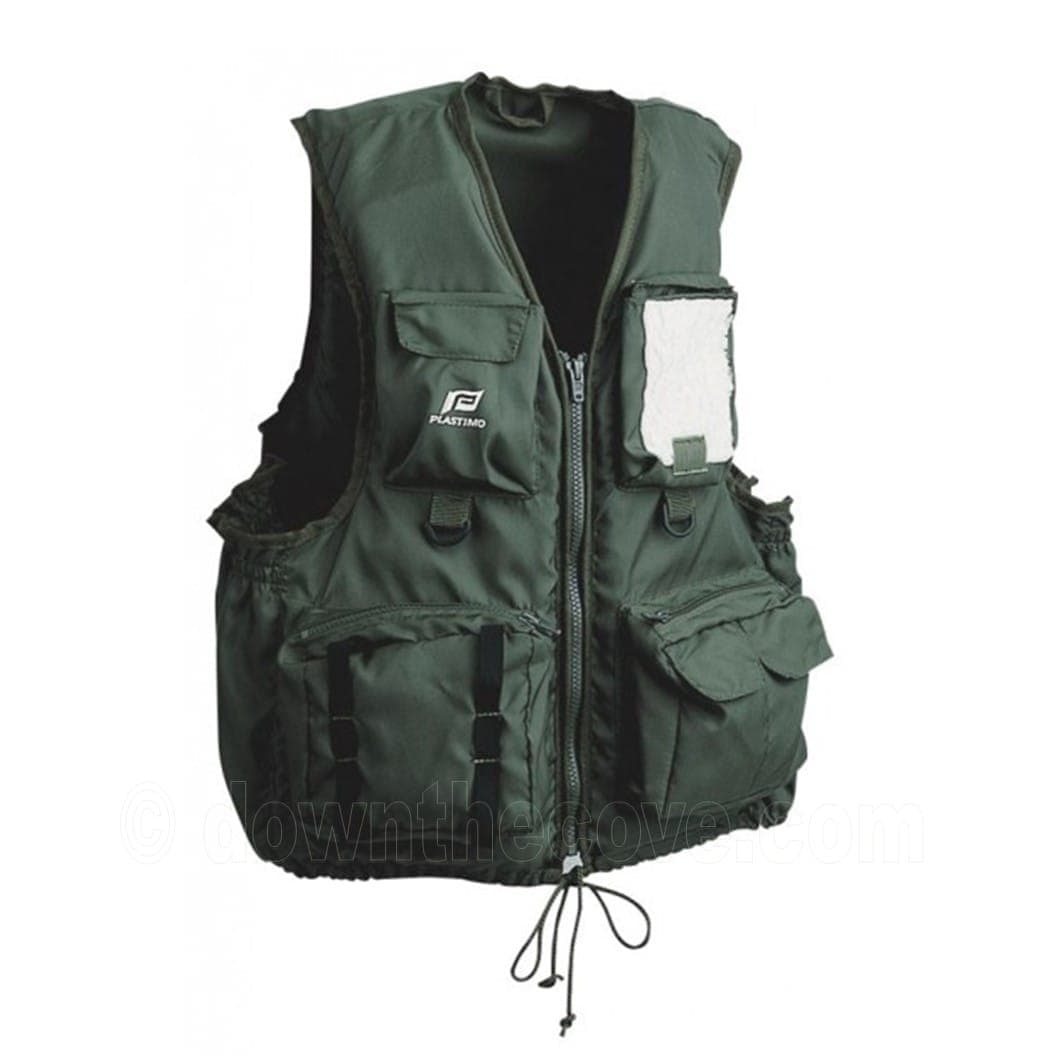
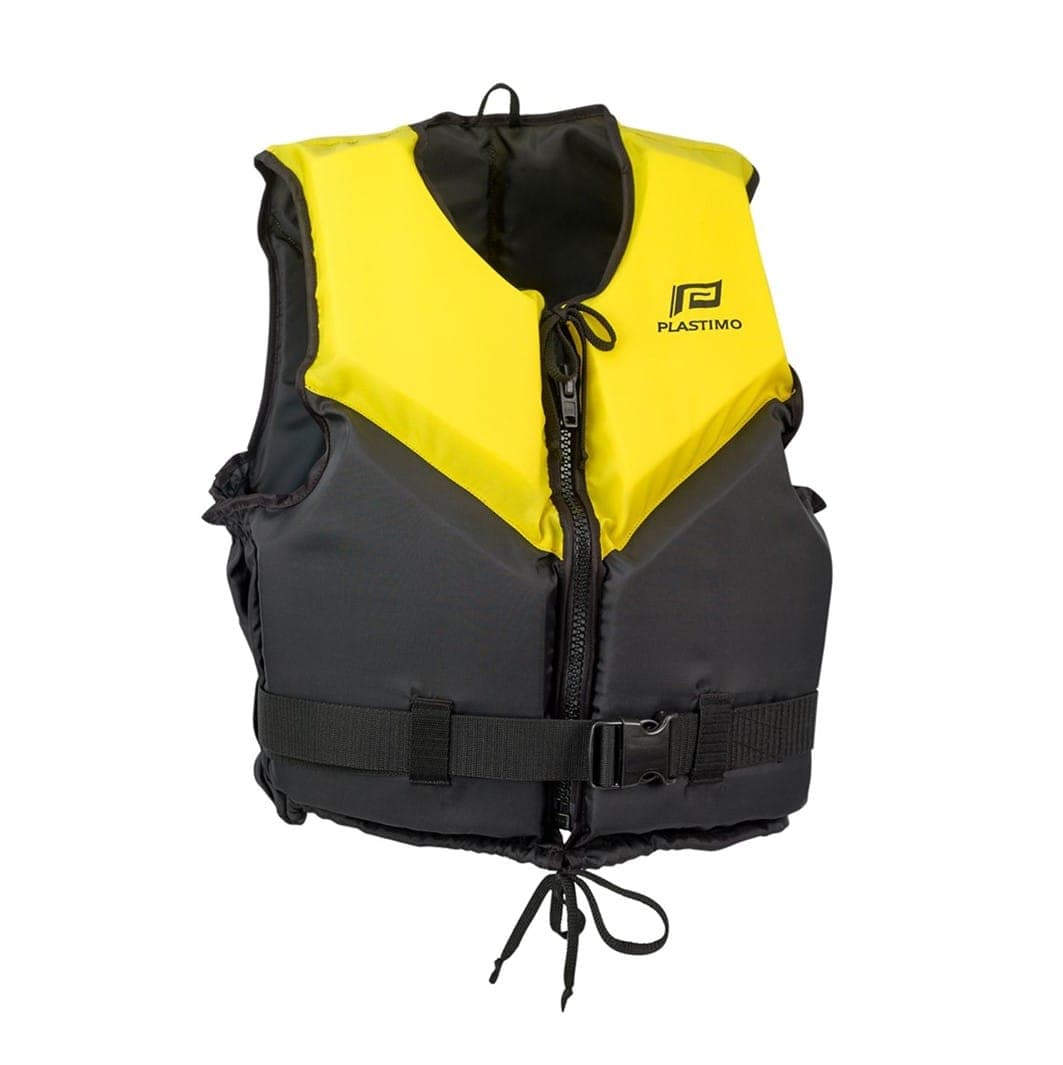
The Plastimo 50N fishing buoyancy aid is a waistcoat with six pockets for able swimmers fishing in sheltered water with help close at hand. On rocks, harbour walls or boats at sea, wear a lifejacket instead. The Plastimo 50N unisex buoyancy aid is made for kayaking, coasteering and lake activities, with an adjustable waist belt, hem and neck; the same rule applies. Before fishing from rocks, read fishing from rocks and cliffs and our coastal safety advice. For lights and other kit, see coastal safety equipment.