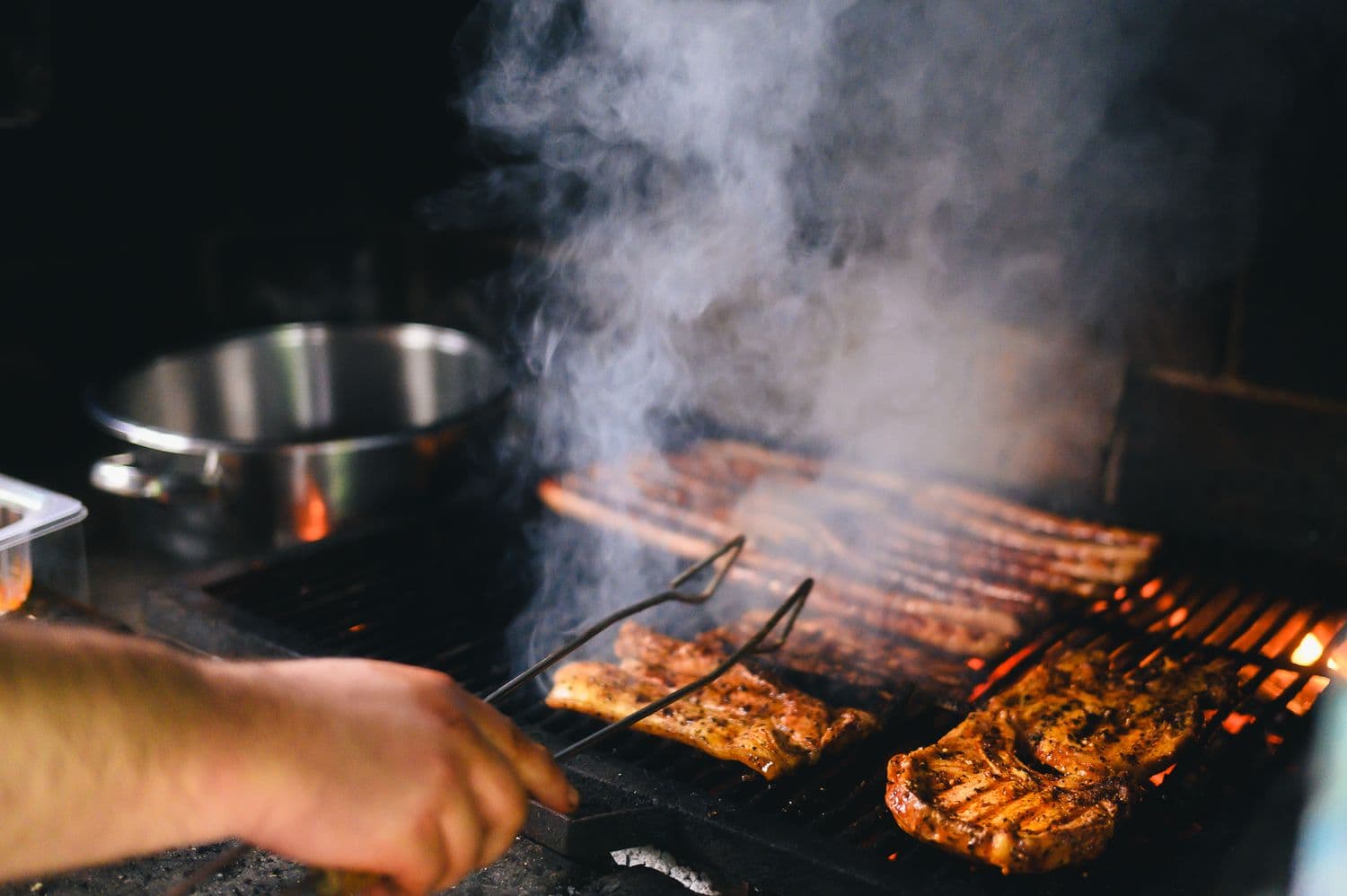

The full guide
Read straight through, or dip into the sections that matter for your next smoking session.
Home smoking starts with choosing between cooking with smoke and adding smoke without cooking. Match the equipment to the method, follow a tested food-specific process and check food temperatures before serving.
Hot smoking and cold smoking are different methods
A hot smoker supplies heat as well as smoke. A cold-smoke generator supplies smoke but is not a cooking appliance. Choose the method before buying the smoker and fuel; a longer smoking time does not make the two methods interchangeable.
Choose equipment for the job
Follow the manufacturer's instructions for the exact smoker, fuel, heat source and ventilation. Use equipment indoors only if its manufacturer explicitly permits that use. Outdoor smokers and charcoal equipment must stay outdoors, not in a shed, garage or other enclosed space.
Hot smoking: check the food, not just the clock
Check the centre of the food with a clean thermometer: the FSA gives 70°C for 2 minutes, or an equivalent combination such as 75°C for 30 seconds. The smoker's air temperature and elapsed cooking time are not substitutes for this check.
Cold smoking: food-specific controls matter
Cold smoke adds flavour without cooking. Curing, salting and smoking alone do not establish that fish is suitable to eat uncooked. Use a validated food-specific process; this guide is not a preservation recipe or a shelf-life assessment.
Who should take extra care?
The FSA advises pregnant people and people with weakened immune systems to avoid ready-to-eat cold-smoked or cured fish unless it is cooked until steaming hot throughout. Older people should also be aware of the increased risk. Read the current FSA advice linked in this guide.
Wood chips, dust and flavour
Use food-smoking fuel in the grade specified by the equipment manufacturer. Chips and fine dust are not interchangeable in every smoker. Do not use painted, treated or unidentified scrap wood. Start with the specified amount and adjust flavour without changing the safety controls.
Preparation, serving and leftovers
Keep raw foods chilled and separate from food that is ready to eat. Follow the recipe's preparation steps and clean utensils after handling raw ingredients. Smoking does not give leftovers an assumed extra shelf life; follow current storage guidance and supplier instructions.
Get help choosing equipment
Our shop team can help compare smokers and compatible fuel. Equipment advice is not a substitute for a qualified assessment of a curing process. Use our contact page for current contact options rather than relying on a copied phone number.
Practical checks before your next purchase
Before adding another smoker to the basket, check the method, heat source, permitted location, compatible fuel and food-temperature controls. A cold-smoke generator does not replace a cooking appliance.
A five-part setup check
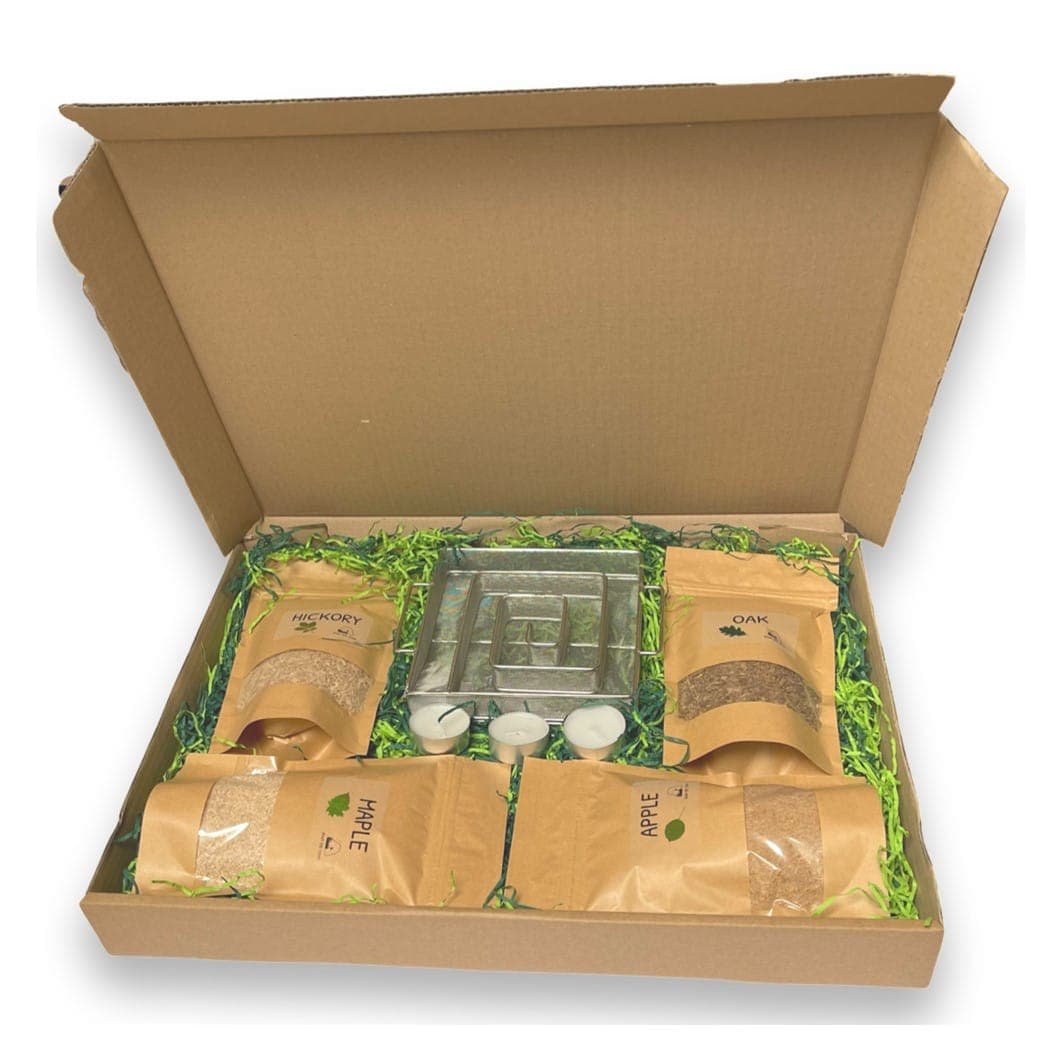
Write down the smoking method, the exact equipment model, the fuel grade it accepts, where it may be used and how food safety will be checked. A cold generator also needs a suitable chamber and airflow; a hot smoker needs the specified heat source and cooking checks. Compare a kit’s contents with this list rather than assuming starter means everything is included.
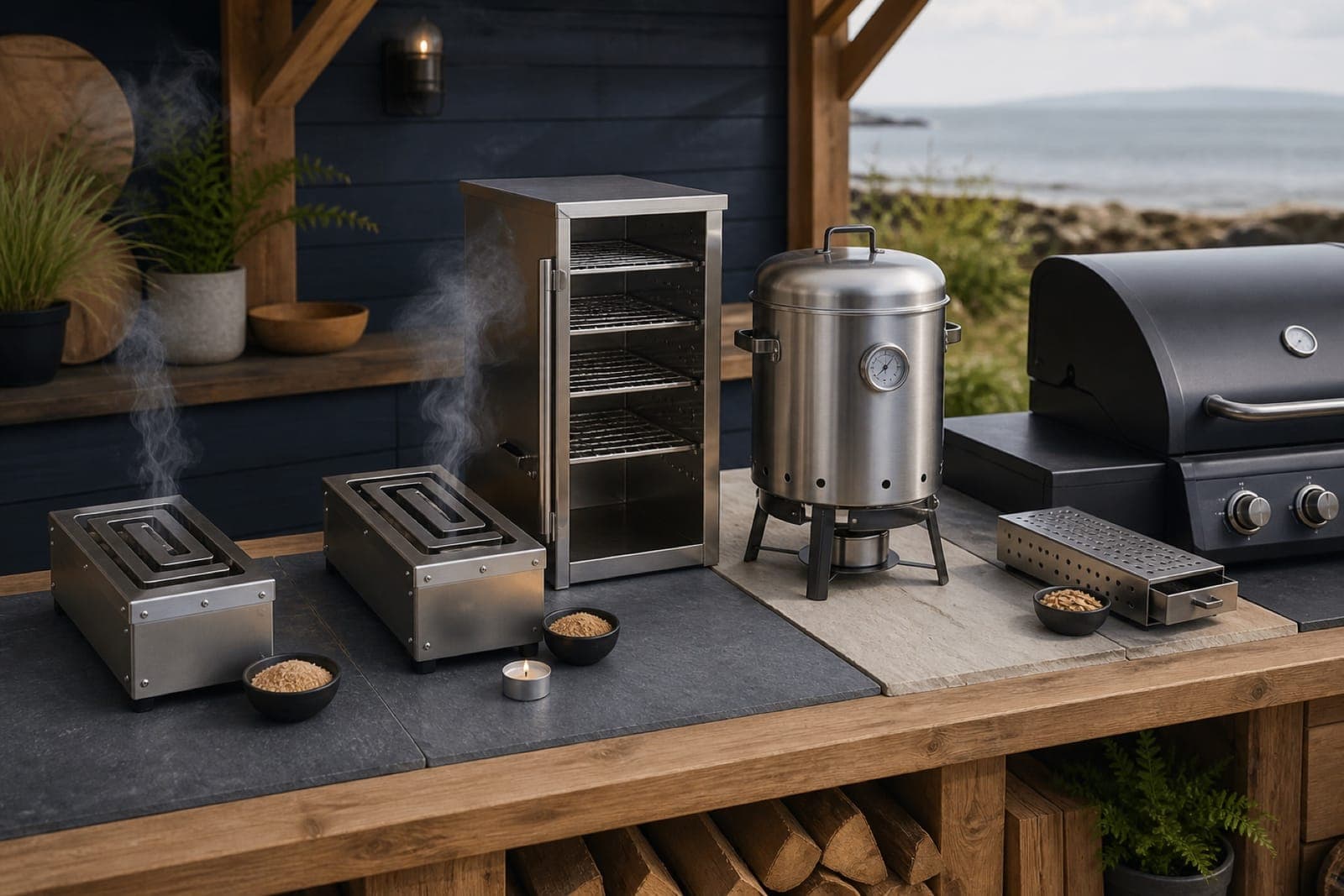
Printable setup comparison
Generator, starter kit or hot smoker?
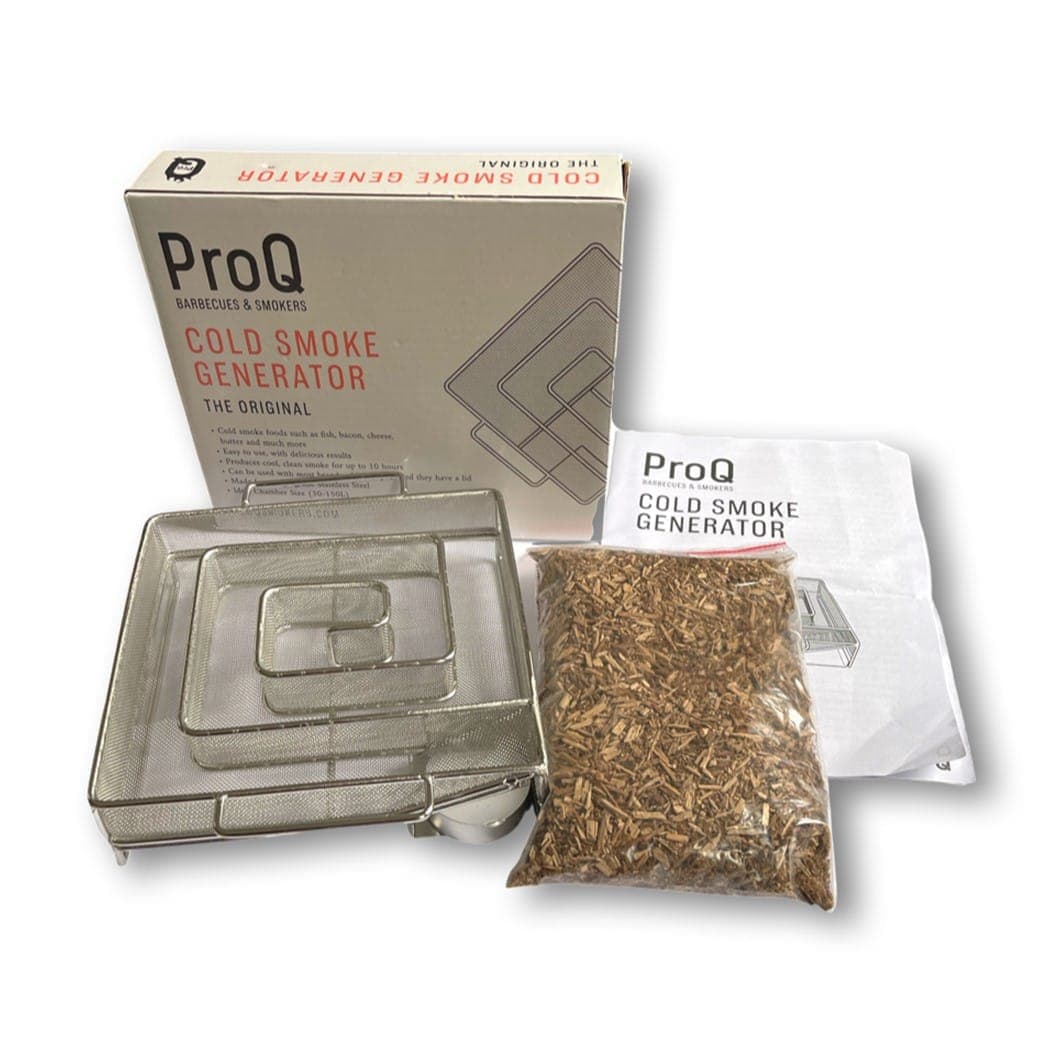
Choose the standalone cold-smoke generator when you already have a suitable ventilated chamber. Choose the starter kit when you need compatible dust and setup essentials. Choose a hot smoker or barbecue smoker box when the aim is to cook while adding smoke.
Cold-smoking equipment creates smoke without cooking; a hot smoker is a different method, not a larger version of the same setup.
| Setup | Choose it when | You still need | Method |
|---|---|---|---|
| Standalone cold-smoke generator | You own a suitable chamber and want a reusable smoke source | Correct smoking dust, ignition method and airflow | Cold smoking |
| Cold-smoking starter kit | You want the compatible core pieces in one purchase | A suitable chamber and food-specific preparation | Cold smoking |
| Hot-smoking kit | You want to cook and smoke during the same session | Heat control and food-temperature checks | Hot smoking |
| Barbecue smoker box | You want to add smoke to a gas or charcoal barbecue | Suitable chips and a barbecue with a lid | Hot smoking / smoke flavour |
Cold-smoke setup check
Tick off the checks as you work through them. This is a personal reminder, not a safety approval.
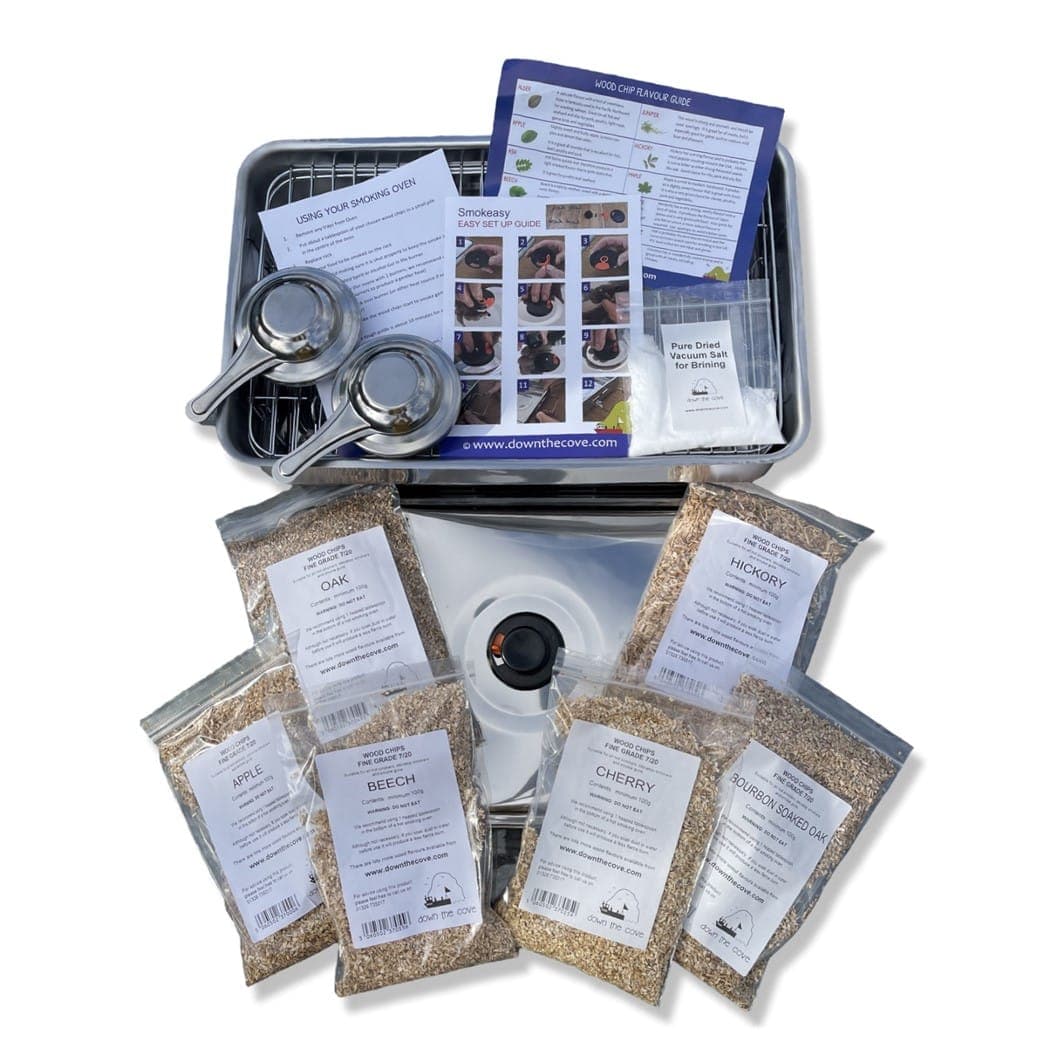
Smoking kit to help at home
Home smoking essentials that make the advice easier to put into practice.
Common questions
- What is the difference between hot and cold smoking?
- Hot smoking supplies cooking heat and smoke; cold smoking supplies flavour without cooking. Cold smoke adds flavour without cooking. Curing, salting and smoking alone do not establish that fish is suitable to eat uncooked. Use a validated food-specific process; this guide is not a preservation recipe or a shelf-life assessment.
- How long does smoking fish take?
- Timing depends on the food and equipment. Use a tested method and check the centre of hot-smoked food, not a generic ten- or fifteen-minute instruction.
- Can I smoke food indoors?
- Follow the manufacturer's instructions for the exact smoker, fuel, heat source and ventilation. Use equipment indoors only if its manufacturer explicitly permits that use. Outdoor smokers and charcoal equipment must stay outdoors, not in a shed, garage or other enclosed space.
- Which wood fuel should I buy?
- Check your manufacturer's fuel specification. A generator designed for fine dust may not work with chips; use food-smoking wood rather than improvised scrap.
- Can I use a cold-smoke generator to cook dinner?
- No. It supplies smoke, not cooking heat. Use the correct cooking method and food-safety checks; extending the smoke time is not a substitute.