When is the best time to go rock pooling?
Tide matters far more than the time of year. Rock pools are only worth exploring when the sea has dropped back far enough to uncover them, so check a tide table for your beach before you set off and plan to arrive about an hour or two before low water. That gives you the falling tide, when more pools appear by the minute, and a little time at the bottom of the tide before it starts to come back in.
Spring tides are the ones to aim for. They happen around new and full moons, and the low tides drop further down the shore than usual, uncovering pools that stay underwater for most of the month. Lower pools tend to hold more variety, so a good spring low can be a much richer trip than a neap low on the same beach. Tide times get later by about 50 minutes a day, so a handy morning low one weekend may fall at teatime or after dark a week later.
Once you are on the shore, keep watching the tide rather than relying on the time you read that morning. Wind and swell can push water further up the beach than the table suggests, and on many Cornish beaches the tide fills gullies behind you before it covers the rocks you are standing on.
Is October half-term a good time for rock pooling?
Yes, and it can be one of the nicest times to go. Beaches are quieter, the pools are still full of life, and children who have done some summer crabbing often enjoy the slower pace of searching under rocks. Plenty of the animals you find in August are still around in the autumn.
The differences are daylight and weather. Days are shorter, so check that low tide falls well before sunset and allow time to walk back off the rocks in good light. Autumn swell can be large even on a sunny day, so look at the forecast, watch the sea for a few minutes before you go down, and choose a sheltered beach if waves are breaking over the outer rocks. If you are planning a combined crabbing and rock pooling trip, our UK crabbing season and best spots guide covers how the seasons change through the year.
What can you find in UK rock pools?
Most Cornish and UK rocky shores share a familiar cast. Shore crabs are the ones almost every child finds first, from tiny ones the size of a fingernail to bigger greenish adults that wave their claws. You may also find small hermit crabs in borrowed shells and flat porcelain crabs clinging under stones.
Fish are a highlight. Blennies, often called shannies, are the cheeky-faced fish with big eyes that hide in cracks and under rocks, and they can survive a while out of water when the tide drops. Gobies look similar but are usually paler, with eyes higher on the head. Look closely in weedy pools for prawns, which are almost see-through until they move.
Anemones are everywhere once you know what to look for. Beadlet anemones close up into red or green blobs of jelly when the tide is out, then open their tentacles underwater. Snakelocks anemones have long green or grey tentacles that stay out. Starfish turn up on lower shores, especially under ledges and in deeper pools.
On the rocks themselves you will see limpets clamped tight, periwinkles, top shells and other sea snails, plus barnacles covering almost every surface. Seaweeds are worth naming too: bladder wrack with its air bubbles, serrated wrack with saw-toothed edges, bright green sea lettuce and pink, crunchy coral weed lining the pools.
How do you look in rock pools without harming anything?
Start by sitting still at the edge of a pool and just watching for a minute or two. Animals that darted away when your shadow fell across the water often come back out, and children spot far more this way than by sweeping a net through everything.
When you turn a rock, lift it gently towards you so anything underneath is not crushed, have a look, then put it back the same way up and in the same place. The animals on the underside need to stay underneath and the seaweed on top needs to stay on top. Leave big rocks and anything wedged in.
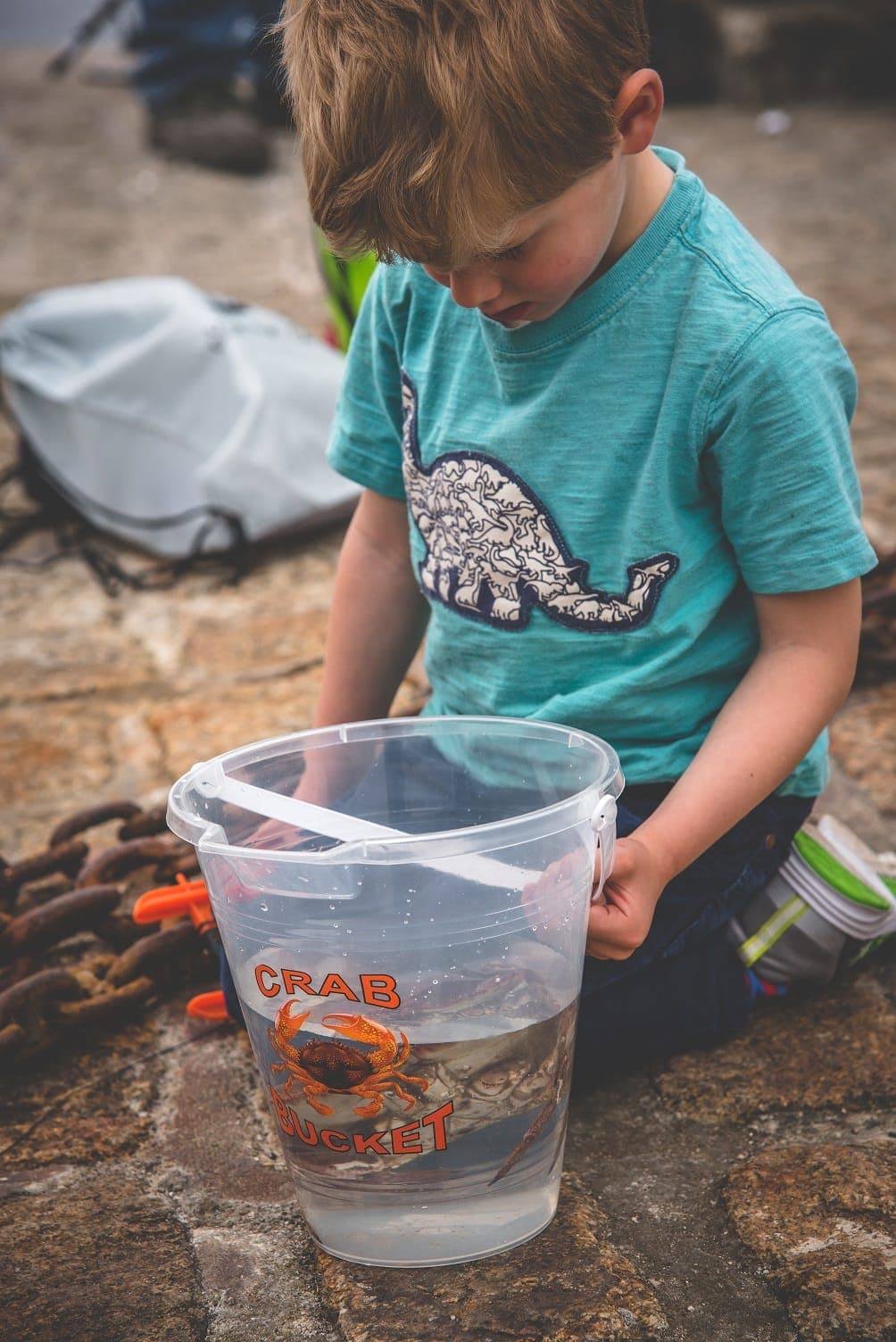
Fill a bucket with seawater before you start and keep it in the shade, topping it up with fresh seawater as you go. Small animals in a sun-warmed bucket can struggle quickly, so look, enjoy and return them within a short time. Keep crabs to a few at once so they do not fight, and keep them separate from small fish and prawns.
Use small, soft nets and scoop slowly rather than scraping along the bottom. Never pull limpets, anemones or anything else stuck to the rock off its surface, as you can easily damage it. Starfish are best admired where they are or lifted very gently in water. When you have finished, return every animal to the pool where you found it, gently and at water level rather than dropping it from a height. Living animals and shells with occupants stay on the beach.
Some stretches of coast have extra protection, for example as nature reserves or marine conservation zones. Follow any local signs, and if you are unsure what is allowed, check with your local Inshore Fisheries and Conservation Authority (IFCA) or the landowner.
What kit do you need for rock pooling?
You do not need much. A clear bucket for looking at animals, a small net and something to help children identify what they find will cover most trips. If your family also likes crabbing off harbour walls, a kit that does both saves carrying two sets of gear.
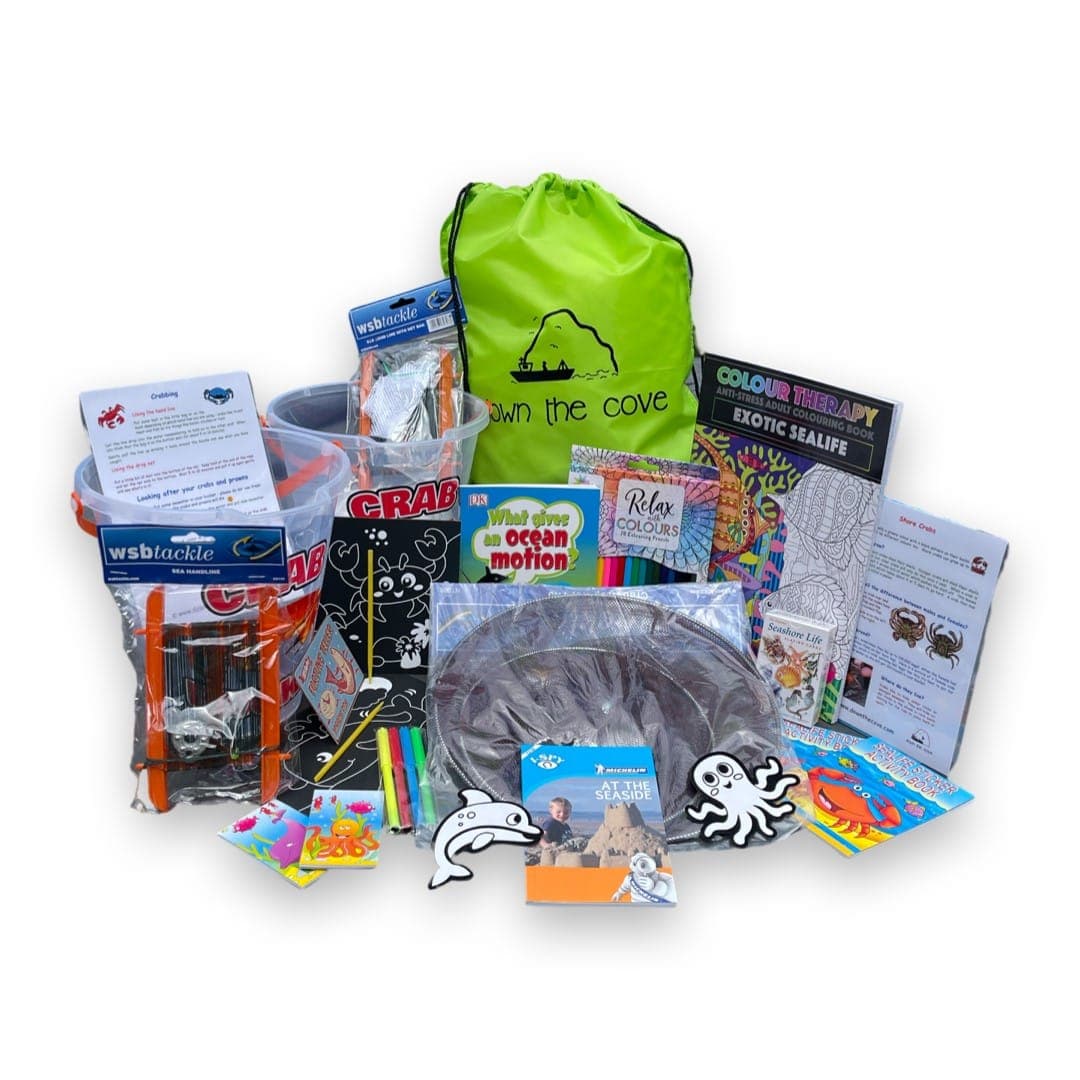
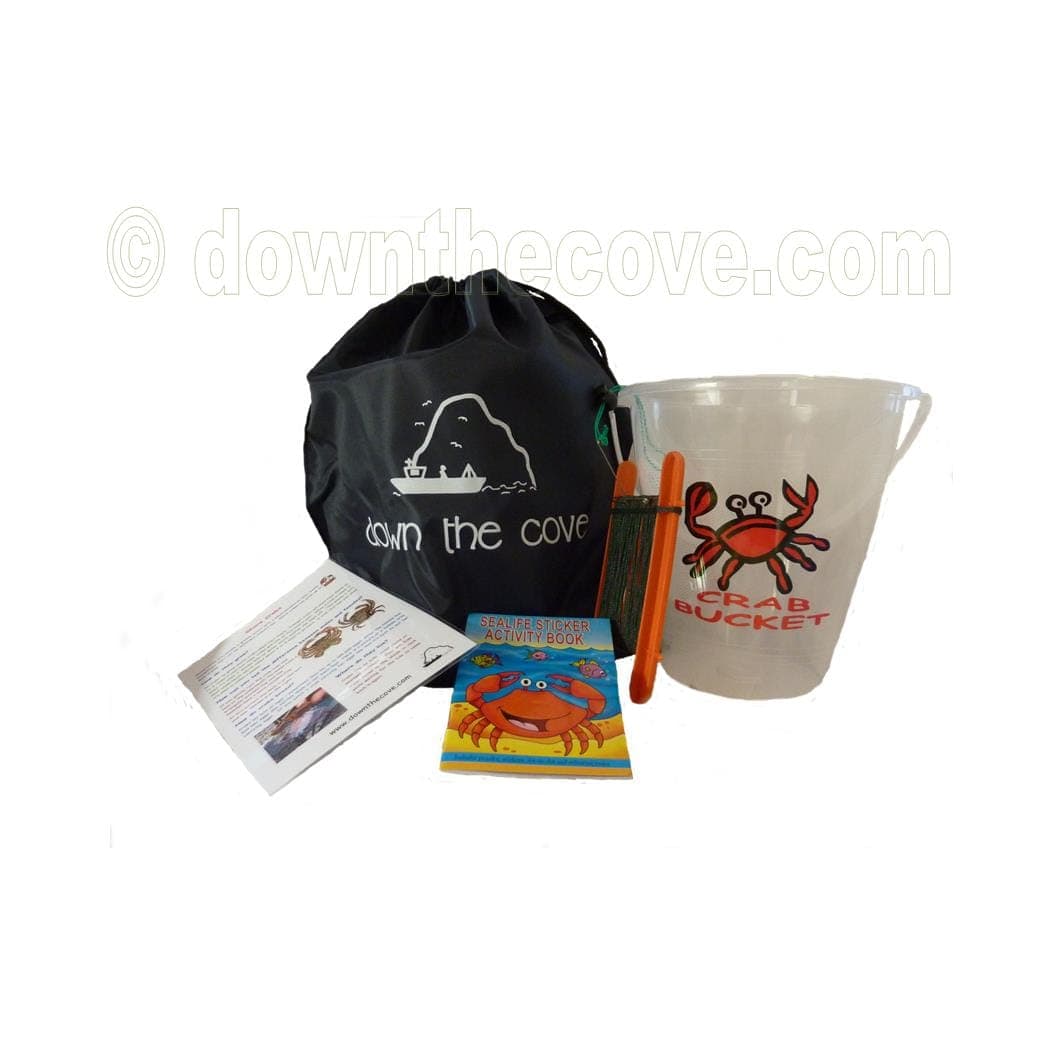
Our Family Crabbing Kit and Seashore Activity Pack is built for children who want more than one activity on a coastal day, so it suits a mix of crabbing and shore exploring. The simpler Kids Crabbing Kit with Bucket, Line and Guide includes a bucket and a waterproof crab guide, which is handy for checking what you have found. Our best crabbing kits for kids guide compares the options in more detail.
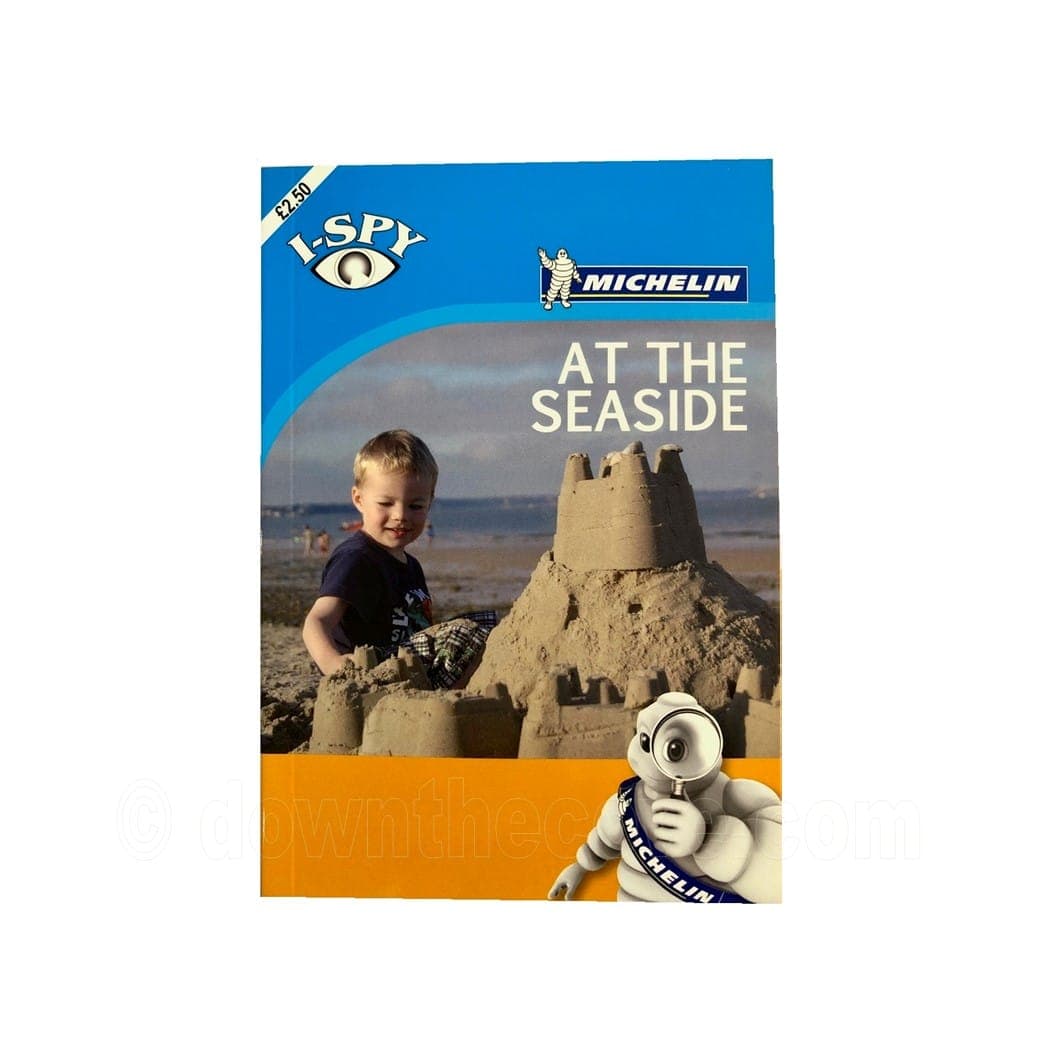
A small spotter book keeps younger children busy between pools. The I-Spy At The Seaside pocket book works well for this, and you will find more ideas in our little explorers collection. If the day turns into a crabbing session at the harbour afterwards, our best bait for crabbing guide explains what to bring. Older children who are ready to try fishing next can start with our kids fishing rods guide.
What should kids wear for rock pooling?
Footwear is the most important thing. Wet rocks and weed are very slippery, and barnacles and mussel shells can cut bare feet. Choose shoes with a grippy sole that stay on firmly, such as closed-toe water shoes, old trainers or wellies with a good tread for cooler days. Flip-flops and smooth-soled sandals are best left at home.
Dress in layers, because exposed shores are often colder and windier than the car park. In summer, a sun hat and suncream matter as children spend a long time crouched over pools. One of our I Love Crabbing bush hats or a crabbing baseball cap helps keep the sun off. In October, add a warm layer, a waterproof jacket and a spare set of clothes and a towel in the car, because someone always sits in a pool.
How do you stay safe rock pooling with children?
Supervise children closely the whole time. Pools can be deeper than they look and the rocks around them are uneven, so keep younger children within arm's reach and agree simple rules before you start, such as no running on rocks and always staying where an adult can see them.
Seaweed-covered rock is very slippery, especially green weed. Walk slowly, step on bare rock or barnacles rather than weed where you can, and keep hands free for balance rather than carrying full buckets across rough ground.
Keep watching the incoming tide. Know your way back, avoid going round headlands or across gullies that could fill behind you, and start heading back as soon as the tide turns. Stay away from the base of cliffs, where rocks can fall, and do not climb them. Keep well back from the edge of the sea when waves are breaking, as larger waves can arrive without warning.
In summer, weever fish can lie buried in the sand in warm, shallow water at low tide, and their spines give a painful sting if stepped on. Wearing shoes when paddling on sandy shallows helps. If someone is stung, find a lifeguard if there is one and follow current NHS advice.
If you see someone in difficulty at the coast, call 999 and ask for the Coastguard. Our coastal safety guide covers tides, cliffs and cold water in more detail, and the RNLI publishes up-to-date beach safety advice that is worth reading before your trip.
Rock pooling spotter checklist
Print or copy this list and let children tick things off as they go. Seeing it is enough; nothing needs to come home.
Creatures: shore crab, hermit crab, porcelain crab, blenny or shanny, goby, prawn, beadlet anemone (open or closed), snakelocks anemone, starfish, limpet, periwinkle, top shell or other sea snail, barnacles.
Seaweeds: bladder wrack, serrated wrack, sea lettuce, coral weed.
Bonus points: a moulted crab shell on the strandline, a fish hiding under a rock, an anemone opening its tentacles, a prawn you only spot when it moves.
Quick checklist before you go
Check the tide table and aim to arrive one to two hours before low water, ideally on a spring tide. Check the weather, swell and sunset time, especially in October.
Pack a clear bucket, a small soft net, a spotter book or ID guide, grippy shoes, layers, sun protection or a warm hat, a towel and spare clothes, and a charged phone.
On the shore: watch the tide, avoid cliffs, keep children close, turn rocks gently and put them back the same way up, never pull anything off the rocks, keep the bucket in the shade and return every animal to where you found it.