Useful for your next trip
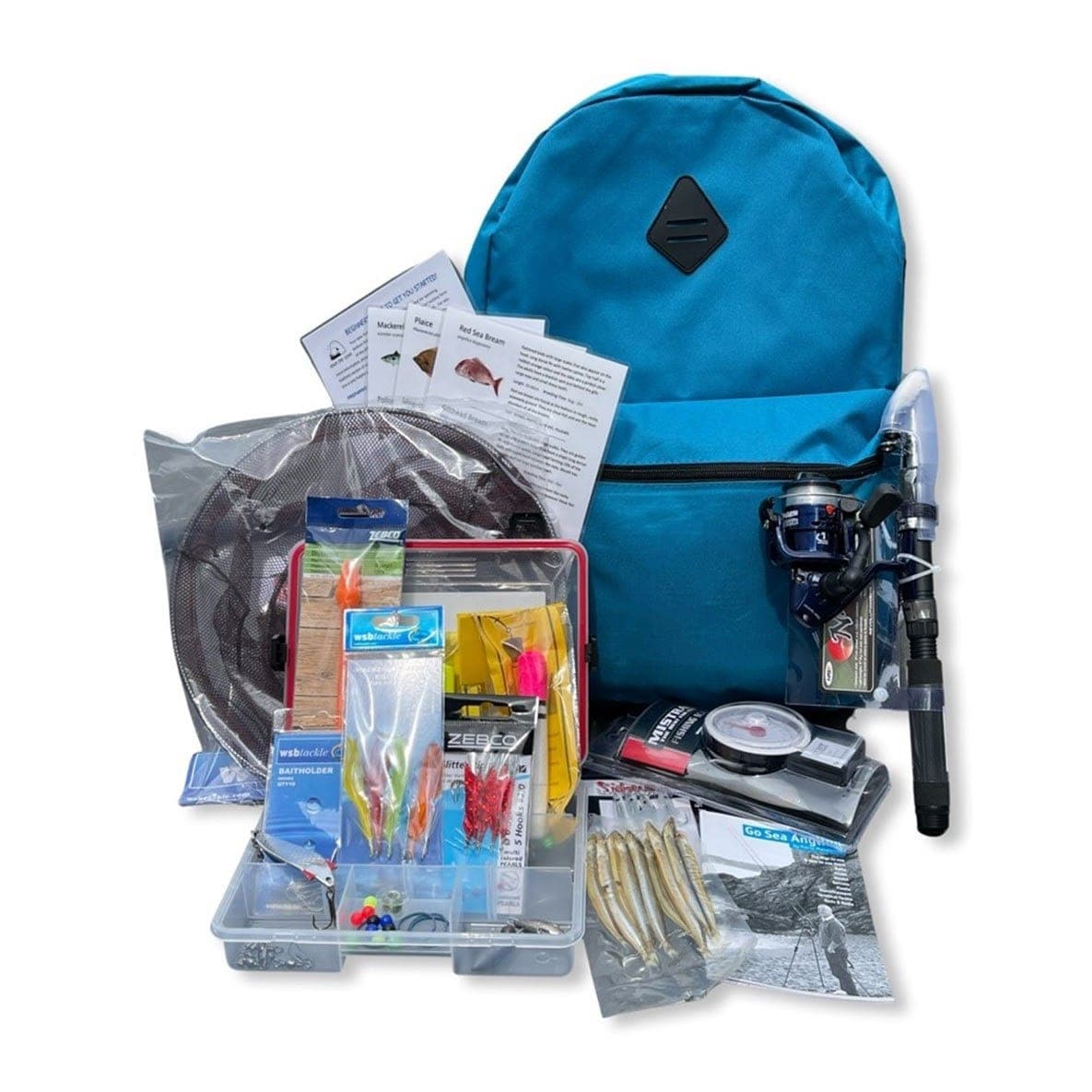
Useful kit connected to this guide, chosen to keep the next step simple.
Full mackerel guide
How to spot it, where it lives, how it is caught and how to cook it — the complete guide, in one easy read.
Nothing rings in a Cornish summer like the first mackerel. As the sea warms they pour inshore by the thousand, hunting hard against the headlands and right under the rod tip. Torpedo-bodied and tiger-striped, a fresh one almost burns blue and silver in your hand. They are fast, plentiful and gloriously easy to fall for, which is why half the county learned to fish on them, and they are better still laid over coals the same evening.
How to spot it
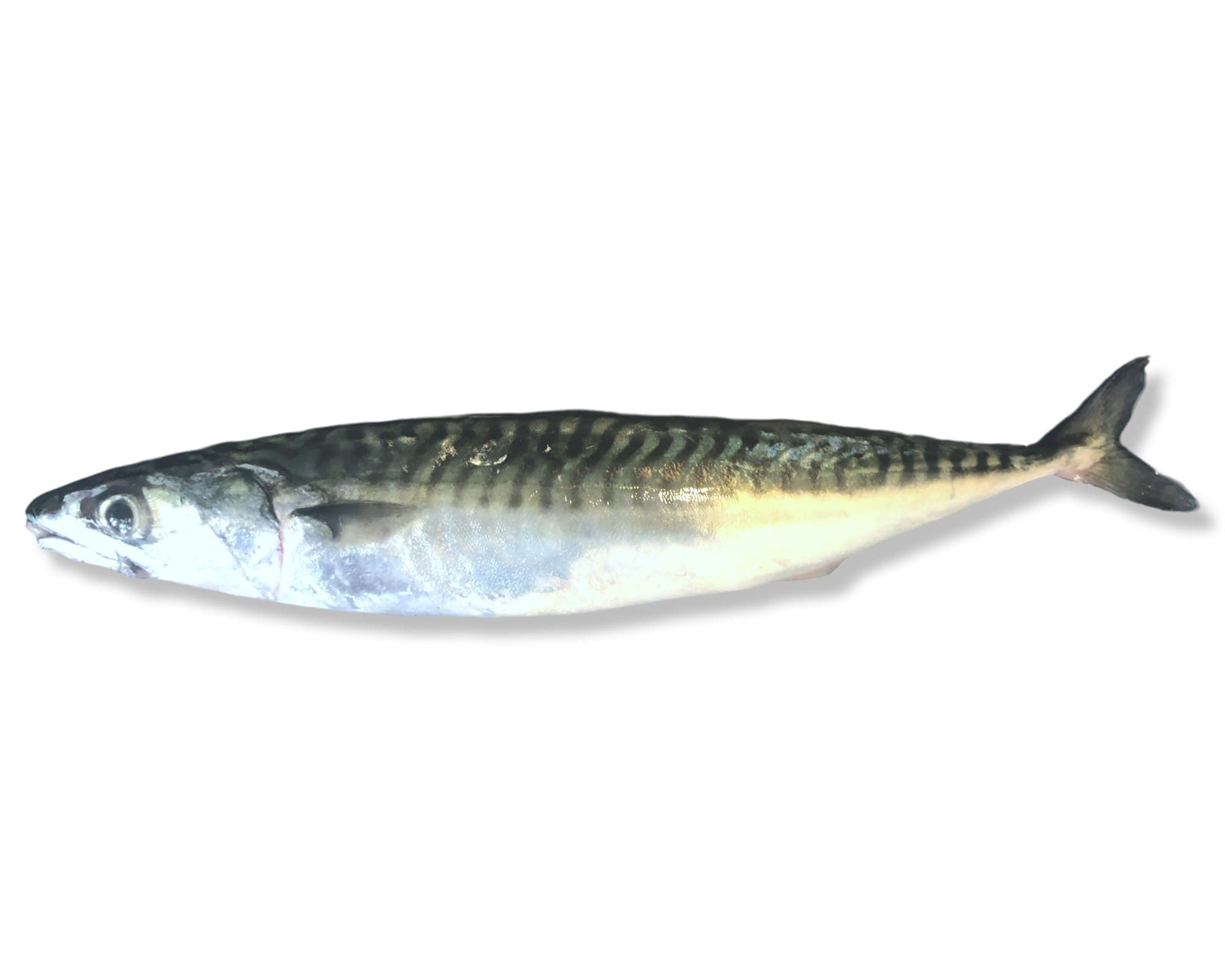
There is no mistaking a mackerel in the hand. The body is sleek and torpedo-shaped, narrowing to a deeply forked tail, the back a hard metallic blue-green crossed by bold dark bars. Those bars run almost vertically, like the ripples the tide leaves in wet sand, above a belly of mirror-bright silver. Most run 30-40cm. The clincher, though, is the shine: a fish straight from the water has an iridescence that seems lit from within, and it fades within the hour once the mackerel is out of the sea. No tired fish can fake that living gleam.
Where it lives
Mackerel roam all around Cornwall in restless shoals, chasing the small fish and plankton they feed on. Through the cold months they hold offshore in deeper water, but as the sea warms they sweep inshore in huge numbers, the first wave arriving around May. They hunt hard right up against the rocks, beneath the headlands and into the breaking surf, which puts them squarely within reach of the shore angler. From May and June and on through the summer is the season, and they stay close enough in to make for some of the most exciting fishing of the year.
Catching it
Mackerel are a pleasure to fish for and forgiving of beginners. Spin off the rocks or a pier with a string of feathers or a small shining lure, casting out and working it back with a steady jigging lift that will often bring up three or four fish at once. Bait pulls them too: sand eel, worm, prawn and shrimp all do the job. Time it for a rising or falling tide around dawn or dusk, when the shoals lift to feed near the surface. The Cornish headlands fish well, from the Padstow area, Port Isaac and Boscastle round to Sennen, the Lizard, St Ives, Mevagissey, Porthleven and Charlestown. The legal minimum is 20cm in the South West (30cm only in the North Sea), though plenty of anglers return anything under about 30cm anyway; measure your catch, keep a few and let the rest swim on.
In the kitchen
Few fish reward fire like a mackerel. Score the flanks, rub them with salt, and lay the fish straight onto a screaming-hot barbecue until the skin chars and the oil-rich flesh firms up: ten minutes, a turn halfway, a squeeze of lemon, done. The other route is the smoker. Hot-smoke fillets over oak chips for fifteen minutes, then flake them warm into a pate with cream cheese, horseradish, lemon and black pepper for the best fish sandwich of the summer. Either way that oiliness wants cutting, so reach for the old English partner: a sharp gooseberry or rhubarb sauce slices clean through the richness.
Related guides and gear
FAQs
Quick fish questions
Short answers for the questions families and coastal readers often ask first.
Is mackerel good for you?
Exceptionally. Mackerel is among the richest sources of omega-3 oils of any fish, alongside protein, vitamin D and B12. Those oils give it its deep, satisfying flavour and support heart and brain health. It is at its very best the same day it is caught.
What is the minimum size limit for mackerel in the UK?
The legal minimum conservation reference size is 20cm in the South West (30cm in the North Sea). Many anglers voluntarily put back anything under about 30cm; carry a measure, take only a few for the table, and let the rest swim on. (Note: NE Atlantic mackerel currently has no MSC certification.)
How do you catch mackerel from the shore?
Spin off the rocks or a pier with a string of feathers or a small shining lure, casting out and retrieving with a steady jigging lift that often brings several fish at once. Sand eel, worm, prawn and shrimp all work as bait too. Fish dawn or dusk on a moving tide.
How do you make smoked mackerel pate?
Hot-smoke mackerel fillets over oak for around fifteen minutes, then flake the warm flesh and beat it with cream cheese, a spoon of horseradish, a squeeze of lemon and plenty of black pepper. Spread it thick on hot toast. To balance the oil, serve with a sharp gooseberry or rhubarb sauce.
Where can I catch mackerel in Cornwall?
Try the headlands through summer: the Padstow area, Port Isaac, Boscastle, Sennen, the Lizard, St Ives, Mevagissey, Porthleven and Charlestown all fish well. For the best eating, cook what you catch the same day, or buy from a day boat the day it is landed.