The easiest way to cook fresh mackerel is to pan-fry the fillets skin side down in a hot, lightly oiled pan for two to three minutes until the skin is crisp, then turn them for the last 30 seconds to a minute. Whole mackerel takes about 4 to 6 minutes a side under a hot grill or on a barbecue, or 15 to 20 minutes in an oven at 200°C (180°C fan). Below we cover how to choose a fresh mackerel, how to prepare it, five ways to cook it with times and temperatures, how to tell when it is done, what to serve with it, how much oily fish the NHS recommends, and how to store leftovers.
How do you choose fresh mackerel, and why does it matter?
Mackerel is an oily fish with soft flesh, and it goes off faster than almost any other fish you will cook. A mackerel eaten the day it is caught is sweet and clean tasting. Two or three days later, even in the fridge, the flavour turns strong and fishy and the belly starts to soften.
There is a safety reason too. Mackerel is one of the fish that can build up histamine if it is kept warm after catching, and histamine is not destroyed by cooking. The answer is simple: get it cold quickly and keep it cold. Our guide to gutting and filleting mackerel explains why, and how to look after your catch from the moment it leaves the water.
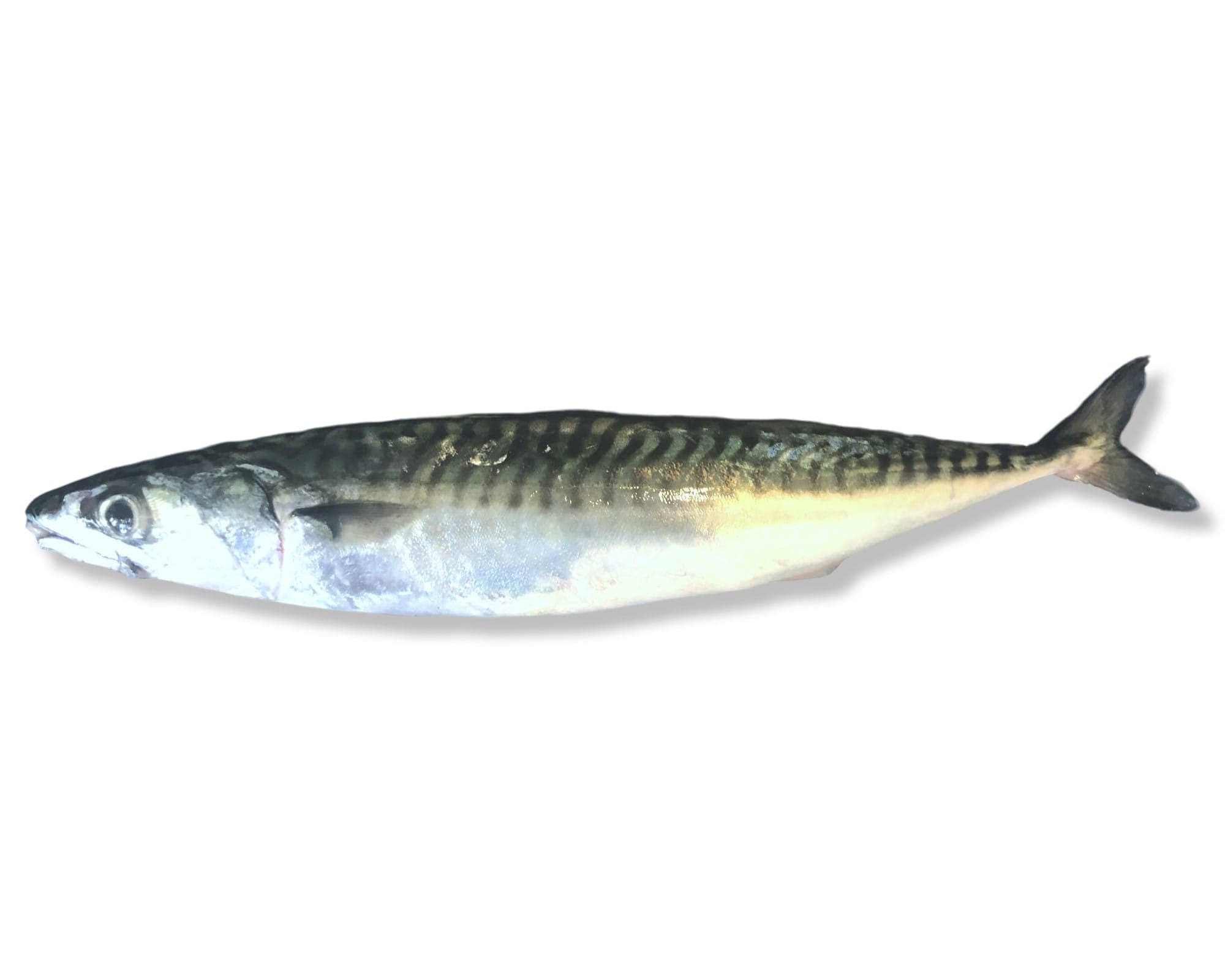
Look for a fish that looks almost alive. The eyes should be clear, bright and slightly bulging, not sunken or cloudy. The gills should be bright red, not brown. The skin should be shiny, with sharp, dark wavy stripes on a blue-green back and a silvery belly. Press the flesh with a finger: it should feel firm and spring back. A fresh mackerel smells clean, of the sea, not of fish or ammonia, and a very fresh one is often still stiff.
Avoid fish with a split or soft belly, which is the first part to break down. If you are buying fillets, they should look moist and glossy, not dull or dry at the edges. Our guide to buying fresh fish covers what to ask your fishmonger. Mackerel caught on rod and line in summer are hard to beat, and our mackerel fishing guide shows you how to catch your own.
Get it into the coldest part of the fridge, covered, as soon as you are home, and cook it the same day or the next.
How do you prepare mackerel for cooking?
For cooking whole, the fish needs gutting, the gills removing and the dark blood line along the backbone rinsing out. Mackerel scales are so small that there is no need to scale it. For pan-frying, sousing and most quick recipes, you want fillets with the pin bones out. Our step-by-step guide to gutting and filleting mackerel covers all of it, and a pair of fish bone tweezers makes the pin bones a two-minute job.
When cooking whole fish, cut two or three shallow diagonal slashes into each side, down to the bone. They let the heat into the thickest part so the fish cooks evenly, and give the seasoning somewhere to go. Pat the fish dry with kitchen paper before cooking: wet skin steams rather than crisps.
One medium mackerel of around 300 to 400g, or two fillets, makes a good single portion.
How to pan-fry mackerel fillets with crispy skin
This is the fastest method and the best way to get crisp skin. It takes about five minutes from pan to plate.
Step 1: pat the fillets dry and score the skin two or three times with a sharp knife, just through the skin. This stops the fillets curling up when they hit the heat. Season the skin with salt.
Step 2: heat a non-stick or well-seasoned frying pan over a medium-high heat with a thin film of oil, about a teaspoon. The oil should shimmer but not smoke.
Step 3: lay the fillets in skin side down, away from you, and press each one flat for 10 seconds with a fish slice so the whole skin touches the pan. Cook for two to three minutes without moving them, until the skin is crisp and golden and the flesh has turned opaque most of the way up.
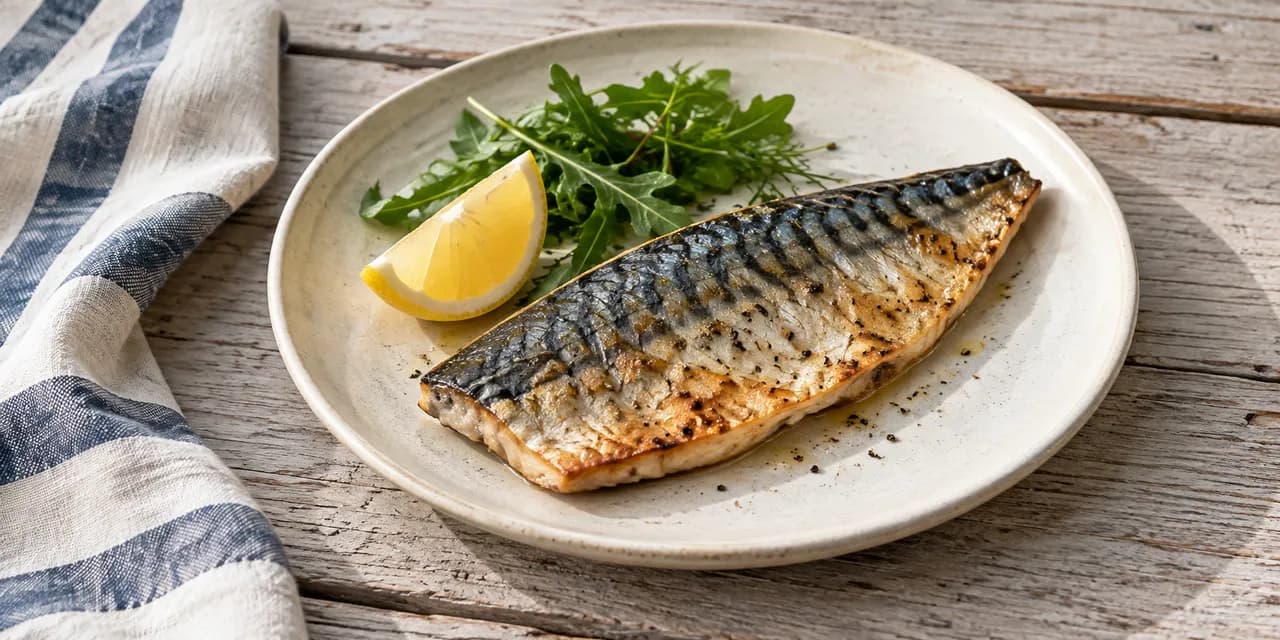
Step 4: turn the fillets for the last 30 seconds to a minute, just to finish the top, then serve straight away, skin side up so it stays crisp. A squeeze of lemon and some salt is all it needs.
How to grill whole mackerel
Grilling is the classic way to cook whole mackerel, and the high heat crisps the skin while the bones keep the flesh moist.
Step 1: heat the grill to its highest setting for at least five minutes. Line the grill pan with foil and oil it lightly.
Step 2: slash and season the gutted fish, rub it with a little oil, and put a few slices of lemon or some herbs such as parsley, thyme or fennel inside the belly.
Step 3: grill the fish about 8 to 10cm (3 to 4 inches) from the heat for 4 to 6 minutes a side, depending on size, until the skin is blistered and the flesh at the backbone is opaque and comes away easily. Turn it once, carefully, using a fish slice.
How to barbecue mackerel
Mackerel is the perfect barbecue fish. It cooks fast, its oils stop it drying out, and it suits a bit of char.
Step 1: let the coals burn down until they are covered in grey ash, which takes around 30 to 40 minutes on a charcoal barbecue. You want a medium-hot fire: you should be able to hold your hand above the grill for no more than three or four seconds. Clean the grill bars and oil them well, because fish skin sticks to dirty bars.
Step 2: slash, oil and season the whole fish. Leave it alone for the first few minutes on the grill, because it will release by itself once the skin has crisped.
Step 3: cook for 5 to 7 minutes a side for a medium fish, turning once. A hinged fish grill or a sturdy fish slice makes turning easier. If the skin is blackening before the fish is cooked, move it to a cooler part of the grill.
For a smoky edge, add a handful of soaked wood chips to the coals. Our guide to using a BBQ smoker box shows how, and our BBQ guide has more ideas for cooking outdoors.
How to bake mackerel in the oven
Baking is the most forgiving method, and easy if you are cooking several fish at once.
Step 1: heat the oven to 200°C (180°C fan, 400°F, gas 6). Line a roasting tin with baking paper or oiled foil.
Step 2: lay the slashed, seasoned whole fish in the tin with a little oil, lemon slices and herbs inside and on top.
Step 3: bake whole fish for 15 to 20 minutes, depending on size, or fillets for 8 to 10 minutes, until the flesh is opaque and flakes from the bone. Wrapping the fish in a loose foil parcel keeps it moist but stops the skin crisping.
For a full recipe, try our baked mackerel with English mustard. Mustard is one of the best partners there is for mackerel.
How to make soused mackerel
Soused mackerel is fillets cooked gently in a sweet-sour pickling liquor, then left to cool in it. It is a traditional way of making a good catch go further, and it is lovely cold with bread and butter or a potato salad.
Step 1: make the liquor. In a pan, put 200ml cider vinegar, 100ml water, 2 tablespoons of sugar, a teaspoon of salt, a sliced onion or shallot, a bay leaf and a teaspoon of mixed peppercorns, mustard seeds or coriander seeds. Bring to the boil and simmer for 2 to 3 minutes until the sugar has dissolved.
Step 2: lay four to six boneless mackerel fillets skin side up in a snug ovenproof dish and pour the hot liquor over them so they are just covered.
Step 3: cover with foil and bake at 160°C (140°C fan, 325°F, gas 3) for 15 to 20 minutes, until the fish is opaque all the way through. Baking makes sure the fish is properly cooked, which is safer than relying on hot liquor alone.
Step 4: let it cool in the liquor, then cover and chill for a few hours or overnight to let the flavours develop. Serve cold, with some of the onions and a spoonful of the liquor.
How do you know when mackerel is cooked?
Cooked fish turns from translucent to opaque all the way through and flakes easily when you press it with a fork. With a whole fish, check at the thickest point next to the backbone: the flesh should come cleanly away from the bone with no pink or glassy patches.
If you use a probe thermometer, the Food Standards Agency's guidance on cooking food is that the middle of the food should reach 70°C for 2 minutes. Push the probe into the thickest part, avoiding the bone.
Mackerel is thin and cooks very quickly, so the bigger risk is usually overcooking. Overcooked mackerel goes dry and tastes stronger. Take it off the heat as soon as it is done and let it rest for a minute.
What goes well with mackerel?
Mackerel is rich, so it needs something sharp, hot or sour to cut through it. The classic British pairing is gooseberry sauce: simmer 250g gooseberries with a tablespoon or two of sugar and a knob of butter for about 10 minutes until they burst. Early forced rhubarb, cooked down the same way, does the same job in spring.
Horseradish is the other great partner, either grated fresh into crème fraîche or as a sauce. Try it alongside our potato salad with horseradish. Beetroot, raw in a slaw or roasted, adds sweetness and colour. Mustard, English or grain, works in a dressing, a glaze or a sauce; our potato salad with mustard is ideal with grilled mackerel. Lemon, parsley, capers, pickled cucumber and a crisp green salad are all good on the side.
Is mackerel healthy, and how much oily fish should you eat?
Mackerel is one of the oily fish the NHS recommends. The NHS advice is to eat at least two portions of fish a week, including one of oily fish, with a portion being around 140g.
There is an upper limit for some groups. Girls, women who are planning a pregnancy, pregnant women and women who are breastfeeding should have no more than two portions of oily fish a week. Boys can have up to four portions a week.
How long does cooked mackerel keep?
Cool leftovers and get them into the fridge within two hours of cooking, covered, and eat them within 48 hours. Your fridge should be between 0 and 5°C. Cold cooked mackerel is excellent flaked into a salad or on toast, and if you do reheat it, heat it only once, until it is steaming hot all the way through. Soused mackerel keeps in its liquor in the fridge, but is best eaten within the same 48 hours.
Cooked mackerel can be frozen as soon as it is cool. Defrost it in the fridge and use it within 24 hours. The smell of mackerel lingers on hands, boards and pans, and our guide to getting rid of fish smells can help.
For hot-smoked mackerel, which is a different product, see our smoked mackerel recipes, and if you want to smoke your own, try our hot-smoked mackerel recipe. For more Cornish ideas, The Great Cornish Fish Book is a good shelf companion.