The five-step method
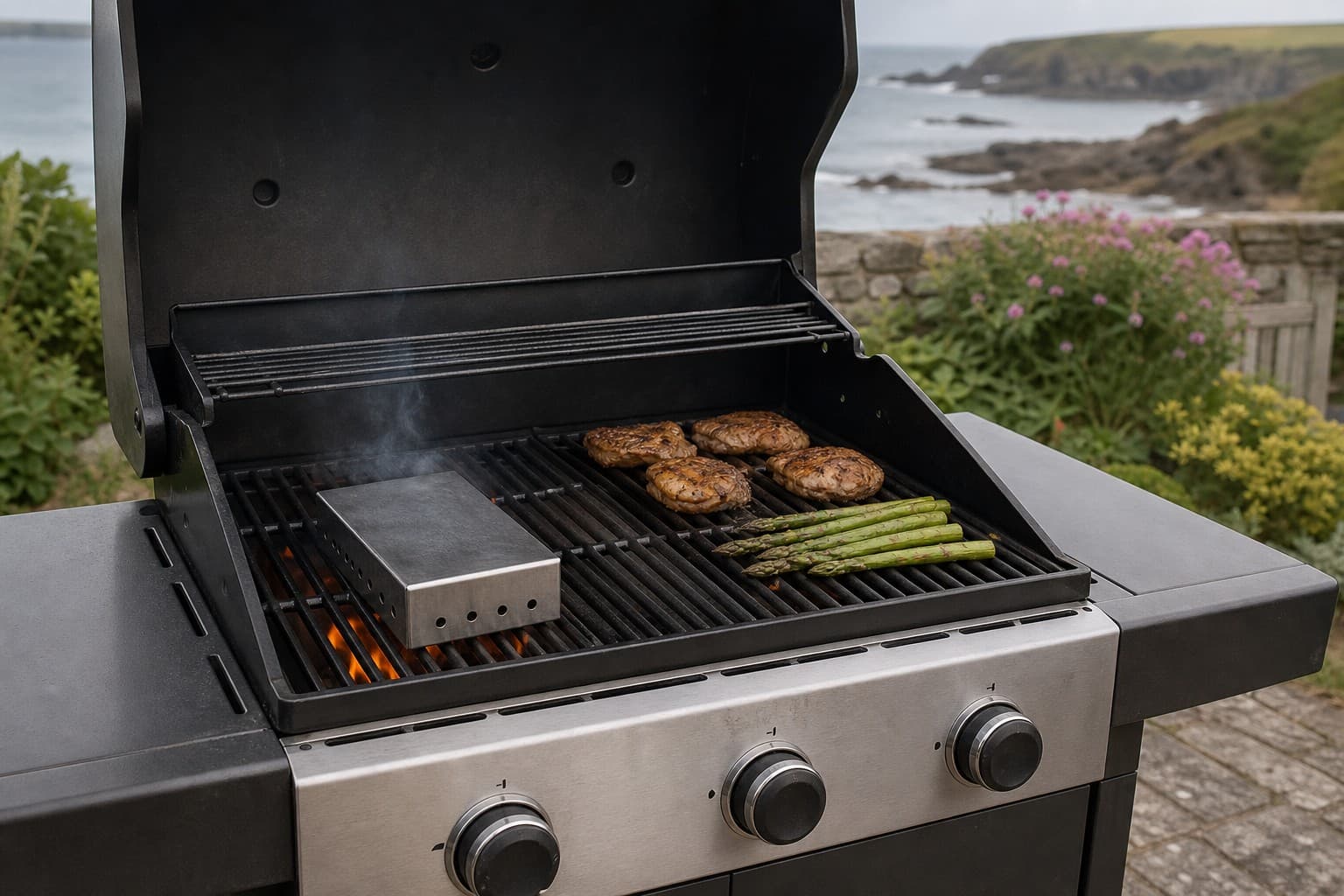
1. Choose coarse chips and fill the smoker box no more than loosely full. 2. Put the box directly above a lit burner or on hot charcoal. 3. Close the barbecue lid until the chips begin to smoulder. 4. Move the food to the cooler, indirect side. 5. Cook with the lid down, adding more chips only when the first clean smoke has faded.
Use coarse chips, not dust
A barbecue gives strong direct heat, so it needs a chunkier grade that smoulders without disappearing at once. Coarse chips are made for smoker boxes, grills and charcoal. Fine chips suit hot-smoking ovens, while dust is for cold smoke generators. Our dust, fine and coarse wood guide makes the grades easy to compare.
Do you need to soak wood chips?
Usually, no. Dry chips start more predictably and produce clean smoke sooner. Soaked chips spend their first minutes steaming, which can delay the smoke without making it better. If your particular box sits extremely close to fierce charcoal and burns through chips too quickly, a brief soak can slow them down, but start dry and adjust only if the setup proves too hot.
Where the box goes on a gas barbecue
Place the box over a lit burner, under the cooking grate if the barbecue design allows it, or directly on the grate above that burner. Leave the burner beside it off and cook the food over the unlit zone. That two-zone setup gives the wood enough heat to smoulder while the food cooks gently rather than scorching.
Where the box goes on charcoal
Bank the hot coals on one side and place the smoker box on or immediately above them. Put the food on the opposite side and close the lid with the vent positioned to draw smoke across the food before it leaves. A small, stable fire is more useful than a barbecue packed edge to edge with glowing coals.
What good smoke looks like
Aim for a light, almost blue stream rather than thick white clouds. Heavy smoke usually means the wood is starved of air or too much has been added. It can leave food bitter and sooty. Keep the vents open enough for clean combustion, resist lifting the lid every minute and remember that smoke should support the food rather than hide it.
Match the wood to the food
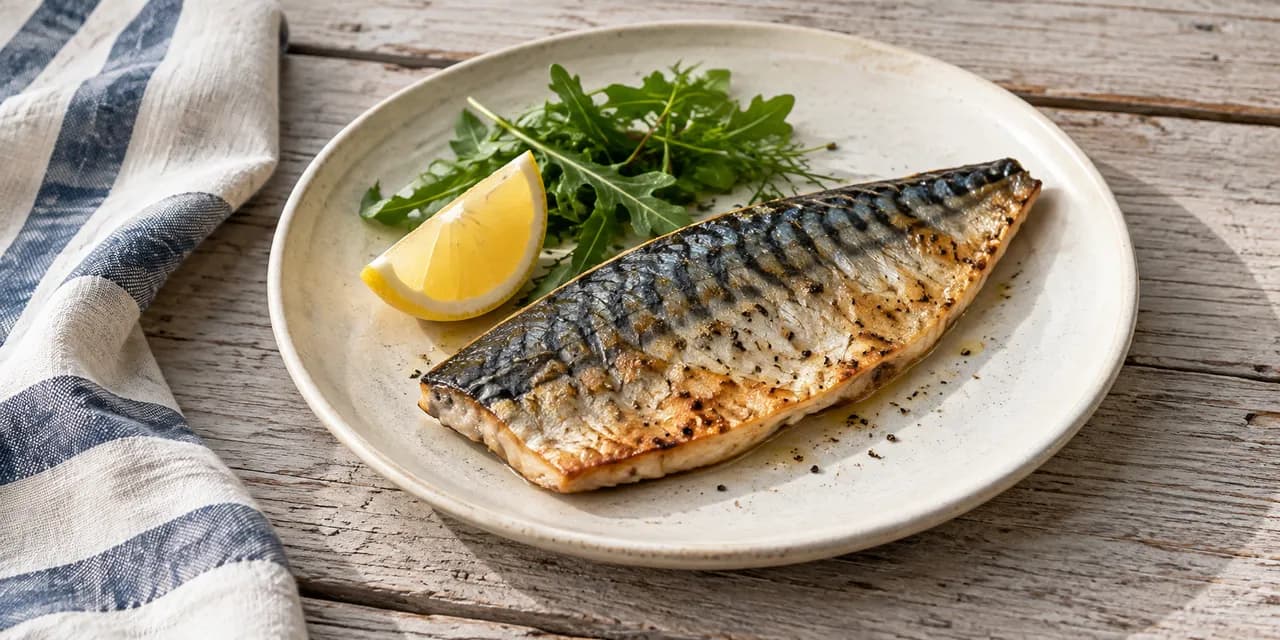
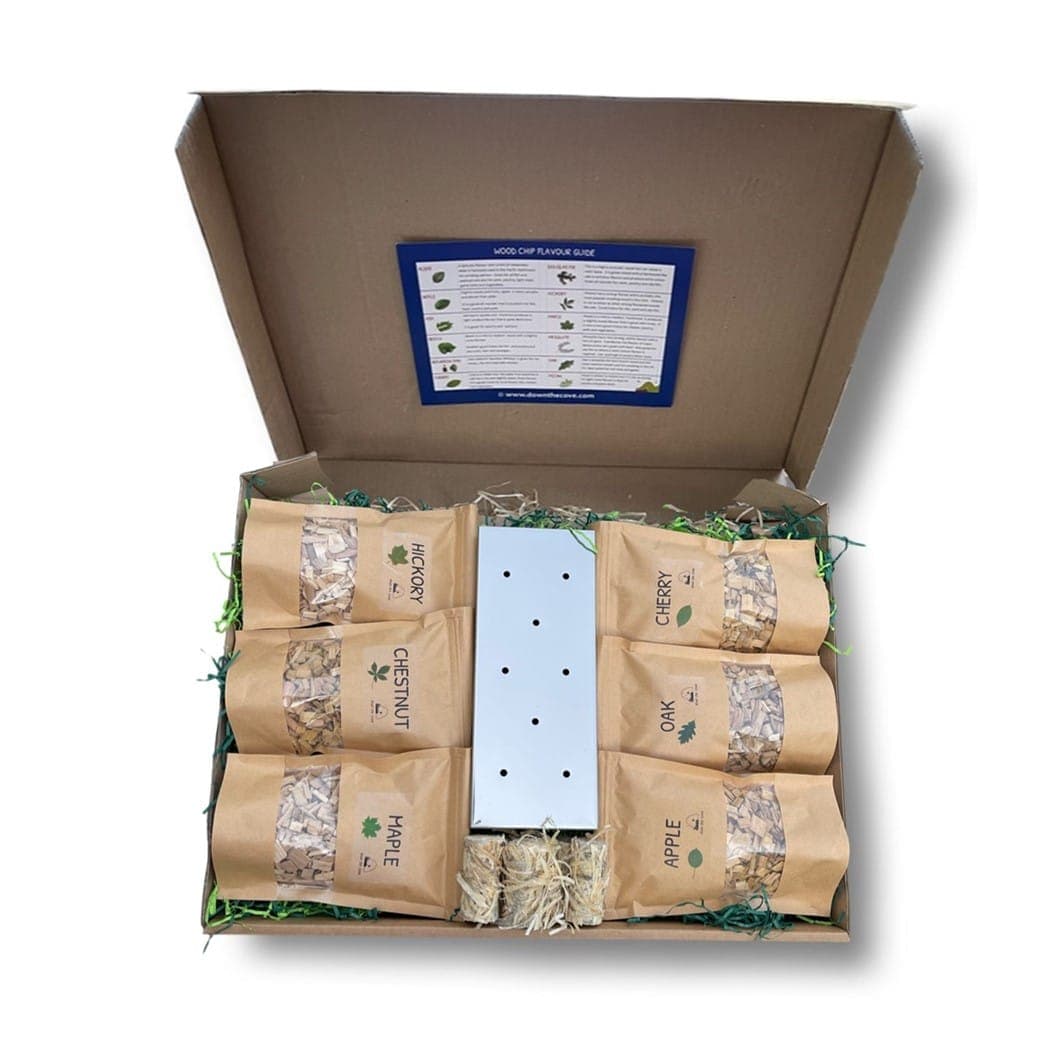
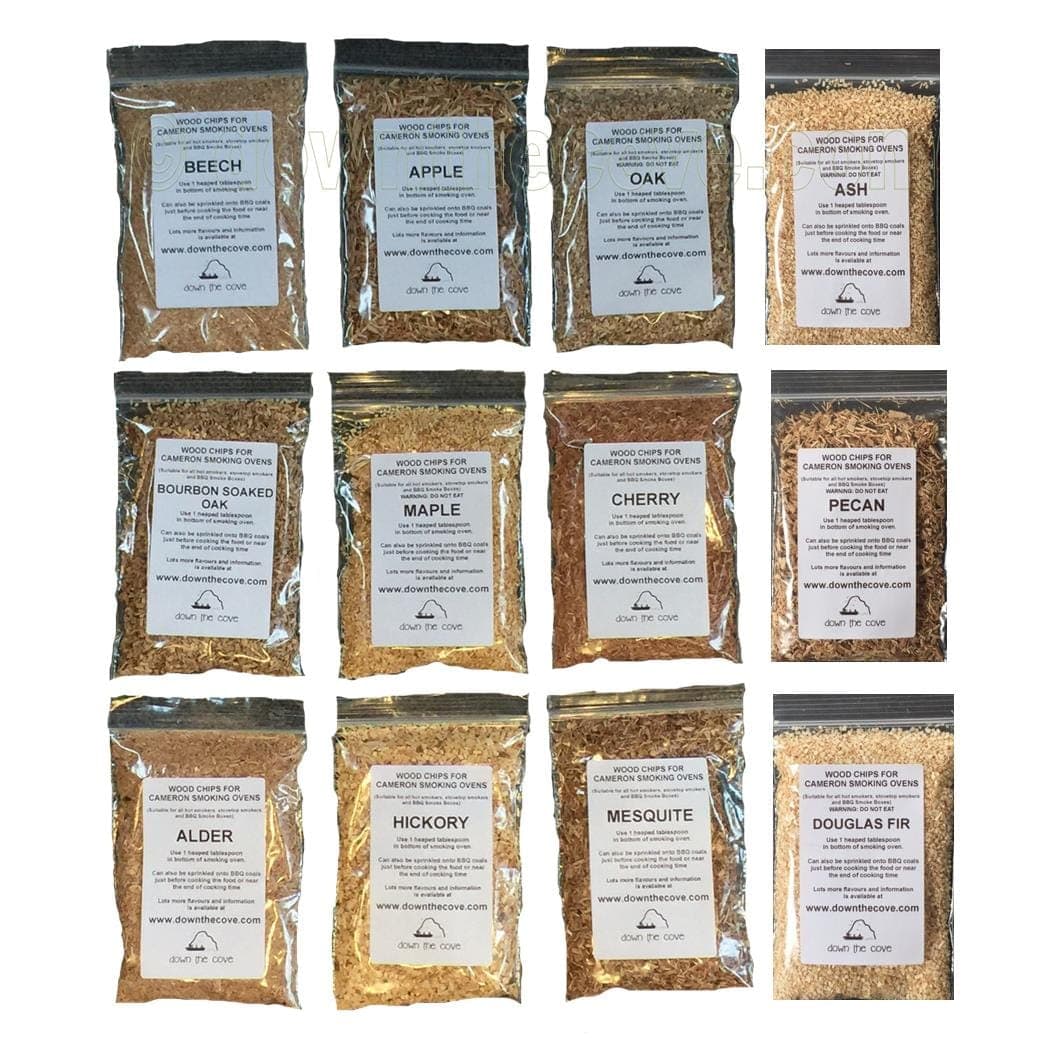
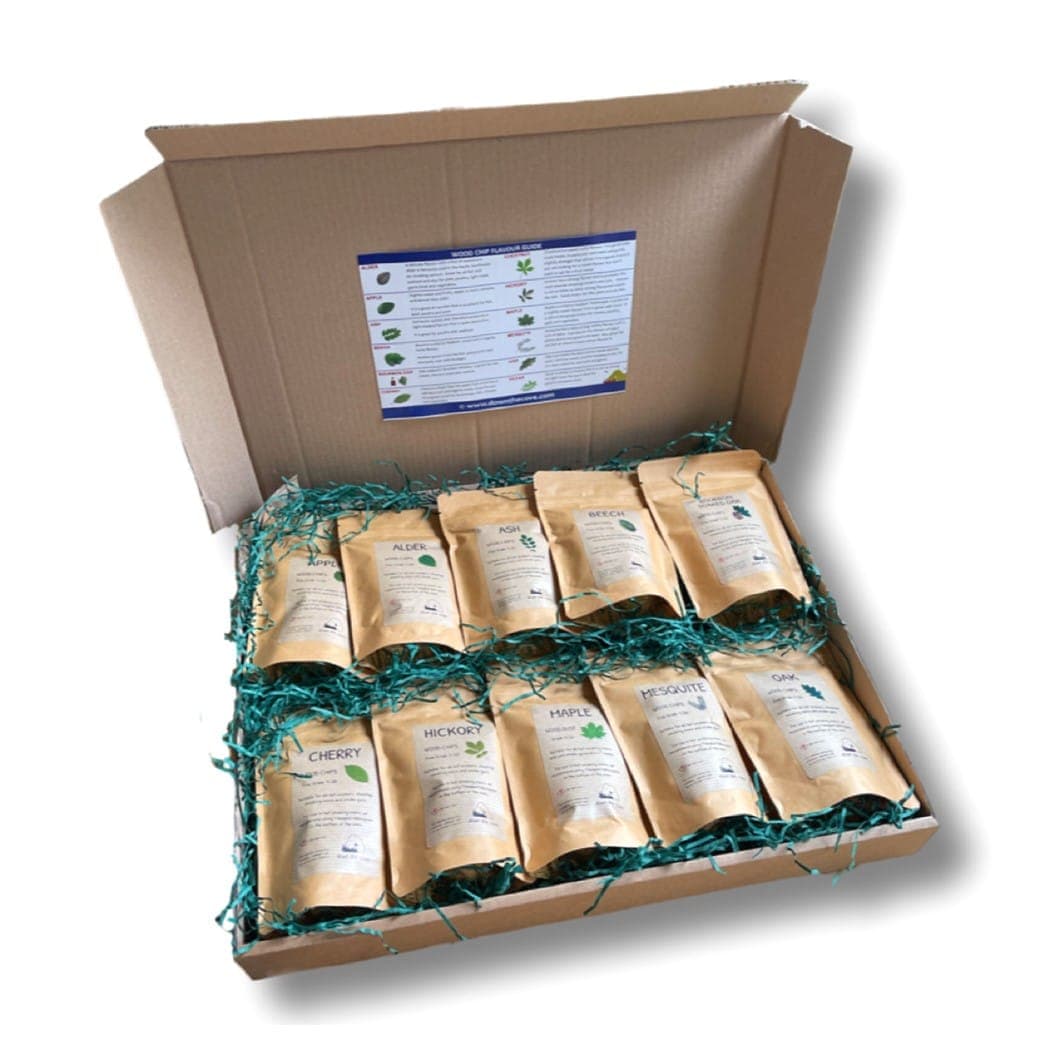
Apple and cherry are gentle with fish, poultry and pork. Oak is a dependable middle ground for beef, sausages and robust fish. Hickory is bold and works well with ribs and pork shoulder, while mesquite is stronger still and best used sparingly. If you want to compare several woods without buying full bags, start with a BBQ wood-chip variety pack.
Common questions
How many chips go in a smoker box?
Start with one loose handful or enough to cover the base of the box. Add more later if needed. Overfilling restricts airflow and creates thick, dirty smoke.
Can I use a smoker box with a gas barbecue?
Yes. That is one of its best uses: the box gives gas cooking a real wood-smoke layer without needing a separate smoker.
Why are my chips not smoking?
They are probably not receiving enough direct heat. Move the box closer to the lit burner or coals, preheat with the lid closed and make sure the vents are not blocked.
Choosing the equipment? Compare the options in our smoking oven buyer's guide or browse BBQ smoker boxes and kits.