The full guide
Read straight through, or use the seafood notes above to keep buying, cooking and serving simple.
Crabs and lobsters have traditionally been cooked alive because their meat spoils very quickly once they die. Their own digestive enzymes start breaking down the flesh and bacteria multiply fast, so a crab or lobster that has been dead for an unknown time can be mushy, smell bad and make you ill. Cooking them alive was the simple way to guarantee freshness. Today, though, crabs and lobsters are recognised in UK law as sentient animals, and the UK Government has said that boiling them alive is not acceptable. The kinder approach keeps the freshness without the suffering: keep them alive and cool until just before cooking, then kill them quickly by spiking or splitting, and cook them straight away.
For the table, once it is cooked
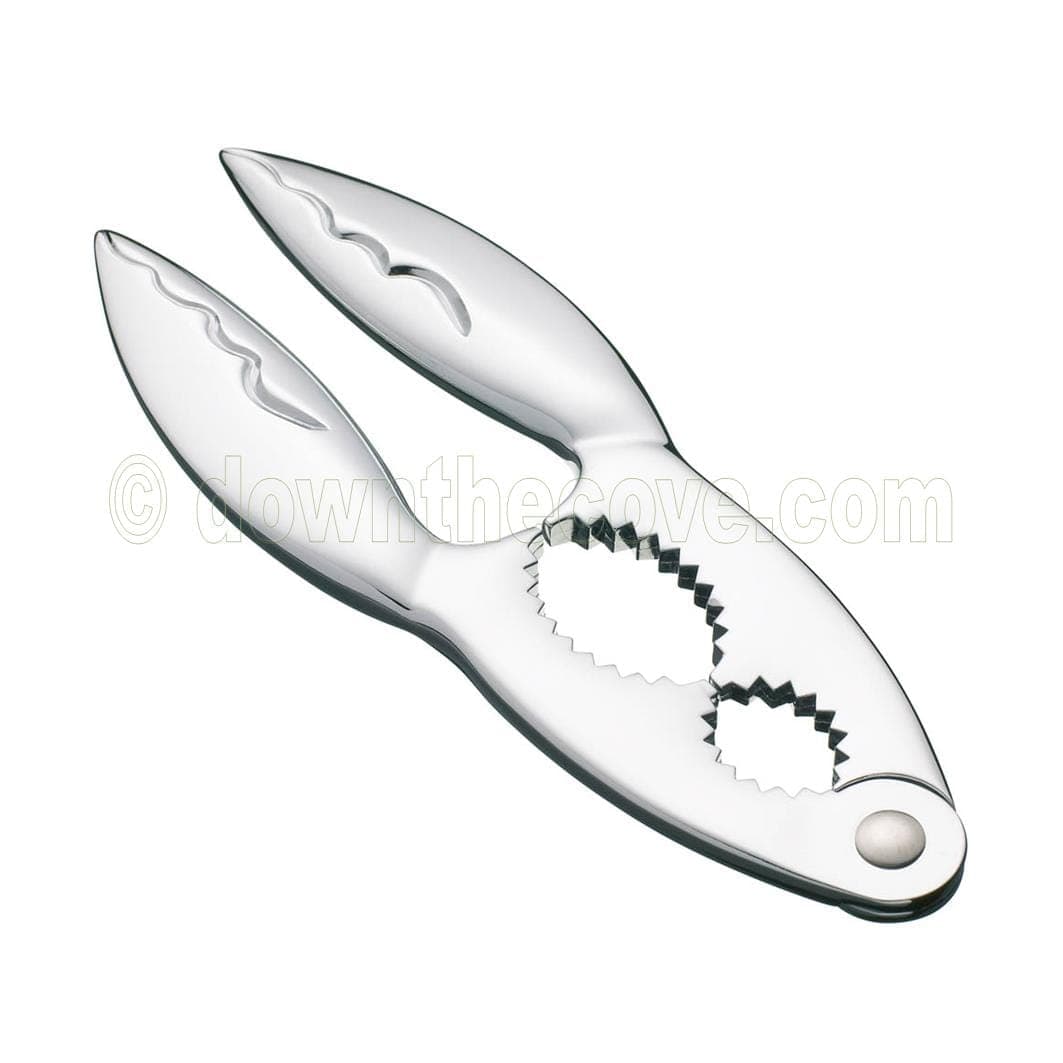
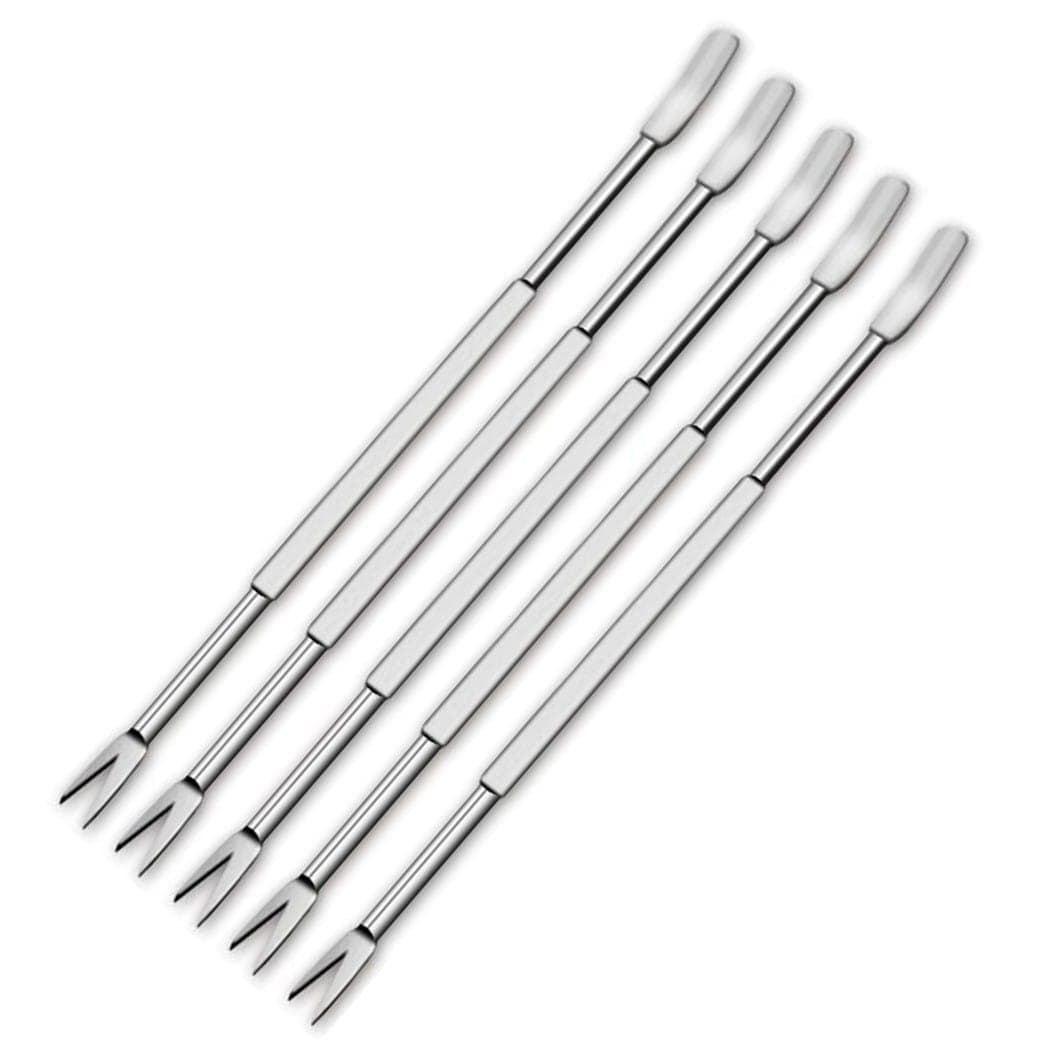
Crackers, long seafood forks and step-by-step placemats for getting every bit of meat out of a crab or lobster.

Why are crabs and lobsters cooked alive?
It comes down to how quickly they go off. Crabs and lobsters have a large digestive gland, which makes up much of the soft brown meat in a crab, and it is full of powerful enzymes. While the animal is alive those enzymes digest its food. Once it dies, they start breaking down its own tissue, and within hours the meat can turn soft and watery and lose its sweetness.
At the same time, bacteria that live naturally on shellfish and in their guts, including Vibrio species, multiply quickly once the animal's defences stop working, especially somewhere warm. Some of these bacteria can cause food poisoning. Because you cannot tell from the outside how long a raw crab or lobster has been dead, the old rule of thumb became simple: only cook them alive.
Boiling was the easiest way to cook something that was still alive, and that is where the habit comes from. It was never really about flavour. A crab or lobster that is killed quickly just before it goes in the pot is every bit as fresh and sweet.
Can you eat a crab or lobster that has died?
Only if you know it died very recently and has been kept cold since, and even then the meat may be soft. If you do not know how long a raw crab or lobster has been dead, do not cook it. Warning signs include a strong ammonia or sour smell, a slimy or discoloured shell, and meat that turns out mushy or watery once cooked.
Cooked crab and lobster from a fishmonger are a different matter. They were cooked while fresh and then chilled, and cooked shellfish keeps for a couple of days in the fridge. Buying it ready cooked is also the easiest option if you would rather not deal with live shellfish at all.
If you buy live crab or lobster, keep it alive and cool until you are ready to cook it, ideally the same day or the next. Put it in a bowl in the bottom of the fridge, covered with wet seaweed or a cloth soaked in salted water, and keep the covering damp. Never put it in fresh tap water, which will kill it, and never seal it in an airtight container, because live shellfish need to breathe. Our guide to buying shellfish covers how to choose a lively one.
Do crabs and lobsters feel pain?
The evidence says they very probably do. In 2021 a review for the UK Government, led by experts at the London School of Economics, looked at more than 300 scientific studies and found strong evidence that decapod crustaceans, the group that includes crabs, lobsters, crayfish and prawns, are sentient: they can experience pain and distress.
Researchers have seen crabs learn to avoid places where they were given electric shocks, guard injured limbs, and weigh up avoiding something painful against other needs, such as keeping a good shell. Crabs and lobsters put into hot water often thrash about and shed claws or legs, which are signs of distress, and they do not die instantly.
That evidence is why decapods were included in the Animal Welfare (Sentience) Act 2022, which recognises crabs and lobsters as sentient beings in UK law.
Is it illegal to boil a lobster or crab alive in the UK?
The rules are changing, so it is worth knowing where things stand. In December 2025 the UK Government's Animal Welfare Strategy for England committed to publishing guidance on which ways of killing crabs, lobsters and other decapods comply with existing welfare-at-killing law, and said that this guidance will make clear that live boiling is not an acceptable method.
When we checked in October 2026, that guidance had not yet been published, and lawyers, campaigners and the shellfish industry still disagree about exactly what the current law requires, especially of home cooks. The direction of travel is clear, though. The Government, welfare organisations and much of the seafood trade now agree that crabs and lobsters should be stunned or killed before they are cooked, not boiled alive. Check GOV.UK for the latest position.
Advice for home cooks has moved on too. Industry guidance from Seafish in 2022, which you will still see quoted, was to chill crabs and lobsters in the freezer for 30 to 60 minutes before cooking. Welfare scientists now doubt that chilling or freezing on its own is humane. The methods most often recommended today are electrical stunning followed straight away by a quick mechanical kill, or, where stunning is not possible, a quick mechanical kill on its own: double spiking for crabs and splitting for lobsters.
A kinder way: how to kill a crab or lobster at home
If you are not confident, ask your fishmonger to dispatch the crab or lobster just before you collect it and cook it as soon as you get home, or buy it ready cooked. If you are doing it yourself, get everything ready first: a large pan of well-salted water at a rolling boil, or a steamer; a sturdy chopping board on a damp cloth so it cannot slide; and a strong, sharp, pointed knife or a metal spike. The aim is to be quick and decisive, so that it is over in seconds.
Calm it first. Put the crab or lobster in the fridge, wrapped in a damp cloth, for an hour or so until it is still and sluggish. Cold makes it easier and safer to handle, and less able to fight back. This is preparation, not the kill: do not leave it in the freezer to die slowly.
To kill a crab, use double spiking. A crab has two main nerve centres, and both are reached from the underside: one near the front, under a shallow dip just behind the eyes and mouthparts, and one further back in the middle of the body, under the tail flap, where there is often a small hole. Turn the crab on its back and lift the tail flap. Push the spike or the point of the knife firmly through the shell into the front nerve centre, then straight away into the rear one, twisting slightly each time. The legs go limp when both are destroyed. Done properly, it takes a few seconds.
To kill a lobster, split it. A single stab to the head is not enough, because a lobster has a chain of nerve centres running the length of its body. Lay the chilled lobster flat on the board with its claws still banded and hold the tail firmly with a cloth. Push the point of a large, heavy, sharp knife down through the centre of the head, on the cross-shaped mark just behind the eyes, then cut quickly down through the centre line of the head, body and tail, so the lobster is split in half lengthways. Keep your fingers well clear of the blade.
Cook it straight away, by boiling in salted water or steaming. Our guides to cooking a crab and cooking a lobster give cooking times by weight. A split lobster can also go on the grill or barbecue in its two halves.
Restaurants, processors and some fishmongers use purpose-built electrical stunners, such as the Crustastun, which make a crab or lobster insensible in about a second. They are designed for commercial kitchens and cost far too much for most homes, which is why spiking and splitting are the methods home cooks use.
What not to do
Do not boil them alive, whether by dropping them into boiling water or by putting them in cold water and bringing it to the boil. Do not drown them in fresh water, microwave them, or leave them in the freezer to die slowly. And do not pull the claws or legs off a live animal.
If at any point you are not sure you can do it quickly, stop and let your fishmonger do it, or buy your crab or lobster already cooked. There is no shame in it, and the result on the plate is the same.
The easy part: eating them
Once cooked, crab and lobster are among the best things you can eat from the sea. Let them cool, then crack the claws with a crab and lobster cracker and pick out the meat with long seafood forks. If you are serving guests who have never tackled a lobster, our How to Eat a Lobster placemats walk them through it at the table.
Our guides to preparing a cooked crab, preparing a cooked lobster and lobster and crab tools show you where all the meat is, and our Christmas seafood platter guide covers how much to buy when you are feeding a crowd.