What lobster and crab tools are there?
Seafood tools all do one of three jobs: break the shell, cut the shell, or get the meat out. Once you think of them that way, a drawer of odd-looking implements makes a lot more sense.
Crackers break shell. Picks, forks and lobster picks get the meat out. Seafood shears cut shell, mostly the softer underside of a lobster tail and the thinner legs. Oyster knives are a separate job altogether, prising open a closed shell rather than breaking a cooked one. Mallets, bibs and finger bowls are the supporting cast that make a messy meal a bit more civilised.
You will find the cracking and picking tools in our lobster and crab tools collection, and the wider range of serving and prep pieces in seafood tools and utensils.
What does each seafood tool actually do?
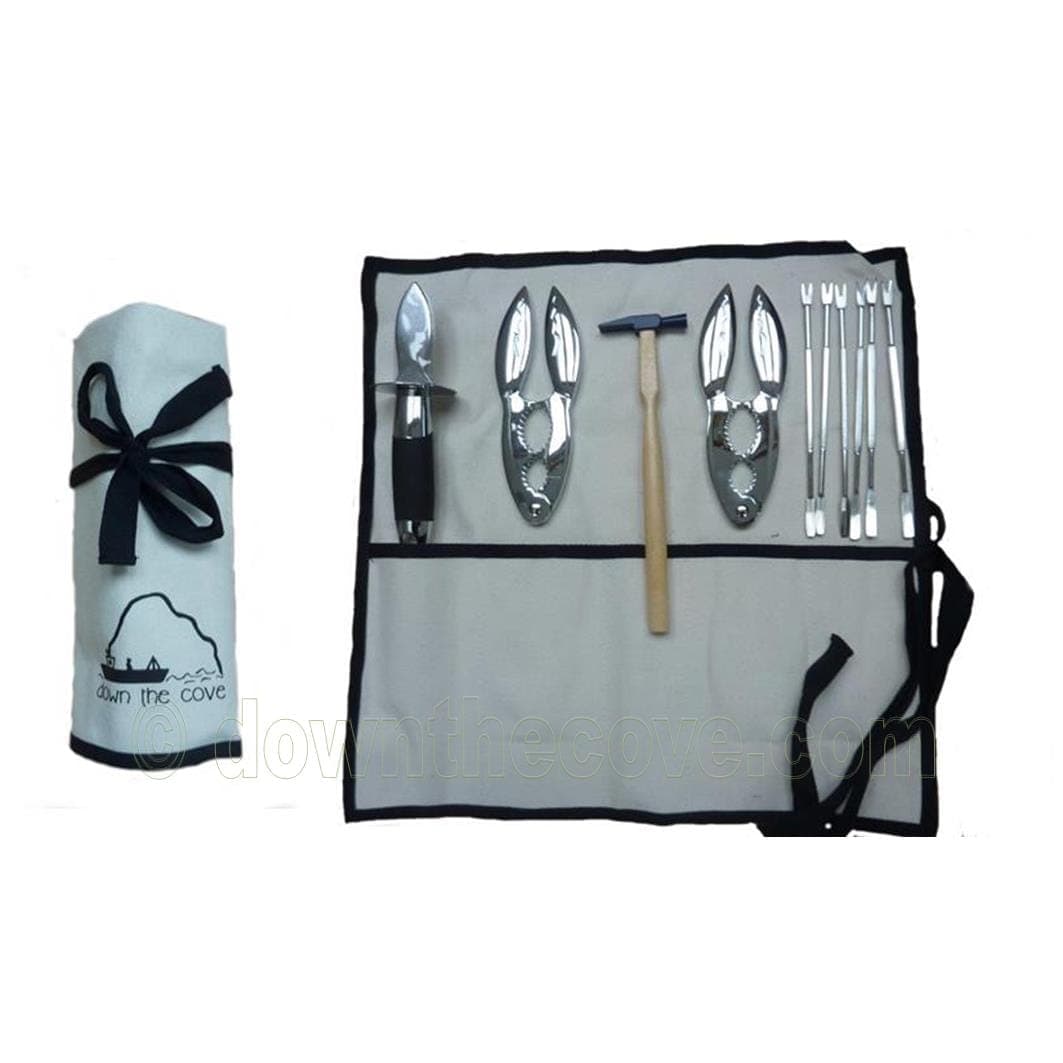
**Crab and lobster cracker.** A hinged tool, usually with ridged or contoured jaws, that you squeeze to split a claw or thick leg shell. The point is control: you apply steady pressure, the shell cracks, and the meat inside is less likely to be crushed or full of shell fragments. Our MasterClass crab and lobster cracker is a good example of the shape.
**Seafood picks and forks.** Long, narrow tools for reaching into the joints, knuckles and leg sections where fingers cannot go. Many are double-ended, with a small fork or scoop at one end and a pointed pick at the other. A set like our stainless steel seafood forks gives everyone at the table their own.
**Lobster pick.** Essentially a longer, finer pick designed for lobster legs and the narrow sections of the claw. Some people push the meat out of a lobster leg with it; others roll the leg with a rolling pin. Either works.
**Seafood shears.** Short, strong scissors with curved blades for cutting through shell rather than cracking it. They are most useful on a lobster tail, langoustines and thinner crab legs. See our MasterClass seafood shears.
**Oyster knife and shucking glove.** An oyster knife has a short, stiff, blunt-edged blade and usually a guard, built for levering open the hinge of a live oyster, not for cutting. A shucking glove, or a thickly folded tea towel, protects the hand holding the oyster in case the knife slips.
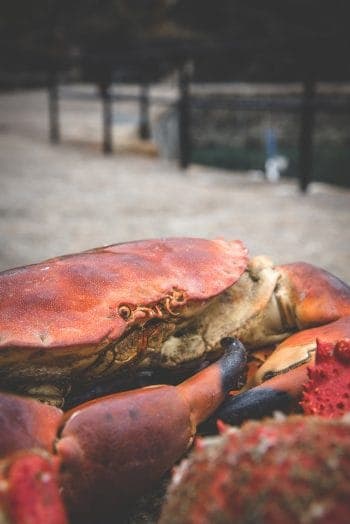
**Mallet or hammer.** A small wooden or rubber mallet is handy for the thick claws of a large brown crab, especially the big pincer, which can be harder than a standard cracker likes. Tap, do not smash.
**Finger bowls and bibs.** Not tools in the strict sense, but on a seafood night they matter. A bowl of warm water with a slice of lemon for rinsing fingers, plus a bib or a large napkin, saves a lot of washing afterwards.
Claw crackers vs a nutcracker: does it matter?
A nutcracker will open a crab claw, and plenty of people have managed with one for years. The difference is in the jaws. A nutcracker is designed to concentrate force on a round, hard nut, so it tends to shatter a claw all at once and drive shell fragments into the meat.
A purpose-made crab cracker usually has wider, contoured or ridged jaws that grip the curved claw and spread the pressure, so the shell cracks along a line and you can peel it away. If you only eat crab once a year, a nutcracker will do. If crab or lobster is a regular treat, a proper cracker is worth having for cleaner meat and fewer bits of shell.
Which tools do you need for a first crab or lobster dinner?
Keep it simple. For two people sharing a cooked crab or lobster, this is plenty:
- One cracker, shared if needed - A seafood fork or pick each - Seafood shears if you have lobster - A large board or plate for shells, kitchen roll and a finger bowl
If you are starting from a live animal, follow our guides on how to cook a live crab and how to cook a live lobster first. If you have bought it ready-cooked, our guide to preparing a cooked lobster walks through the whole thing step by step.
What do you need for a full seafood platter?
A platter with crab, lobster, langoustines, prawns and perhaps oysters needs a bit more kit, mainly so people are not waiting for the one cracker to come round.
- A cracker for every two guests - A pick or seafood fork for each person - A pair of seafood shears for the kitchen or the head of the table - An oyster knife and glove if serving oysters, used by one confident person rather than passed around - A small mallet for big crab claws - Bowls for empty shells, finger bowls, bibs or large napkins
A wipe-clean mat under the platter helps too; our Cornish lobster tablemat is melamine with a cork base. For what to put on the platter and how to eat each item, see our eating shellfish guide.
How do you use crab and lobster tools?
**Cracking the claw.** Twist the claw off the body first. Hold it on a board, place the cracker across the widest part of the shell and squeeze gently until you feel it give. Turn it a little and crack again if needed, then peel the shell off in pieces. On a large crab claw, wrap it in a tea towel and give it one or two firm taps with the mallet instead.
**Picking the knuckles.** The knuckles, the jointed sections between the claw and the body, hold some of the best meat. Crack each section lightly, then use the narrow end of a pick or seafood fork to draw the meat out, working from both ends. Take your time; this is where a good pick earns its keep.
**Cutting the tail shell with shears.** Turn a cooked lobster tail over so the softer underside faces up. Cut along each edge of the underside shell with seafood shears, lift the flap away, and the tail meat should come out in one piece. Remove the dark intestinal line running along the top of the tail before serving.
**Legs.** Snap lobster or crab legs at the joints. Thin legs can be cut open with shears, or you can push the meat out with a lobster pick or roll them firmly with a rolling pin.
**Opening oysters.** Hold the oyster cupped side down in a gloved hand or a folded tea towel on a board, hinge towards you. Work the tip of the oyster knife into the hinge and twist to pop it, then slide the blade along the top shell to cut the muscle. Always keep the knife pointing away from your hand. Raw oysters carry a food poisoning risk, so buy from a reputable supplier and keep them chilled. The Food Standards Agency and the NHS advise that people who are pregnant, older people, babies and young children, and anyone who is unwell or has a weakened immune system should avoid raw or lightly cooked shellfish; check the current guidance before serving.
How do you clean and care for seafood tools?
Rinse tools in warm water as soon as the meal is over, before bits of meat and shell dry on. Then wash in hot soapy water, paying attention to the hinges of crackers and the tines of forks, where meat tends to hide. A small bottle brush or old toothbrush helps.
Dry everything thoroughly straight away, especially hinged tools, to keep stainless steel looking its best. Whether a tool is dishwasher safe depends on the product, so check the manufacturer's care instructions. Store sharp picks and oyster knives with the points covered or in a tool roll, so nobody reaches into a drawer and finds them the hard way.
Treat shellfish boards and tools as you would any that have touched raw seafood: keep anything used on raw oysters away from ready-to-eat food until it has been washed.
What makes a good seafood tool gift?
A cracker, a set of seafood forks and a pair of shears together make a practical lobster tools set for anyone who loves crab and lobster, and they cover nearly everything short of oysters. Add the Cornish lobster tablemat for the table, or a cookbook such as Fish by Mat Follas for ideas beyond the platter.
For more ideas, read our guide to gifts for seafood lovers.
Quick checklist and FAQs
**What are the essential lobster tools?** A cracker, a pick or seafood fork, and seafood shears for the tail.
**What is the best seafood cutlery for crab?** A cracker for the claws and a slim double-ended pick or fork for the knuckles and body; a mallet helps with big brown crab claws.
**Can I use a nutcracker instead of crab crackers?** Yes, but it tends to shatter the shell into the meat. A purpose-made cracker gives cleaner results.
**Do I need an oyster knife?** Only if you are opening oysters. Never use a kitchen knife; use a proper oyster knife and a glove or tea towel.
**Before you sit down:** cracker, picks, shears, shell bowl, finger bowls, napkins, and the shellfish kept chilled until it is served.