From the Cove shop
Home smoking essentials that make the advice easier to put into practice.
A careful beginner's guide to curing, drying and cold-smoking salmon at home, with the kit, wood, timing and food-safety rules that matter.

Smoking guide
A simple route through smoke, wood, kit and confidence for home cooks who want flavour without the noise.
How to Cold-Smoke Salmon at Home is a guide for getting better flavour at home without turning smoking into a mystery.
Good smoking is mostly patience: clean heat, the right wood, and food prepared with care.
Home smoking essentials that make the advice easier to put into practice.
. Can I cold-smoke salmon without curing it? No. Cold smoke does not cook the fish. Curing, careful hygiene, temperature control and refrigeration are central parts of the process, not optional flavour steps. Which wood dust is best for salmon? Alder is the classic mild choice. Apple and maple are also gentle; oak is fuller and should be used with a lighter hand. See our wood flavour guide for a side-by-side comparison.
Smoking oven, wood chips, simple accessories
Use food-safe smoking wood, follow your equipment instructions, and keep raw and cooked food separate.
Read straight through, or dip into the sections that matter for your next smoking session.
Cold-smoked salmon is made in three distinct stages: cure the fish, dry the surface, then expose it to cool smoke. The smoke adds flavour but does not cook the salmon, so clean handling, reliable refrigeration and a tested cure are essential. This guide explains the process clearly, including when a home cook should stop and choose hot smoking instead.
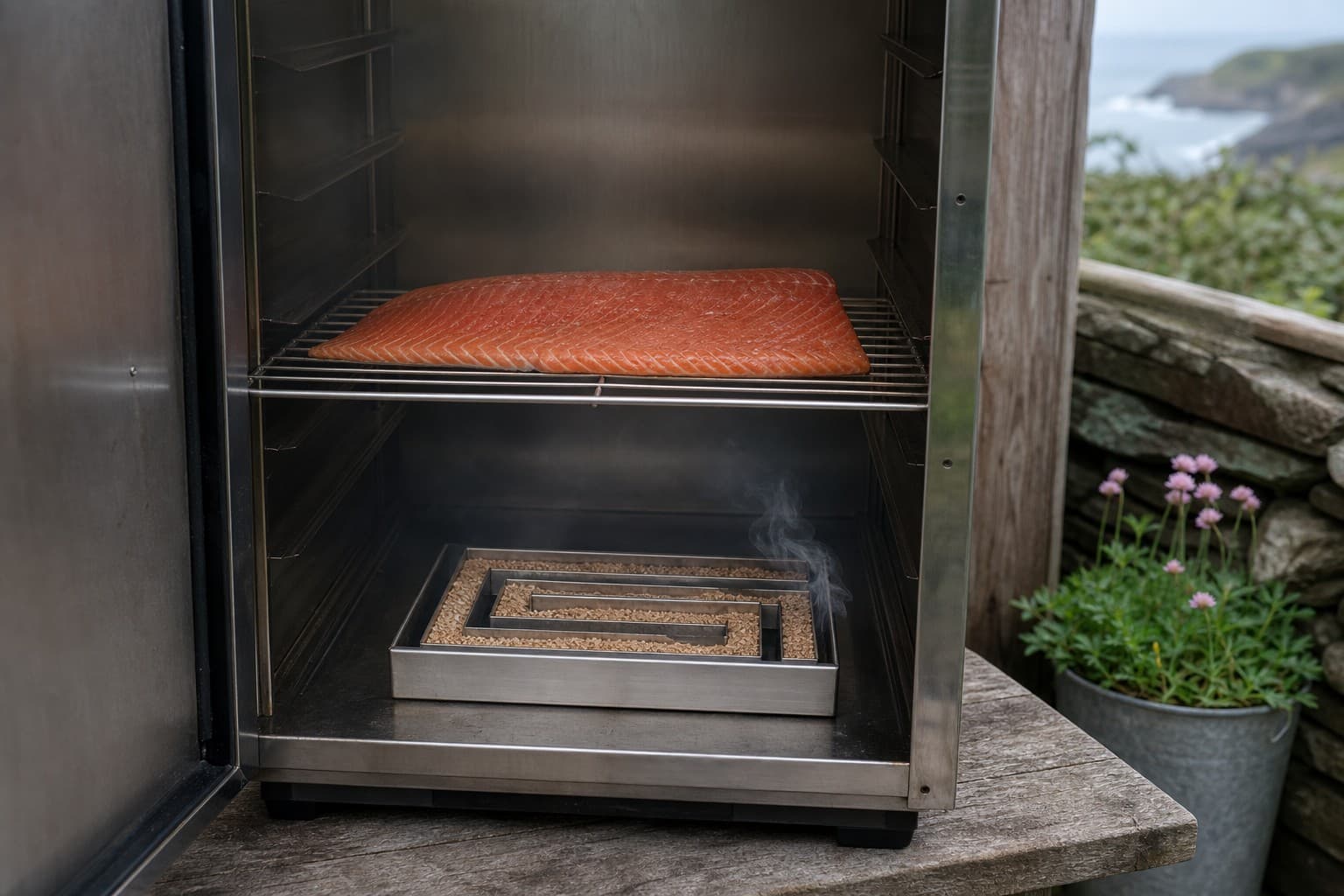
Start with a fresh, evenly thick salmon side. Follow a reputable salt-and-sugar curing recipe, keep the fish refrigerated throughout the cure, rinse and dry it, then leave it uncovered in the fridge until the surface feels slightly tacky. Cold-smoke with food-safe wood dust while the chamber stays below 30°C, then refrigerate promptly and rest the salmon before slicing.
This is the most important distinction. A cold smoke generator creates smoke with very little heat, which is why the finished salmon keeps its silky texture. It also means the smoking stage is not a kill step. The Food Standards Agency warns that ready-to-eat cold-smoked and cured fish can carry a higher listeria risk, particularly for pregnant people, older people and anyone with a weakened immune system. Those groups should avoid it unless it is cooked until steaming hot throughout.
Read the current Food Standards Agency advice on cold-smoked fish before preparing it for a vulnerable person. If you are unsure about controlling cure, temperature or hygiene, make hot-smoked fish instead, because it is cooked during smoking.
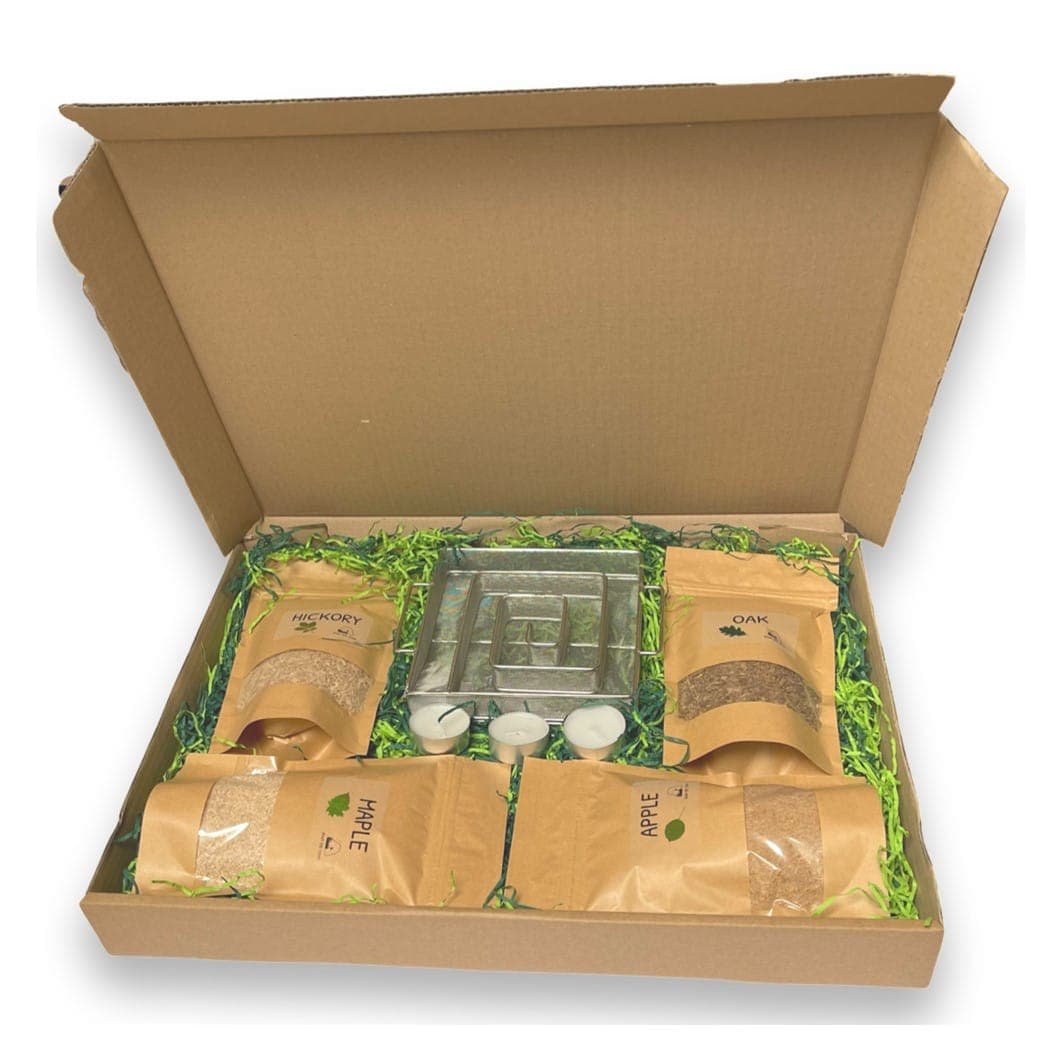
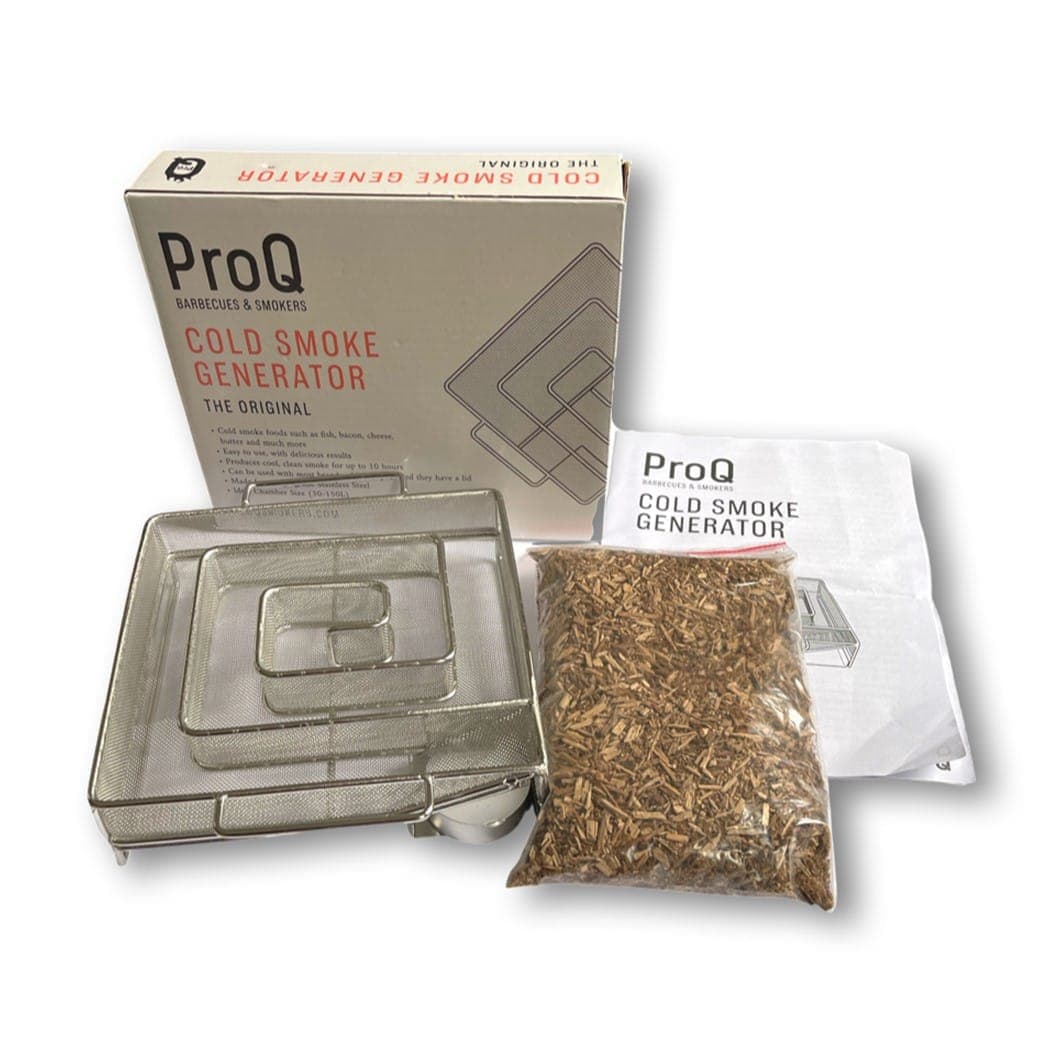
Use a cold smoke generator or maze, food-safe smoking dust, a covered but ventilated chamber such as a lidded barbecue, a fridge thermometer and clean trays. Dust is the correct grade because it smoulders steadily without the heat needed to ignite chips. Our guide to smoking dust and wood chips explains the difference, while the cold-smoking collection brings the compatible kit together.
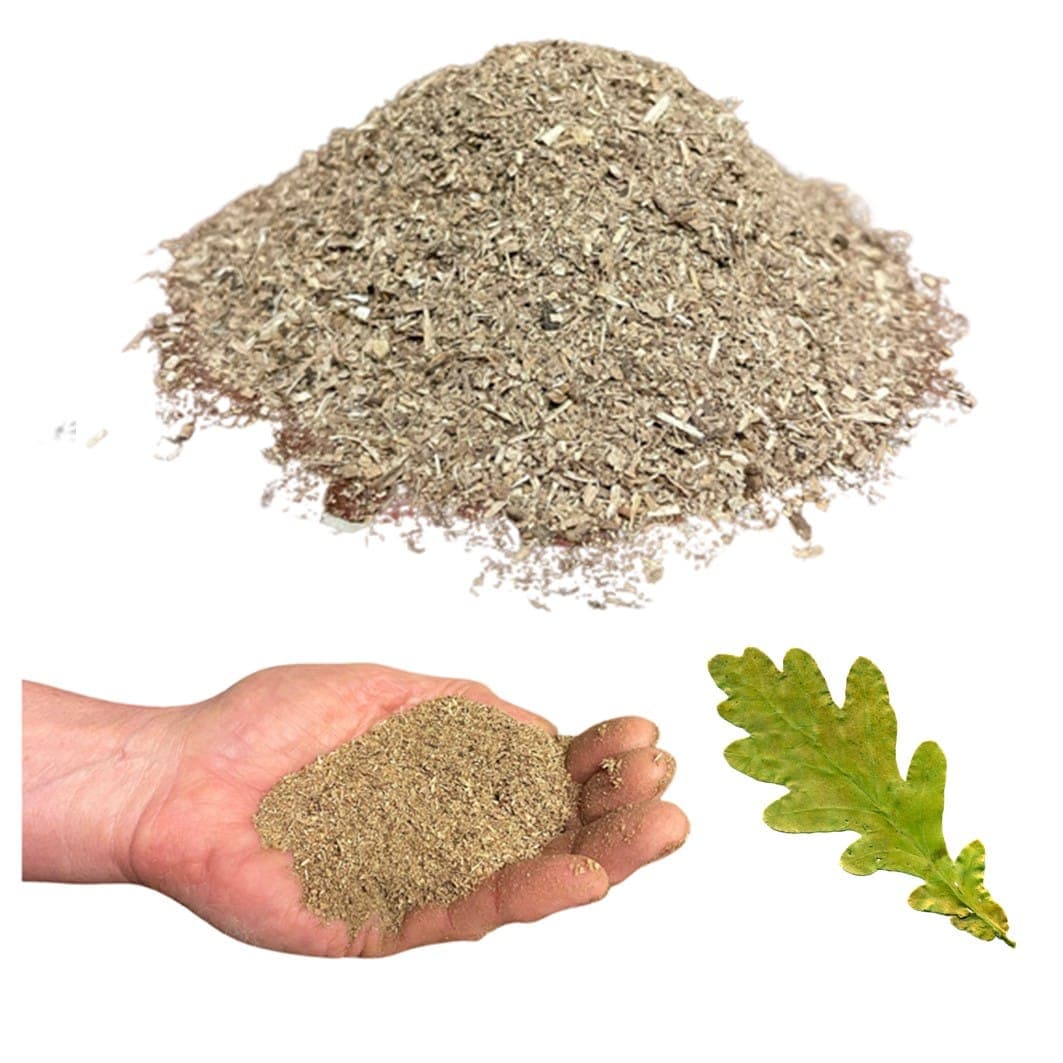
Alder is the traditional first choice for salmon: mild, clean and gently sweet. Apple and maple are also forgiving. Oak gives a fuller savoury smoke, so use it lightly until you know how strong you like the finish. Avoid resinous, painted, treated or unidentified wood. Only use wood sold specifically for food smoking.
Use a tested curing recipe and weigh ingredients rather than guessing. Keep the salmon cold while it cures. Once cured, rinse it as directed, pat it dry and return it uncovered to the refrigerator. The slightly tacky layer that develops is called the pellicle; it helps smoke adhere evenly and prevents a wet, patchy finish. Do not move on while the surface is still visibly wet.
Fill and light the generator exactly as its instructions specify, then confirm it has settled to a clean smoulder with no flame. Put it below and away from the fish, allow air to enter and smoke to escape, and monitor the chamber rather than relying on the weather forecast. If the chamber approaches 30°C, stop. Autumn, winter and cool evenings are much easier than a sunny summer afternoon.
Smoke time depends on the cure, thickness, generator and desired intensity. Eight to twelve hours is a useful planning range for a salmon side, but it is not a substitute for a validated process. Start lighter; you can add another smoking session after a refrigerated rest, but you cannot remove harsh smoke.
Chill the salmon promptly after smoking. Resting it overnight lets the smoke settle and gives a cleaner flavour. Slice thinly across the grain with a long sharp knife, keep it refrigerated and use a conservative shelf life. Home cold smoking is flavouring, not canning: it does not make fish shelf-stable.
Keep the smoking chamber below 30°C. More importantly, keep the salmon correctly chilled before and after smoking and follow a tested curing method.
No. Cold smoke does not cook the fish. Curing, careful hygiene, temperature control and refrigeration are central parts of the process, not optional flavour steps.
Alder is the classic mild choice. Apple and maple are also gentle; oak is fuller and should be used with a lighter hand. See our wood flavour guide for a side-by-side comparison.
Home smoking essentials that make the advice easier to put into practice.