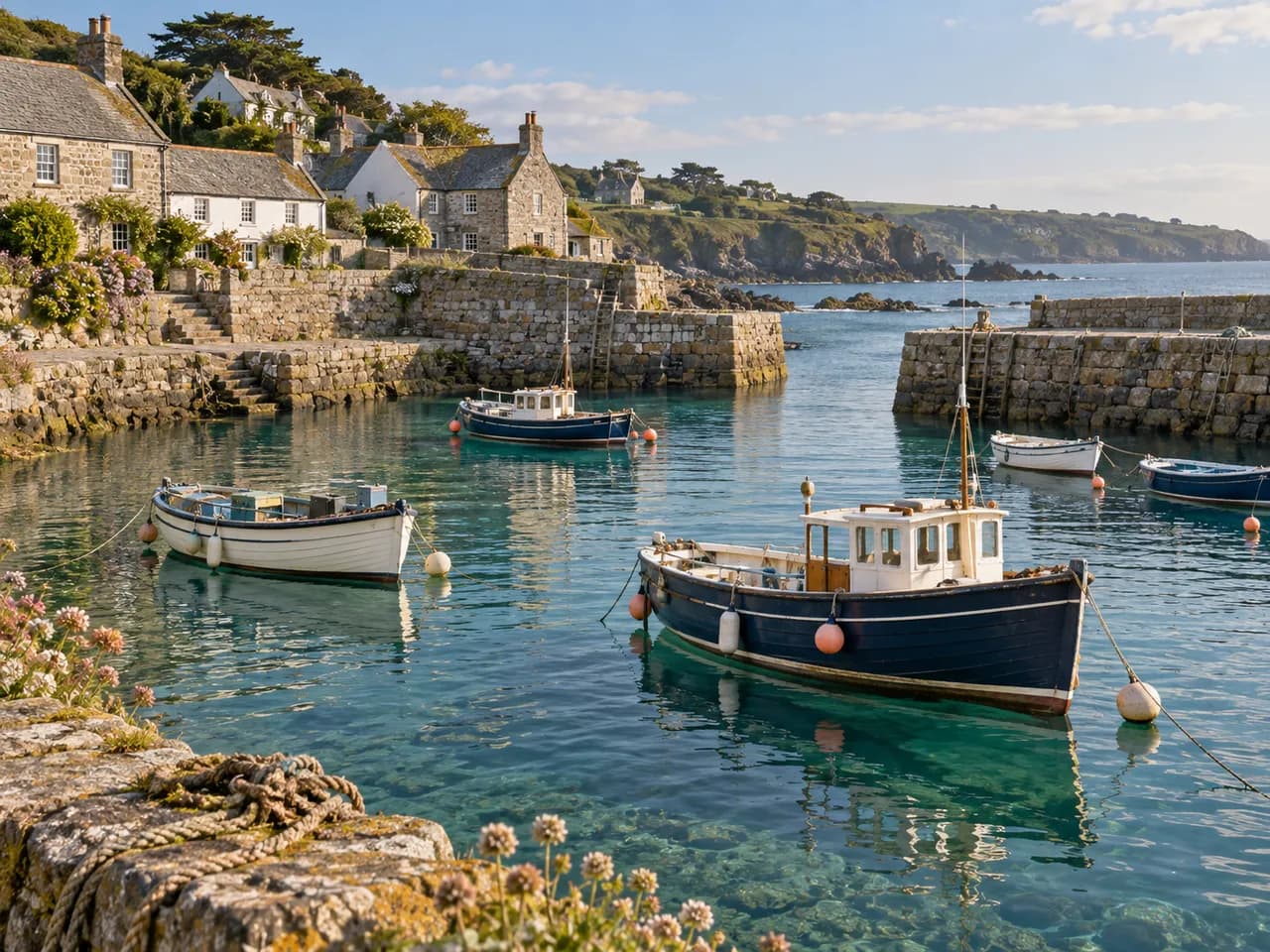
Upton Towans forms the middle section of the long sandy shore on the eastern side of St Ives Bay, with the dunes rising behind it just north of Hayle. The word towans is Cornish for sand dunes, and here they are part of one of Cornwall's largest dune systems, rolling back from the beach in a soft, grassy landscape that feels worlds away from the firm flat sand at the water's edge. At low tide the bay opens into a generous expanse that links up with the neighbouring beaches along the bay.
The dunes carry an unexpected history. From the late 1880s this was the site of the National Explosives Company, a sprawling works that made dynamite and, during the First World War, cordite and other munitions for the army and navy, employing well over a thousand people at its peak. The factory was deliberately sited among the dunes so the sand would screen and absorb any blast, and though it closed after the war you can still trace grassed-over banks and earthworks among the marram. Locals long knew the spot as Dynamite Towans.
Now the dunes are a Cornwall Wildlife Trust nature reserve, prized for orchids, wildflowers, skylarks and the silver-studded blue butterfly that thrives in this increasingly rare habitat. Visitors come for the wide swimming and surf, for long walks where the beach meets the dunes, and for the quieter, wilder feel compared with the busier resorts around the bay. It rewards an unhurried pace, with time to wander the paths and watch the sea light shift across the sand.