The full story
Read straight through, or use the story notes above to settle into the place, memory and detail.
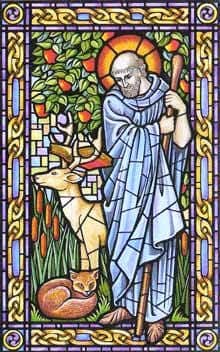
St Piran is the patron saint of Cornwall and the patron saint of tin miners.
Legend
It is said that in the 6th century in Ireland, the King became suspicious of the powers that Piran had and that he was able to perform miracles so they tied a millstone to his neck and threw him off a cliff in a storm.
The seas calmed and Piran floated on the millstone until he reached the beach at Perranporth, where he came safely ashore.
Piran built an oratory in the Penhale Dunes north of Perranporth where he promoted Christianity.
People flocked from all over the place to see him. This 8 foot cross stands a short distance from the remains of the Oratory.
Discovery of Tin
St Piran is said to have discovered tin as he was burning black stone and it got so hot that white liquid leaked from the black stone in the shape of a cross, which is why it is believed that the white cross on a black background forms the St Piran Flag.
In reality though tin had been smelted many years earlier but the technique had been forgotten so St Piran actually rediscovered the method to smelt tin.
St Pirans Day
Each year St Pirans Day is celebrated on 5th March. Celebrations and events take place all over Cornwall but a key part of the day is at Perranporth where the legend of St Piran is re-enacted and where many people walk across the dunes to the Oratory holding a sea of St Piran flags - a spectacular sight!
Saint Piran is celebrated later in the year too in Perranporth- the Lowender Peran Festival takes place in October each year.
Common questions
- Who is Saint Piran?
- The patron saint of Cornwall and of tin miners: a 5th to 6th century abbot said to have come from Ireland to Cornwall, where he settled in the dunes near Perranporth and promoted Christianity.
- What is the legend of Saint Piran?
- Legend says a jealous Irish king had him tied to a millstone and thrown off a cliff in a storm. The sea calmed, the stone floated, and Piran drifted safely ashore on the north Cornish coast.
- Why is Saint Piran the patron saint of tin miners?
- He is said to have rediscovered how to smelt tin when white metal ran from a black hearth-stone in the heat. The white cross on black of the St Piran flag echoes that bright tin against dark ore.
- When is St Piran's Day?
- 5 March, Cornwall's national day, celebrated across the county, most famously with a re-enactment and a march across the dunes to St Piran's Oratory near Perranporth.
- What does the St Piran flag look like?
- A white cross on a black background, symbolising bright tin against dark rock and the light of good against the dark. It is now flown everywhere as the flag of Cornwall.