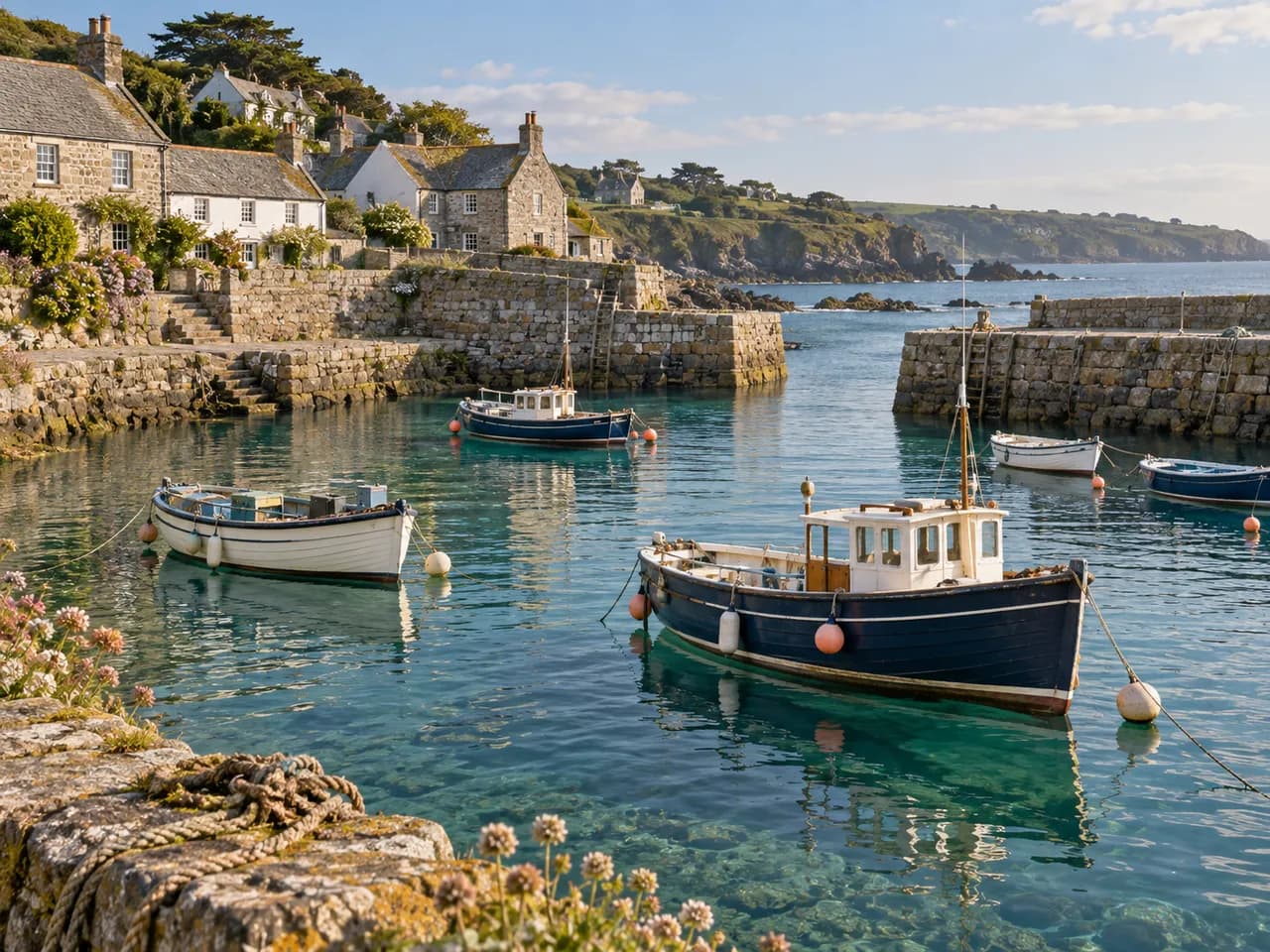
Northcott Mouth lies a few miles north of Bude, near the village of Poughill, on a wild and largely undeveloped stretch of the north Cornwall coast. Reached by a short walk down from a small National Trust car park, it is a beach of pebbles and shingle at high water that transforms as the tide draws back, revealing a broad expanse of sand and a generous spread of rock pools. With few facilities to speak of, it keeps a remote, unspoilt feel even at the height of summer.
A little stream crosses the beach to meet the sea, and the rock pools left behind by the falling tide make it a fine spot for slow exploration. Offshore reefs shape the incoming Atlantic swell into a powerful beach break that tends to suit more experienced surfers, and the exposed setting means the sea here demands respect. It is a place that rewards those who come prepared and read the conditions carefully.
The beach is steeped in quiet history. At very low tide the rusting remains of the steamship Belem, which ran aground nearby at Menachurch Point in 1917, can still be seen emerging from the sand. The South West Coast Path climbs the cliffs to either side, leading north over Maer Cliff with its Bronze Age burial sites and, on a clear day, distant views out to Lundy Island, while a popular circular route links Northcott Mouth with Crooklets back towards Bude.