
Fit and safety
Let them try it on land first
- Do up the straps so it sits snugly
- Lift them out by the grab handle
- Try it on land, then in calm water
- Always supervise near water
Fit and safety
Details
Not every dog is a strong swimmer. Blue Cross points out that tired dogs can get into trouble in deep water, and the PDSA says short-legged breeds such as Corgis and flat-faced breeds such as Pugs find swimming hard work. A buoyancy aid helps your dog float, and the handle gives you something to hold.
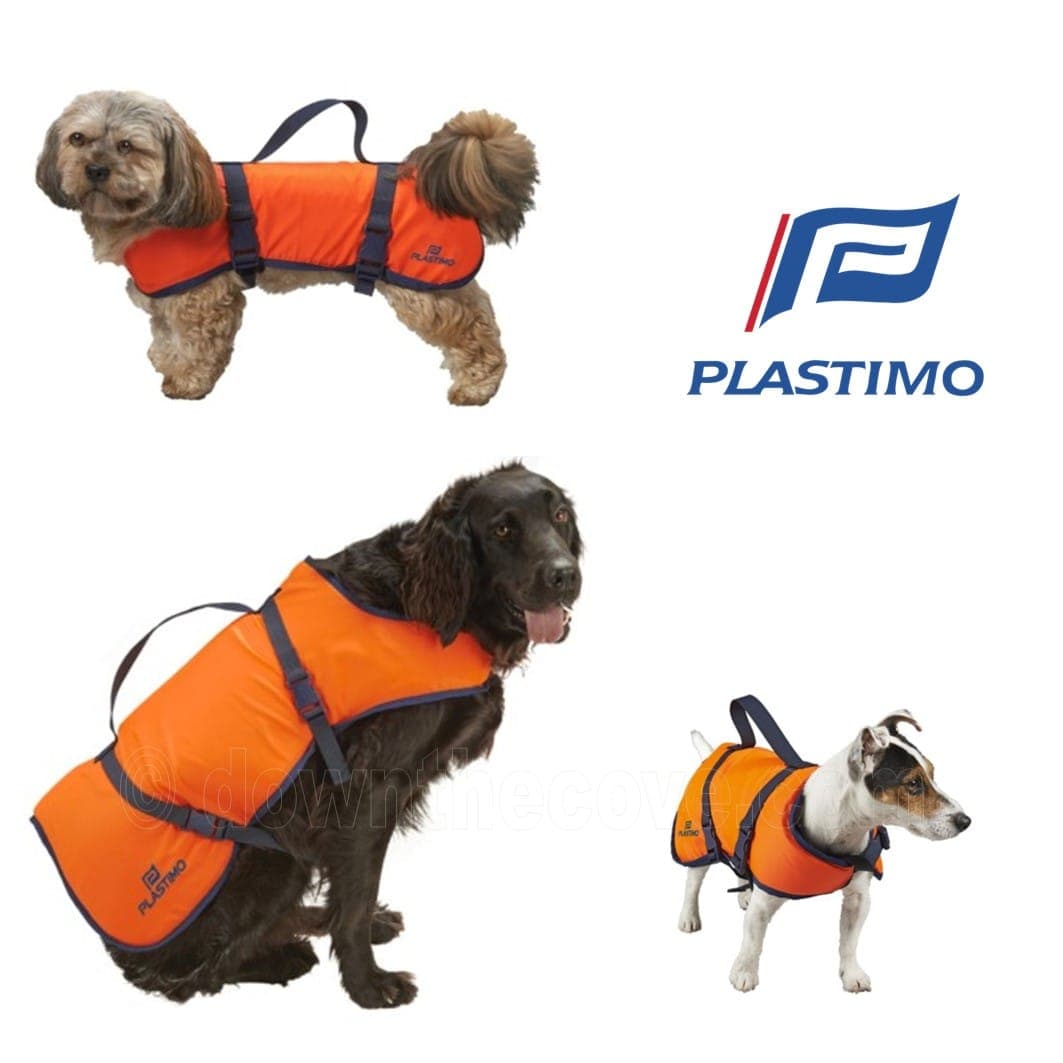
We've long sold it as the Plastimo dog flotation vest. Soft closed-cell foam panels sit along the body, the bright orange shows up well against the water, and navy webbing straps adjust with side-release buckles so it fits close. It's easy to put on, adjust and take off.
Plastimo sizes it by buoyancy: 10N, 20N and 40N. As a rough guide, Small suits Jack Russells and Shih Tzus, Medium suits spaniels and cockapoos, and Large suits Labradors and retrievers. If you're not sure which size, send us your dog's chest measurement (around the deepest part, just behind the front legs) and weight, and we'll help you choose.
The Canal & River Trust suggests putting a buoyancy aid on away from the water first, then practising scoop drills on dry land: lift your dog a little way by the handle, put them down and reward them. A dog that's used to the vest and the lift is far easier to help in a hurry, from the water onto a boat, pontoon or paddleboard.
If your dog gets into trouble in the sea or a river, the RNLI's advice is clear: don't go in after it. Move to where it can get out and call it, and if you're worried, call 999 and ask for the Coastguard. In 2024, RNLI lifeboats launched 56 times to dogs.
Plan around the water as well as the vest. Blue Cross suggests checking tide times before a beach walk, because currents can catch dogs out, and the PDSA warns that cold water can cause shock and gasping, so keep swims short when the sea is cold and rinse your dog off afterwards.
We're not aware of any safety standard for dog buoyancy aids, so a good fit and someone watching matter more than any label. Keep an eye on your dog whenever it's near the water.
Specifications
How to use
Use the breed guide, or send us your dog's chest measurement and we'll advise.
Fasten the buckles and tighten the straps so it sits snugly but lets your dog move freely.
Your dog shouldn't be able to wriggle or back out of it.
Lift a little way by the handle, put your dog down and reward them.
Rinse in cold fresh water and hang it to dry.
Really nice, looks great.
Picked it up on a whim and glad I did. The coastal detail was the bit that made me choose it.
Really happy with this dog life jacket and it arrived fast. I would rather leave a plain useful note than overpraise it.
FAQs
Yes, a buoyancy aid for dogs: foam panels that help your dog float, plus a handle for lifting. It isn't designed to turn a dog onto its back, so keep watching your dog whenever it's in or near the water, however well it swims.
As a rough guide, Small (10N) suits Jack Russells and Shih Tzus, Medium (20N) suits spaniels and cockapoos, and Large (40N) suits Labradors and retrievers. Small is currently unavailable. If your dog is between sizes or very deep-chested, send us its chest measurement and weight before you order.
Yes, a webbing handle on the back. Use it to steady your dog or lift it out of the water, onto a boat, pontoon or paddleboard. Practise the lift on dry land first, as the Canal & River Trust suggests: heavier dogs are much harder to lift from the water.
Navy webbing straps go around your dog's body and fasten with side-release buckles. Tighten them until the vest sits snugly and your dog can't wriggle out, as the Canal & River Trust advises, while still letting it walk, swim and breathe freely. Check the straps again after a swim.
It's still worth it. Blue Cross notes that dogs that tire can get into trouble in deep water, and the PDSA warns that cold water can cause shock. A buoyancy aid helps a tired dog float on boats and paddleboards, and the handle helps you get it out.
Check the tide times before you go, as Blue Cross advises, and watch for currents. Salt water can upset a dog's stomach, so bring fresh water to drink. The PDSA suggests keeping dogs out of very cold sea, and the RNLI says never go in after your dog: call 999 for the Coastguard instead.
Rinse it in cold fresh water after every swim, especially in the sea, and hang it to dry away from direct heat. Check the buckles, straps and stitching before each trip, and replace the vest if anything is damaged.
Still deciding?
We are a small family-run shop. Ask us anything before you order.
Send us a message support@downthecove.comDelivery and returns
Packed and posted by our own small team.
On the water


 Est. 2012
Down The Cove · founded in Cornwall, 2012
We donate 1% of all profits to Compassion UK, supporting its work with children and communities facing poverty: clean water, healthcare and education. Compassion UK is an independent charity. Visit Compassion UK
