
Useful for your next trip
Useful kit connected to this guide, chosen to keep the next step simple.
Full pollock guide
How to spot it, where it lives, how it is caught and how to cook it — the complete guide, in one easy read.
Hook a decent pollock off the rocks and it fights like something twice its size, diving for the reef the second it feels the steel. That is half of why it is a Cornish favourite; the other half lands on the plate as firm, clean white flesh that takes to almost any treatment. It is a handsome member of the cod family, and a sounder choice than the pressured cod it often stands in for, as long as it is line-caught.
How to spot it
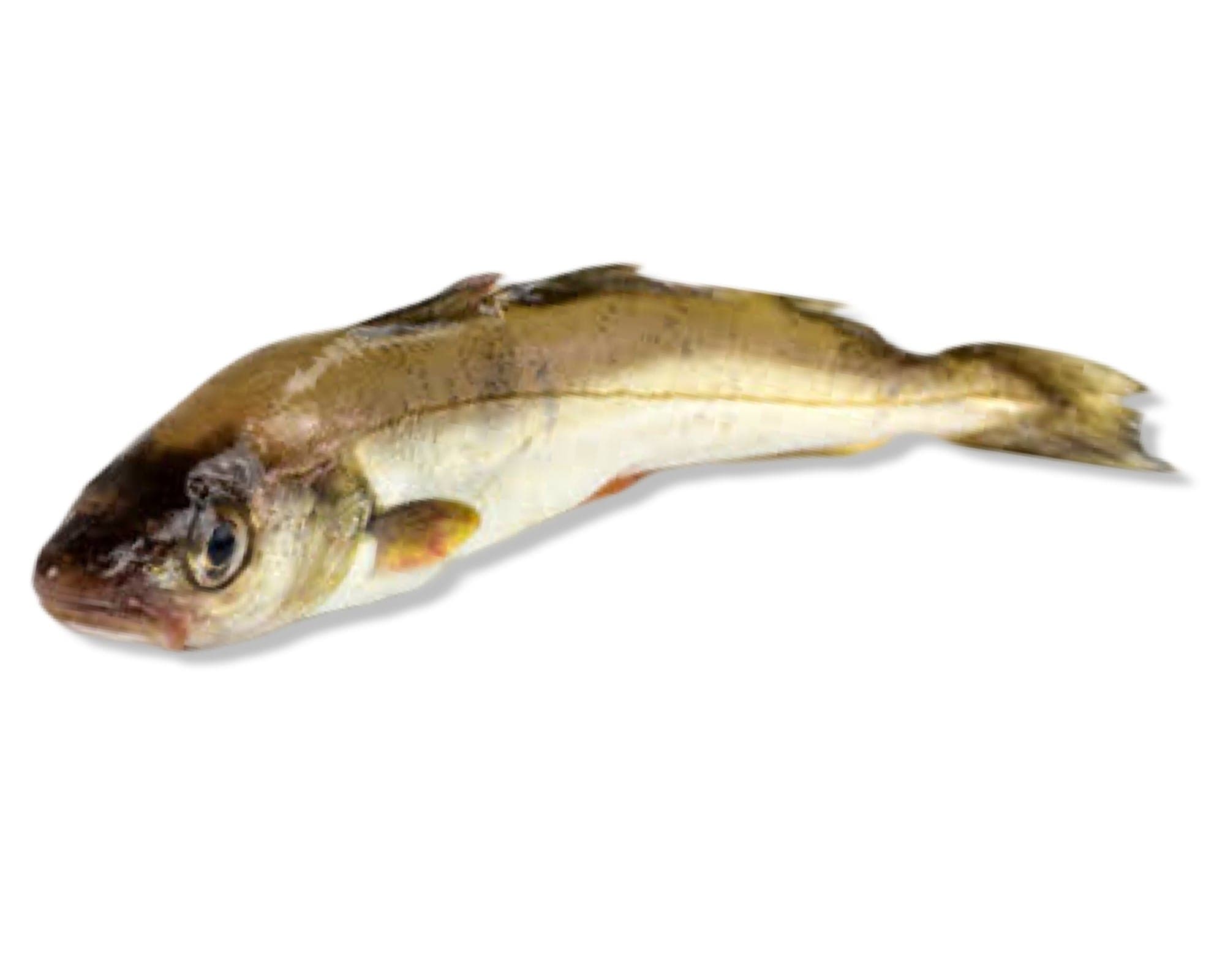
Pollock is a good-looking cod-family fish: a greenish-brown back shading from dark olive to a soft golden sheen, silver flanks and a clean white belly, with three dorsal fins, two anal fins and a big, deeply forked tail. What really names it is the jaw. The lower jaw juts forward well beyond the upper, and that one feature settles the usual mix-up with coley, or saithe. Pollock shows that protruding jaw and the golden-green, silver-flanked body; coley runs darker and more evenly grey-green, with the jaws closer to level.
Where it lives
Pollock hold to rocks, reefs, wrecks and harbour walls right around Cornwall. The small ones tuck in tight to structure in shallow water, often directly under jetties and harbour walls, while the bigger fish move out to deeper reefs and wrecks. The coast is studded with marks: Cape Cornwall, the Padstow headlands, Port Isaac, Boscastle, Tintagel, Porthcurno, Lamorna, Sennen, The Lizard, Porthtowan, Helford, Kennack Sands, Coverack, Porthleven, Charlestown, Newlyn and Mousehole among them. The fishing tends to come good from February to April around this rocky, structured ground.
Catching it
Pollock fall to both shore and boat anglers, which adds to the appeal. From the rocks and harbour walls, float fishing is the classic, and spinning with feathers or lures lets you cover water and reach fish holding near structure. For the bigger fish out over deep reefs and wrecks, drop a ledger rig. Bait with mackerel, sand eel, squid, crab or worm. If you are filleting your catch, pollock takes apart like any round fish: cut behind the head, run the knife along the backbone to the tail, then skin each fillet flesh-side down. Fish February to April for the best of it, keep only what you will use, and mind the size limits.
In the kitchen
Pollock is firm and flaky and takes happily to almost anything: stirred through a chowder, layered into a fish pie, baked with herbs and lemon, pan-fried in butter or battered for a proper Friday chip supper. Two things make or break it. First, freshness, because pollock softens faster than cod once landed and is far better eaten within a day or two. Second, salt, as a light overnight brine firms the flakes and seasons them through, which is the trick the chip shops use. Get those right and you can enjoy it with a clear conscience, knowing it is a far steadier choice than cod.
Related guides and gear
FAQs
Quick fish questions
Short answers for the questions families and coastal readers often ask first.
How do you tell pollock from coley?
Pollock has a lower jaw that juts forward well beyond the upper, with a greenish-brown, sometimes golden body and silver flanks. Coley, or saithe, runs darker and more evenly grey-green, with the jaws closer to level. The forward jaw is the clearest tell.
How do you fillet pollock?
Treat it like any round fish. Cut down behind the head to the backbone, turn the knife and run it along the spine to the tail to free the fillet, then repeat on the other side. Skin each fillet by sliding the blade between flesh and skin, flesh-side down.
Is pollock healthy?
Yes. Pollock is a lean white fish, high in protein and low in fat, with useful B vitamins, selenium and a modest dose of omega-3. It is a light, filling choice that works well as a regular, everyday alternative to cod.
Is pollock a sustainable fish?
Line-caught Cornish pollock is the one to look for. After the stock was so depleted it faced zero-catch advice in 2024, it has recovered enough that the MCS Good Fish Guide now rates line-caught South West pollock a Best Choice again; netted and trawled fish rate lower, so the gear really matters.
How do you cook pollock?
Pollock is firm and versatile: use it in chowders and fish pies, bake it with herbs and lemon, pan-fry it in butter, or batter and deep-fry it. A light overnight brine firms the flakes, and above all eat it fresh, within a day or two of landing.
Where can you catch pollock in Cornwall?
Pollock are all around Cornwall over rocks, reefs, wrecks and harbour walls. Marks include Cape Cornwall, Port Isaac, Tintagel, Sennen, The Lizard, Coverack, Porthleven, Newlyn and Mousehole, with many more along the coast.