The full guide
Read straight through, or dip into the sections that matter for your next smoking session.
Use the fuel grade specified for your exact smoker: dust, fine chips and coarse chips are not universal substitutes. Identify the equipment and approved grade before choosing a wood flavour or pack size.
Wood dust: check the generator specification
Fine smoking dust is used in generators designed for that fuel, including the ProQ Original. Other cold-smoking equipment may use a different fuel system, so cold smoking alone does not identify the correct grade. Check the actual model instructions rather than assuming every cold smoker requires dust.
Fine chips: compact equipment, specific instructions
Some compact hot smokers and smoking guns specify a fine fuel. The acceptable particle size and loading depend on the model. Read the manual and fuel label together; a product called fine by one supplier is not proof it meets every manufacturer’s requirement.
Coarse chips: check the box or barbecue
Coarser chips are sold for appropriate barbecue and smoker-box applications. Confirm the allowed grade, placement and amount with the equipment maker. Do not put coarse chips into a narrow dust generator or add wood directly to a heat source unless that use is specifically permitted.
How much wood should you use?
Use the amount or fill instruction for the exact equipment and food-specific process. A universal spoonful, handful or smoking time is not reliable across different smokers. Record what you used so later flavour adjustments are meaningful, without changing the cooking or food-safety controls.
Should chips be soaked?
Follow the equipment and fuel instructions. Do not apply a barbecue soaking suggestion to a dust generator that requires dry fuel. If the instructions conflict or are unclear, confirm the combination before lighting it; improvised fuel treatments are not a substitute for compatibility.
If the fuel goes out or produces an unwanted result
Once safe and cool, check the correct fuel grade, storage condition, cleanliness and airflow using the maker’s troubleshooting guide. Do not add accelerants. Outdoor equipment must remain outdoors. Smoke appearance or intensity does not establish that food is cooked or suitable to store.
Finish the shopping decision
Note the smoker model, accepted grade and required pack quantity, then choose flavour. Check the selected variant in the live wood range. If you are comparing flavour rather than particle size, use the wood-flavour guide instead.
Printable fuel chooser
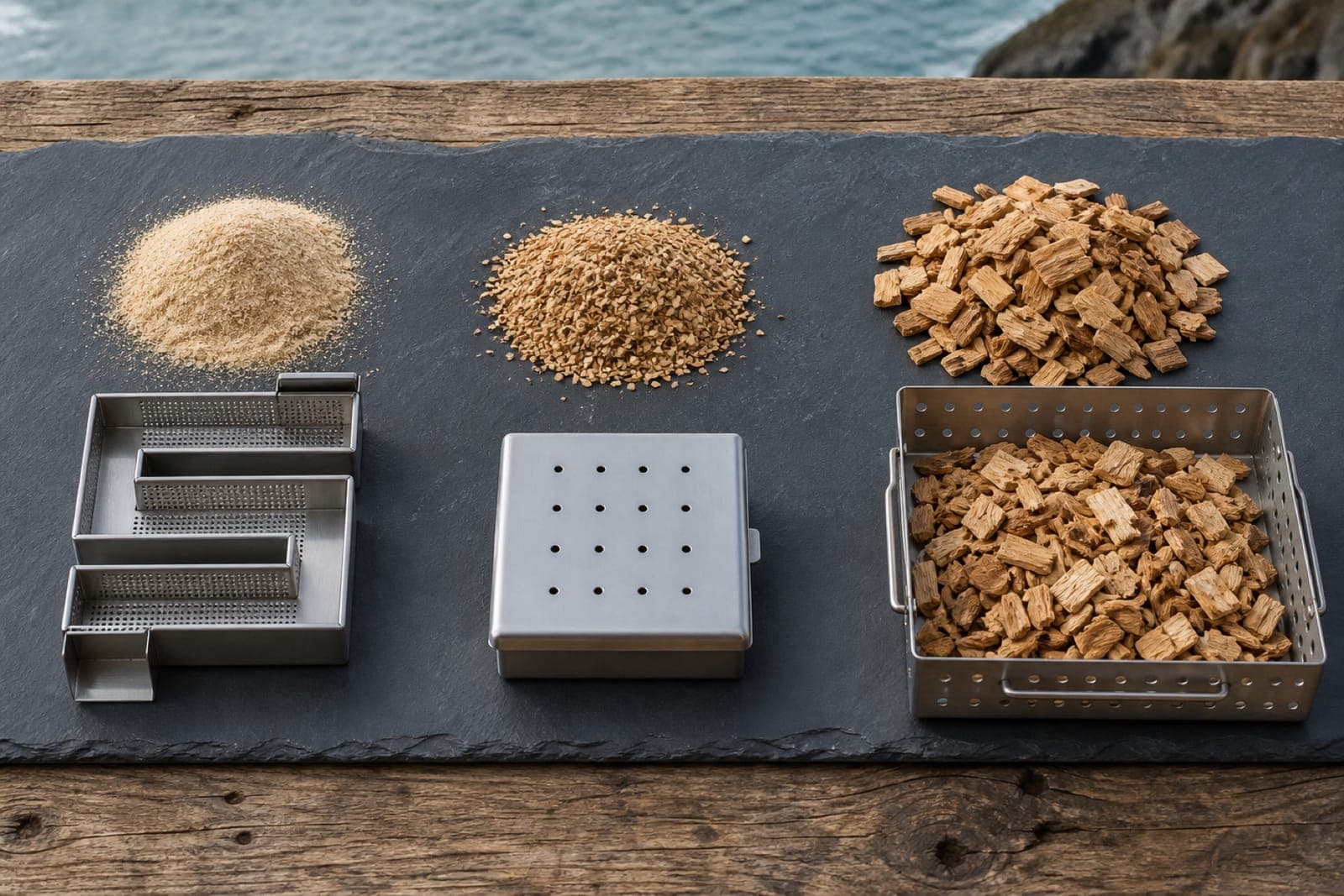
Fine chips, coarse chips or smoking dust?
Identify the exact smoker and use its specified fuel grade. Dust, fine chips and coarse chips are not universal substitutes; choose the flavour after compatibility is confirmed.
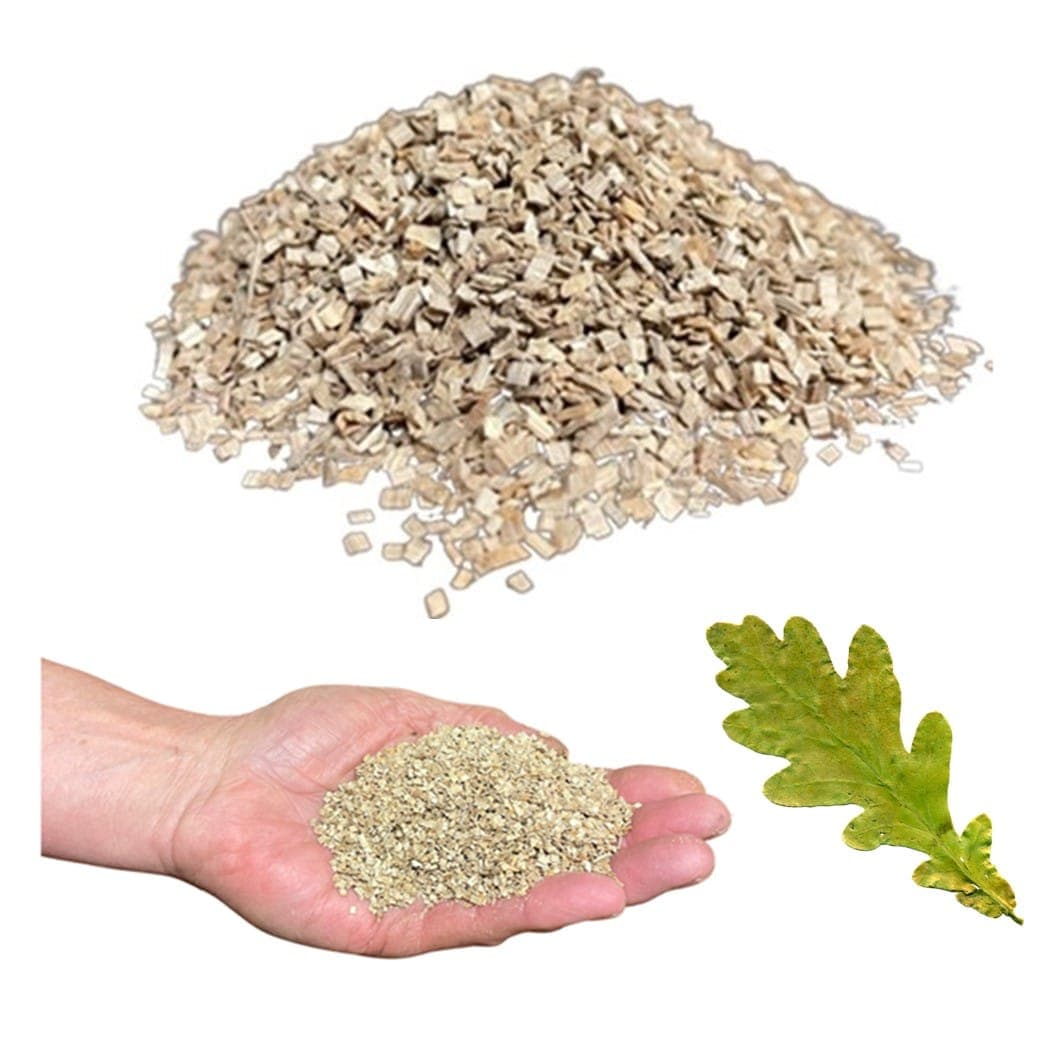
The cut of the wood changes how it burns; it is an equipment choice before it is a flavour choice.
| Fuel | Choose it for | Typical equipment | Avoid when |
|---|---|---|---|
| Smoking dust | A generator that specifies dust | For example, ProQ Original | The model specifies another fuel |
| Fine chips | Equipment that accepts the labelled grade | Some compact smokers and smoking guns | The manual or grade is unclear |
| Coarse chips | An approved barbecue or smoker-box setup | Check the exact box and heat source | A narrow generator designed for dust |
Before you choose
Tick off the checks as you work through them. This is a personal reminder, not a safety approval.
Smoking kit to help at home
Home smoking essentials that make the advice easier to put into practice.

Common questions
- Does every cold smoker need wood dust?
- No. Use the fuel required by the exact equipment. The ProQ Original is designed for appropriate smoking dust, but other systems may use different fuel.
- Can I replace fine chips with coarse chips?
- Only if the equipment manufacturer permits that grade. The particle size affects fit and operation; a shared wood flavour does not make the fuels interchangeable.
- How many spoonfuls of wood do I need?
- Follow the exact equipment and process instructions, not a universal quantity. Record the amount for later flavour comparisons while maintaining food-safety controls.