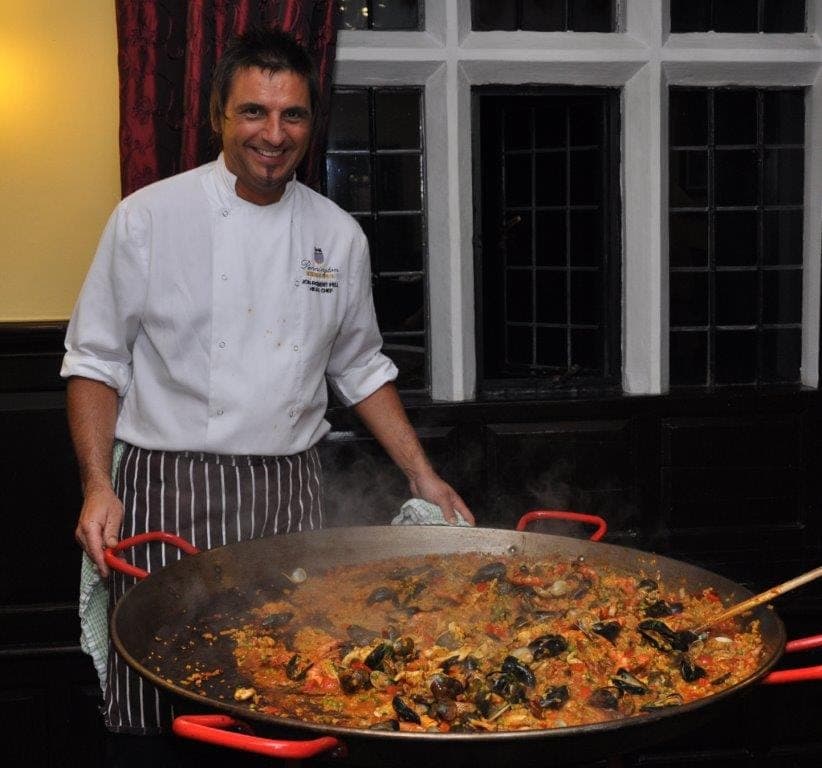
There's nothing quite like a big paella in the middle of the table, everyone reaching in with a glass of something cold in hand. This seafood paella recipe was kindly shared with us by chef Jon-Robert Fell, and it's become a real favourite of ours for feeding a crowd. The beauty of it is how forgiving it is, so use whatever good seafood you can lay your hands on and make it your own.
Why we love this
Shared with us by chef Jon-Robert Fell, this has become our go-to for feeding a crowd, the kind of pan everyone gathers round with a cold drink in hand.
What you'll need
Gather everything first, then the cooking feels calmer.
- 170g chorizo, sliced
- 110g pancetta, cut into thin slices
- 2 cloves garlic, finely chopped
- 1 large Spanish onion, finely chopped
- 1 red pepper, diced
- 1 tsp fresh thyme
- 2 fresh red chillies, chopped
- 570ml Calasparra (paella) rice
- 1 tsp smoked paprika
- 125ml dry white wine
- 1.2 litres chicken stock
- A good pinch of saffron
- 2 chicken breast fillets, diced
- 18 clams
- 18 good-sized mussels, cleaned
- 110g frozen peas
- 4 large tomatoes, chopped
- 125ml good olive oil
- 1 head of garlic, peeled and chopped
- 12 langoustines
- 450g squid, cleaned and thinly sliced
- Handful of fresh parsley, chopped
- Salt and pepper
Cook along
Take it step by step; seafood rewards a calm hand.
- 1
Make sure the mussels and clams are well cleaned and prepared, discarding any that are open and won't close when tapped.
- 2
Fry the pancetta, chorizo, garlic, onion, red pepper, chilli, thyme and chicken together for about 5 minutes to release all the flavours.
- 3
Add the rice, smoked paprika and white wine and cook for 2 minutes, stirring to coat the grains.
- 4
Pour in the chicken stock and chopped tomatoes, stir in the saffron and peas, and cook for a further 10 minutes.
Paella loves to be tinkered with, so don't be precious about the ingredients. If squid isn't your thing, leave it out and add a little more of another seafood instead. We'd always say buy whatever looks freshest at the fishmonger's on the day and build the dish around that. A wide, shallow pan helps the rice cook evenly and gives you a better chance at that prized crispy layer on the bottom, the socarrat.
Serve it with
Bring the whole pan to the table so everyone can help themselves, scattered with parsley. Best cooked and eaten on the day while the rice still has its bite.
Common questions
- What's the best rice for paella?
- A short-grain Spanish rice like Calasparra or Bomba is ideal, as it drinks up all that lovely stock without turning mushy. Most supermarkets stock paella rice these days. At a push, a risotto rice like Arborio will do the job, though the texture is a touch creamier.
- Can I make seafood paella ahead of time?
- It's really best cooked and eaten on the day, as the rice loses its bite once it's been sitting around. You can get ahead by chopping everything and frying off the base earlier, then just finish it when your guests arrive.
- What seafood works well in paella?
- Mussels, clams, langoustines and squid are all classic, but prawns, scallops or a little firm white fish are all lovely too. Use whatever looks freshest and feel free to mix and match.
- How do I get the crispy layer on the bottom?
- That golden crust is called the socarrat, and it comes from leaving the paella undisturbed towards the end of cooking. Once the stock is nearly gone, turn the heat up for a minute or two and listen for a gentle crackle, but stop before it catches and burns.
- Do I need a special paella pan?
- It helps, but it isn't essential. The point of the wide, shallow shape is to spread the rice thinly so it cooks evenly. Your largest, widest frying pan will get you most of the way there.