Fishing guide
Sea Fishing in Cornwall
With over 300 miles of coastline, Cornwall is one of the finest places in the UK for sea fishing. From bustling harbour walls to wild surf beaches and dramatic rock marks, there is water to suit every angler and season. As a Cornish family, we love sharing the spots, species and simple tips that make sea fishing in Cornwall such a joy, whether you are visiting for a holiday or fishing your home coast.

Cornwall packs huge variety into a small county, so this guide helps you choose between its beaches, harbours, estuaries and rocky points.
Best for: Visitors and locals wanting to make the most of Cornwall's varied coast, from sheltered harbours to wild surf beaches. · Tackle: A multi-purpose outfit covers most Cornish shore fishing; add a beachcaster for the surf beaches or light lure gear for bass and mackerel. · Safety: Cornish rock and surf marks can be exposed, so check tides, swell and access carefully, and always respect the power of the Atlantic.
Cornish rock and surf marks can be exposed, so check tides, swell and access carefully, and always respect the power of the Atlantic.
With over 300 miles of coastline, Cornwall is a fantastic place for sea fishing. We can help with fishing equipment, shore guided fishing, finding a boat trip or simply providing jargon free information.
FISHING ADVENTURES AND TUITION
COMPLETE SEA FISHING KITS
Using our local knowledge and experience of sea fishing, we have designed a range of bespoke sea fishing kits ranging from starter travel kits to deluxe sets including everything a novice fisherman could wish for! Our kits only contain equipment that you'll need for sea fishing in Cornwall - they are not full of items you will never use....
Beach Fishing
There are many beaches around Cornwall that are great places to fish from and in particular if you are after flat fish or bass. The north coast of Cornwall has some very large beaches that are perfect for fishing but the disadvantage is that they are also a popular place for families and surfers wanting to enjoy the sand and surf.
If you want to fish from the beaches during the summer months it is better to avoid the busy times and stick to first thing in the morning or in the evenings when the beaches are quieter.
The usual fishing method from the beach is bottom fishing (see below) although don't be afraid to try plugging or spinning as these methods can also be very successful especially for bass.
Rock Fishing
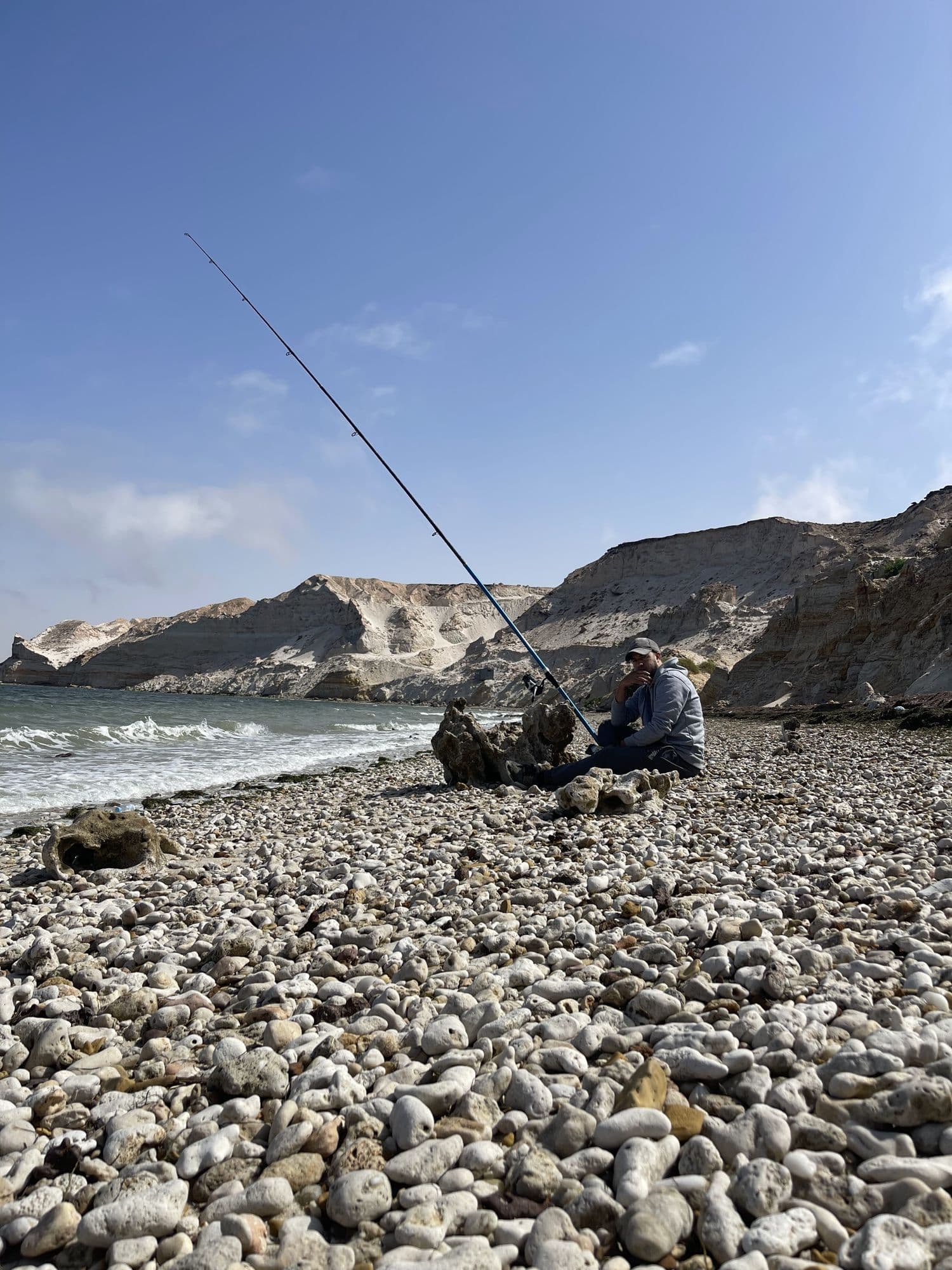
Cornwall's coastline provides an abundance of rocks to fish from although some places are difficult to access and are not recommended for the novice climber. It is also important when rock fishing that you are aware of the tides and state of the sea. Do not try and retrieve lost gear when fishing from rocks.
We would recommend that you do not go rock fishing alone.
The usual fishing methods from rocks are float fishing, spinning or plugging.
Kayak Fishing
Fishing from a kayak is a very popular and enjoyable pastime around Cornwall. We are currently working on a new section for the website which will have specific information for kayakers.
Harbour Walls & Piers
Harbour walls and piers provide the best places for novice anglers as they are safer. You will usually find fellow anglers at these locations so they are good places to gain local knowledge. Harbours and piers will normally be busier in general and care should be taken when casting so that you don't catch a bystander!
The usual fishing methods from walls and piers are float fishing, spinning or plugging.
Boat Fishing
Boat fishing broadens the horizons and will normally give opportunities to catch a greater variety and larger fish. We would only recommend boat fishing if you go with a local boatman who knows the area.
Fish Species caught around the Cornish Coastline
At present on this site we have concentrated on the most common species of fish caught from the shores of Cornwall. If you fish from a boat offshore, you will catch other species too.
A GUIDE TO DIFFERENT FISHING METHODS
Plugging
Plugging is very similar to spinning but many of the plugs have got more than one treble hook and also they are set to dive to a certain depth. Many will float when you stop retrieving.
A lot of plugs have rattles inside that attract the fish.
Float Fishing
Float fishing is a good fishing method for harbour walls and piers. By altering the position of the float on the line you can set the hook to whatever depth you like depending on which species you are aiming to catch. Simply wait for the float to move and bingo!
Free Lining
For free lining you need a rod, reel, light line and hook.
To free line you bait your hook with, for example, sand eel, lugworm, mackerel strip or sprat and cast the line out gently and let the line out gradually as the bait sinks. When you think it has hit the bottom wind it in very slowly.
This is not a conventional rig but is very effective, especially in the evenings when the fish move in closer to the shore as large bass will venture in close to shore.
Many mackerel, plaice, bass, trigger fish and large pollack have personally been caught using this method.
Spinning
Spinning involves using a lure such as a spinner or eel (for example the Eddystone Eel). Cast out the line and then retrieve slowly. The lure will appear like a small swimming fish in the water and will attract your catch.
Bottom Fishing
This is a method of fishing using weights, hooks and bait and is mainly used for fishing from beaches.
You can use lots of different weight/hook combinations and these are called rigs.
Examples of rigs are the ledger, the pennel, the paternoster and a trapped swivel rig.
There are instructions for each type of rig in the booklet that is included in our
starter fishing kits.
Pre-assembled rigs are a good option and we supply a large variety of different ones depending on which species of fish you wish to target.


Safety First! - whatever fishing you are planning to do, make sure you stay safe around the coast. We have some tips to help you on our coastal safety page.